


Royal Scribe
Royal Scribe
About
- Username
- Royal Scribe
- Joined
- Visits
- 9,942
- Last Active
- Roles
- Member
- Points
- 3,476
- Birthday
- February 5, 1968
- Location
- San Francisco, California
- Website
- https://legacy.drivethrurpg.com/browse/pub/31814/Royal-Scribe-Imaginarium
- Real Name
- Kevin
- Rank
- Mapmaker
- Badges
- 16
Latest Images
Reactions
-
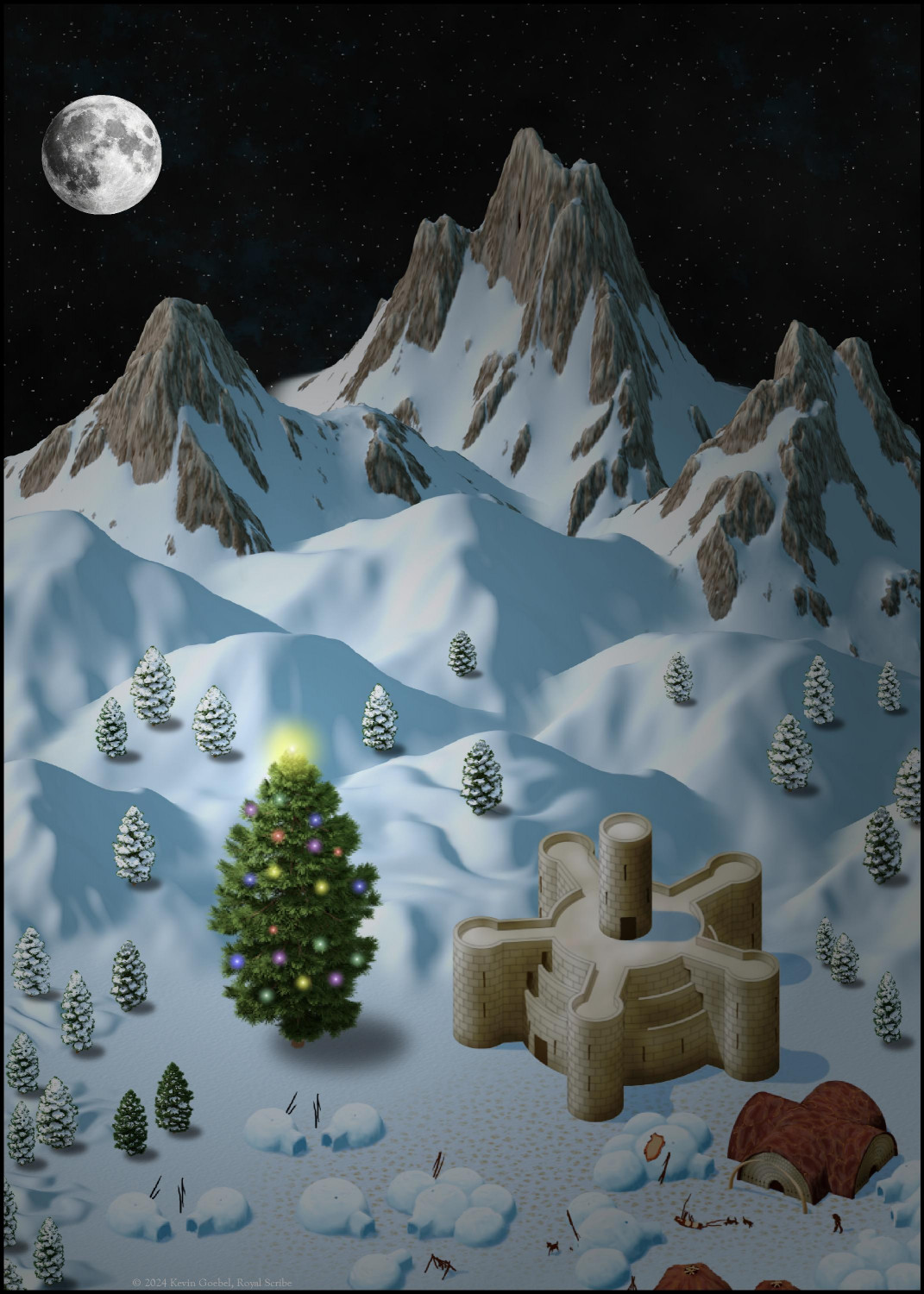
[WIP] The Toy-Maker's North Pole Workshop
Had to make some tweaks -- my originals were in a 4x5 ratio but in looking at card options, a 5x7 ratio seemed better. Decided the Christmas tree lights popped more on the nighttime version (especially after I moved the sheet they were on to render after the Point Light Finalize effect). And I decided to go with the stars instead of the galaxy so that the sky wouldn't draw focus from the rest of the image.
Let me know if you spot anything weird before this gets sent off.



-
[WIP] Rise of the Crone-Mother
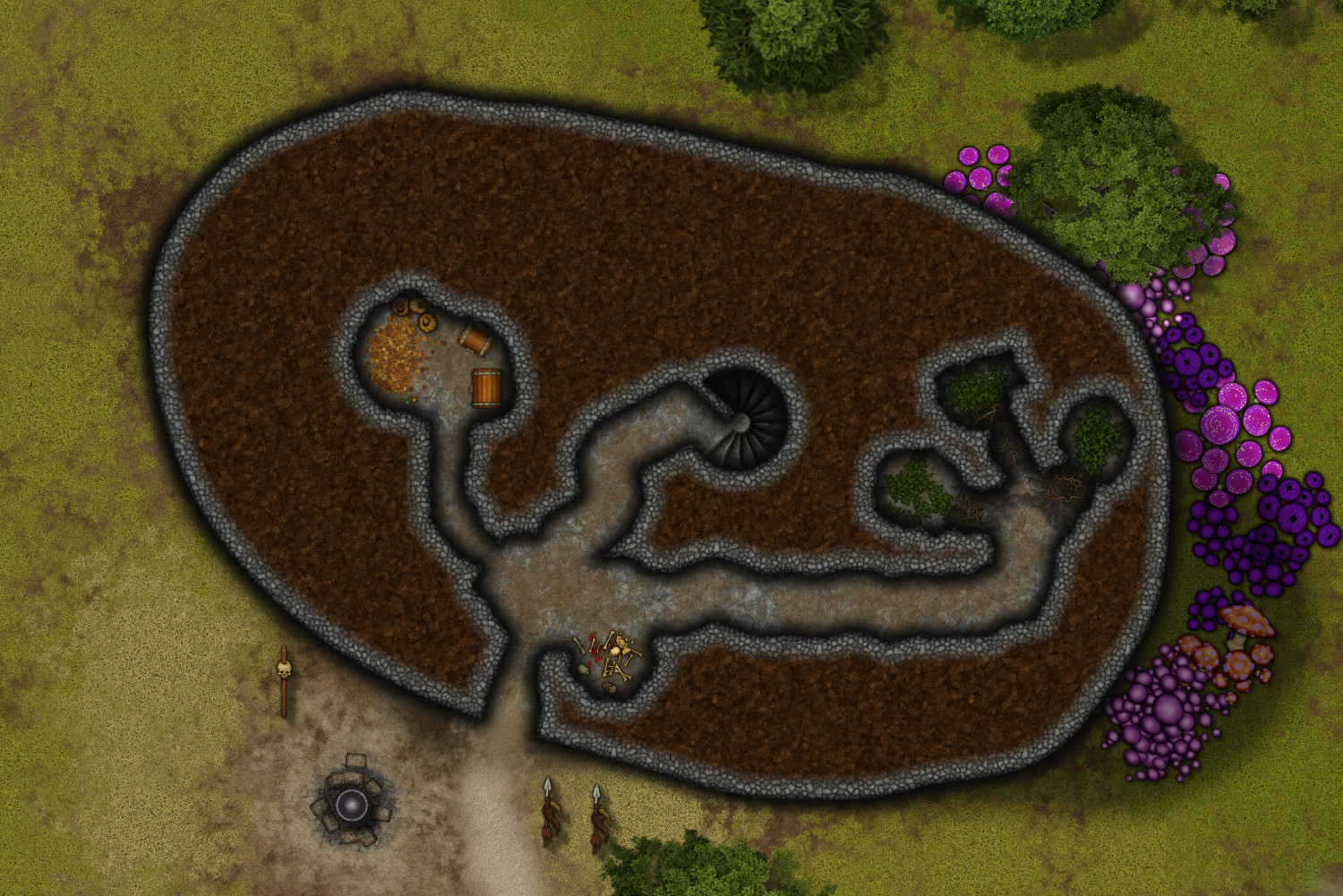
Here's the inside of ones of the hag's caves. Outside, you'll see her cauldron over a fire pit along with some gruesome trophies: skulls and scalps on pikes. (Also added bed a of fungi outside). Bones dumped in a heap in the opening area. "Bedroom" area off to the left -- the bed is just a pile of dried leaves. Some cells for captives (fresh meat!) with grasping vines to keep captives "shackled" and carnivorous roots barricading the doorways. And in the middle, steps going down...
Oh, and I reduced the opacity of the drawn shadow to 40%, hoping that will make it less "floaty."


-
[WIP] Spectrum Desert
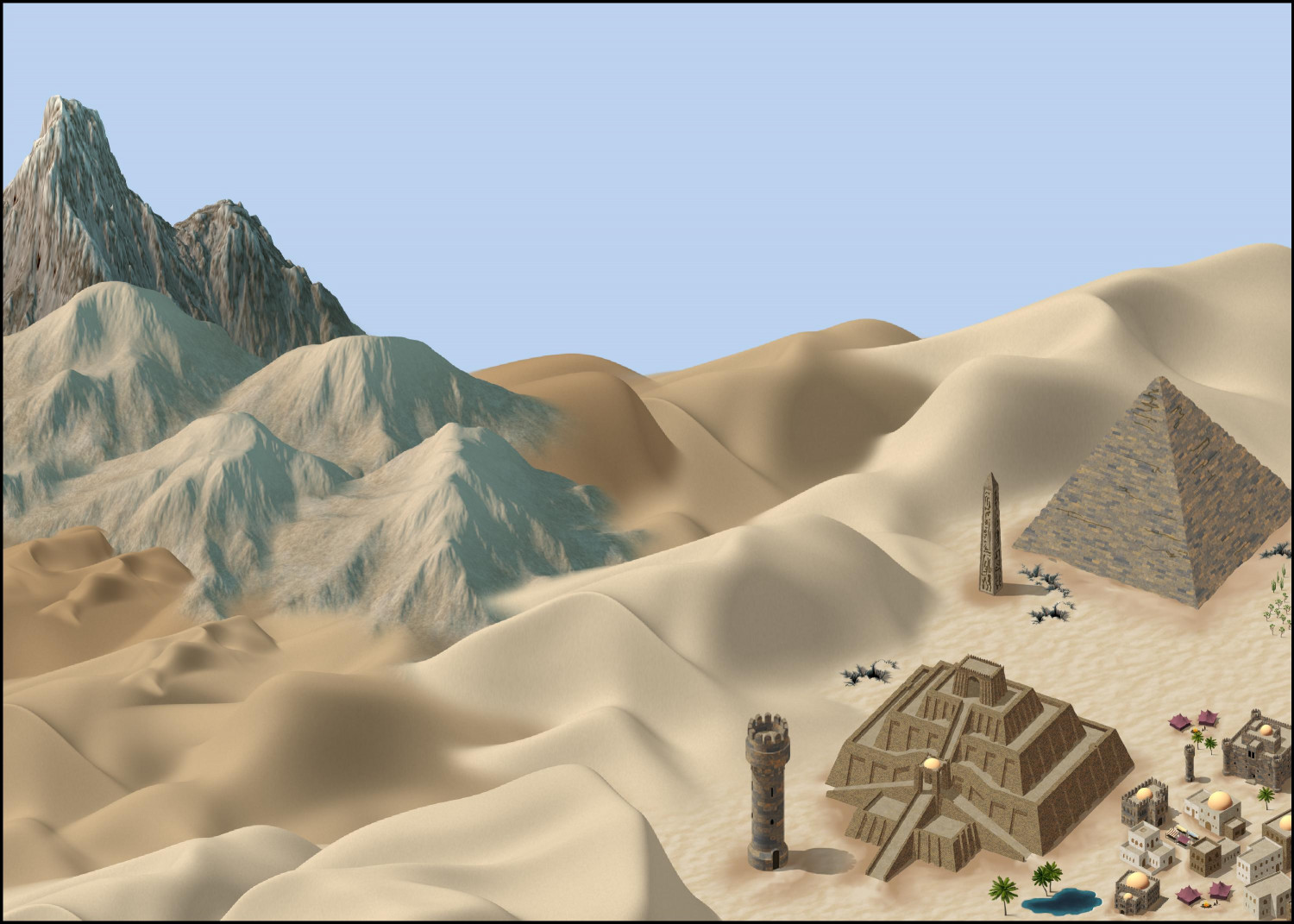
Ahhh, thank you! Good eye. I'm not really sure, but it might be how the same-colored dunes blend together. I tried swapping for a different dune of the same color and moved it a bit.

-
Lumadair and the Caves of Dread (Pencil Sketch annual)
Way back in March, I took a section of my campaign world called the Republic of Lumadair, and used a Fractal Terrains export of the coast to render it in three different ways in CC3+. One version was in this year's Parchment Maps style. Another was to used beveled shading as Ralf demonstrated in this video. And the third was to do it in Mike Schley's style.
I thought about creating a fourth version now using this month's Pencil Sketch style, but decided the scale of the other maps didn't work as well. The other maps were 6,109 x 2,445 miles! Even if I zoomed in to just include Lumadair and not the lands on nearby continents, that still would have required a map that was about 3,100 x 1,800 miles. So I decided to just do a section of Lumadair, the part where the nation's capital city is located.
For reference, here's that portion as exported from the Mike Schley version:
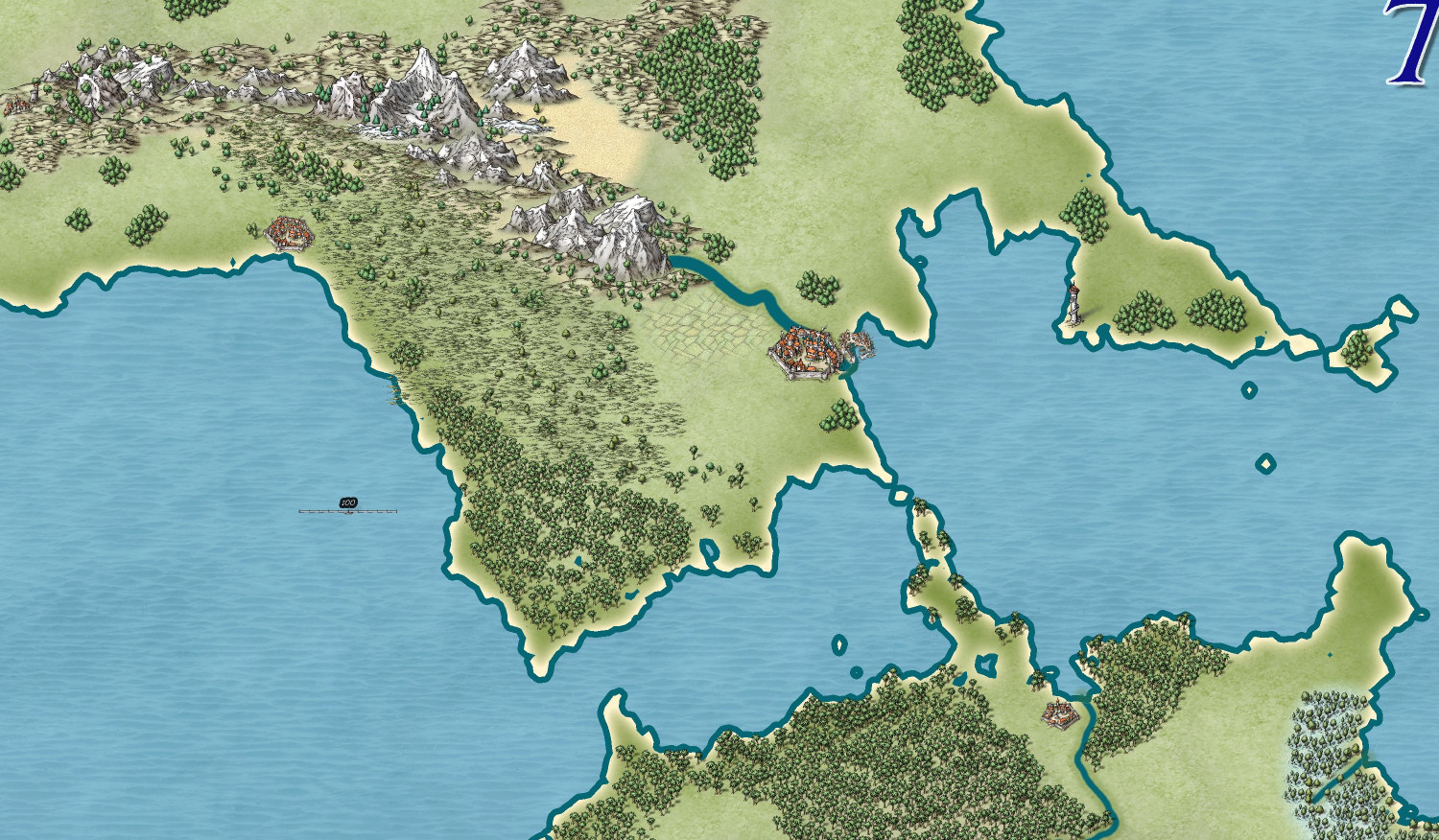
I love how this style can supplement other styles of maps. I had the idea that maybe the adventurers stumbled across someone else's sketch, like a treasure map. Or maybe they've been sent on a quest and they sketched this from a map in their benefactor's fortress.
With the other maps, I imported the Fractal Terrains coastline (lots of nodes!) as well some of the contour lines (tons more nodes!). For this map, I deliberately didn't do that. I imported a JPG bitmap of the Schley map as a drawing guide but then used the Land tool to manually redraw the portions of Lumadair, the southern continent (which is Lennox), and the islands. It's supposed to be someone's sketch, after all, and not an exact replica of every node!
This style has light mountains (just outlines) and dark ones (filled in). I wasn't sure if there was an expected usage for each, but I decided to use the light ones for the taller mountains, as if they were the snow-capped ones.
I added in a cave mouth and labeled it the "Caves of Dread." My thought is that the adventurers are starting in the southern continent's town of Avernol, and their goal is to get to the Caverns of Dread. Most likely, they'll book passage on a ship from Avernol to the capital of Lumadair and hike from there. (Whoever sketched this map didn't even know the name of the capital city.)
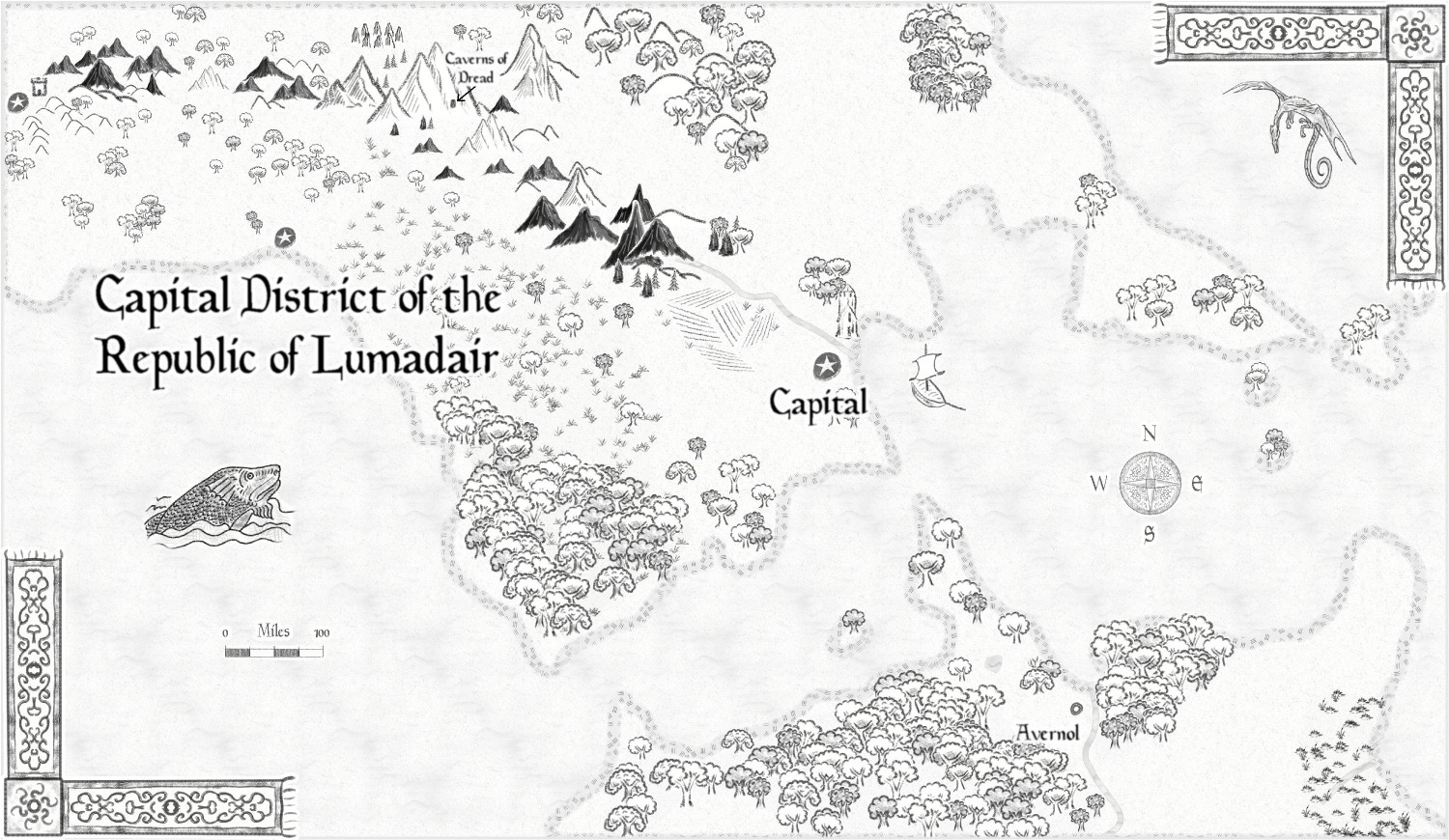
Anyway, my thanks to @C.C. Charron for another great addition to the annuals. I can imagine that game masters will have a lot of fun creating treasure maps and other handouts for their players with this style.
-
Printing maps from PDF?
I think I found a good approach.
- Save a high resolution PNG file following the VTT specs Remy laid out in this blog post from 2020.
- Upload the image to an image splicer app that can automate splicing in a grid that you specify with customizable horizontal and vertical dimensions. I used Imagy.app.
- Take the spliced images and drop them in a desktop publishing or word processing program. I tried it in MS Word with margins set at 0.25", but with the images centered. Printed perfectly (nothing cut off and every square is 1 inch by 1 inch.)
So helpful with larger maps, like a town where you never know where the battle may go.

-
[WIP] Temple of Fah (May Annual: Stairs and Steps)
I've been playing around with Wyvern's great suggestions.
I tried to give the ziggurat a more weathered look by using the FRACTALIZE command. The default settings were way off but I played with it enough to think that with time, I could get it to look right. The problem was that I tried it on a single layer of the temple, and even with just that single layer, it added so many nodes that it slowed everything way down -- and that was just the first of eighteen levels of the temple! So I think my temple won't look weathered after all. Maybe the gods are preserving it. ;-)
Then I hid the desert symbols so that I could play with the different textures and effects to create the illusion of dunes. The Dungeons of Schley style has five sand fills (with 1 being the lightest) and five corresponding partially transparent textures to overlay. The main background in my map was the middle one, Sand 3_SS4. Over the entire map, I also added the Sand 2 T_SS4 texture on a sheet called SAND TEXTURE 1 BASE, which has an inner edge fade to soften it. I then added another sheet called SAND TEXTURE 2 PATCHES, where I drew patches of the textures 1, 4, and 5 (2 already applied to everything, and 3 being the same as the main sand).
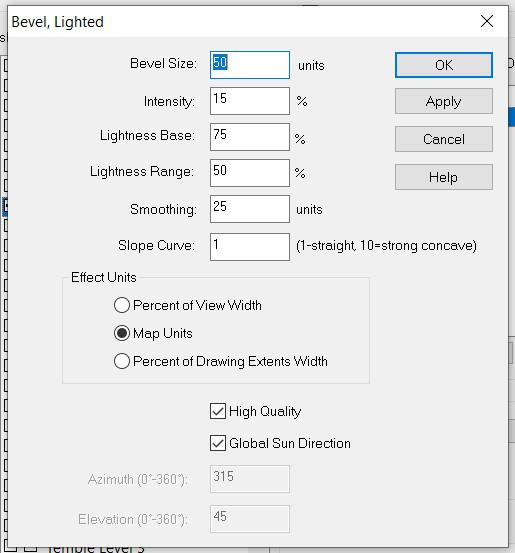
For the dunes, I added another sheet, SAND TEXTURE 3 DUNES. It has three effects: Edge Fade, Inner; Bevel, Lighted; and Blur. I then added dunes, trying with first the Solid 10 fill and then some of the sand ones -- but actually, I kinda think the Sand 3 blends in best.
Here's how it looks:

Here's my Bevel settings:
And here's the FCW:
Thoughts? More dunes? More sand patches? More anything else?
As an aside, learning these desert techniques is very helpful. Last November, one of the first maps I attempted was a Blue Dragon's desert lair. I abandoned it, but I've learned so much in the last six months -- time to revisit it!

-
Live tutorial suggestions
In one of the recent Live video tutorials, Ralf asked for suggested topics for future Lives, as many of the mapping styles and annuals have been done. I thought I would create a thread here where people could add their suggestions.
Before adding my own, I wanted to mention (for the sake of completeness) the request from someone else for a tutorial about OSR Dungeons from the 2015 annual.
My request is to learn more about creating and using house symbols.
I'm not talking about the City Designer tools for creating houses, or drawing streets of houses. Ralf has shown that in a lot of tutorials (shown in this screengrab), such as the Big City Project tutorials from a few years ago, among others.
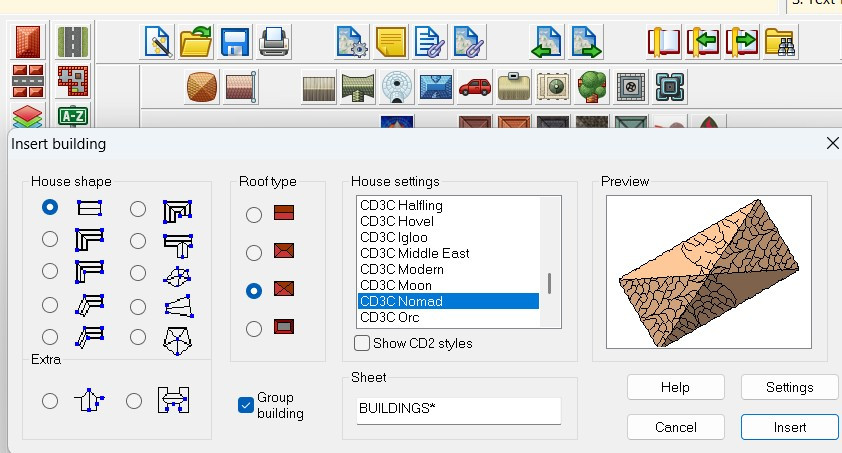
I am specifically curious about creating house symbols. They come with a shading file that I am curious about, and they respond to sheet effects in ways that many other symbols don't.
Here are some screen grabs of the symbols with the shading files to explain what I'm referring to:
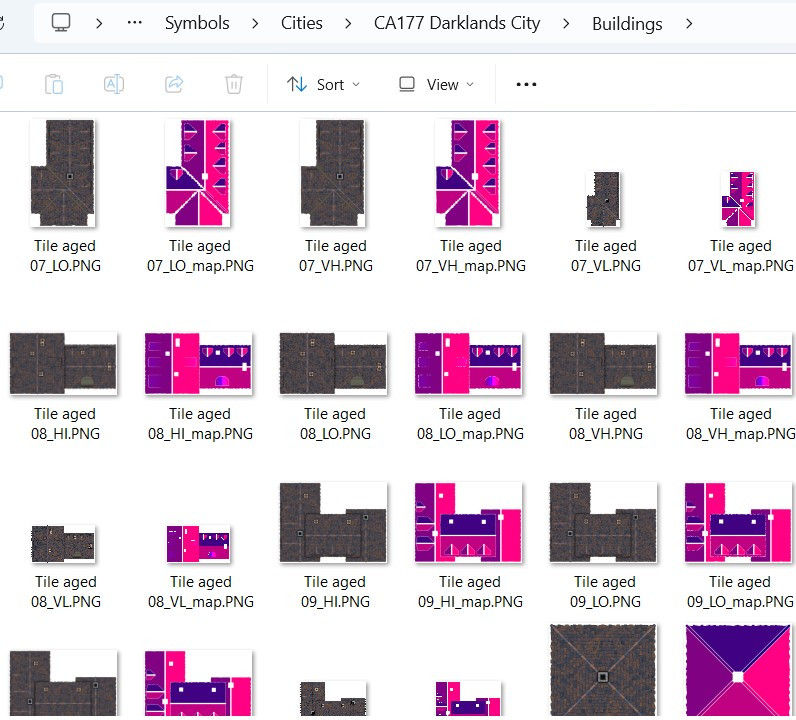
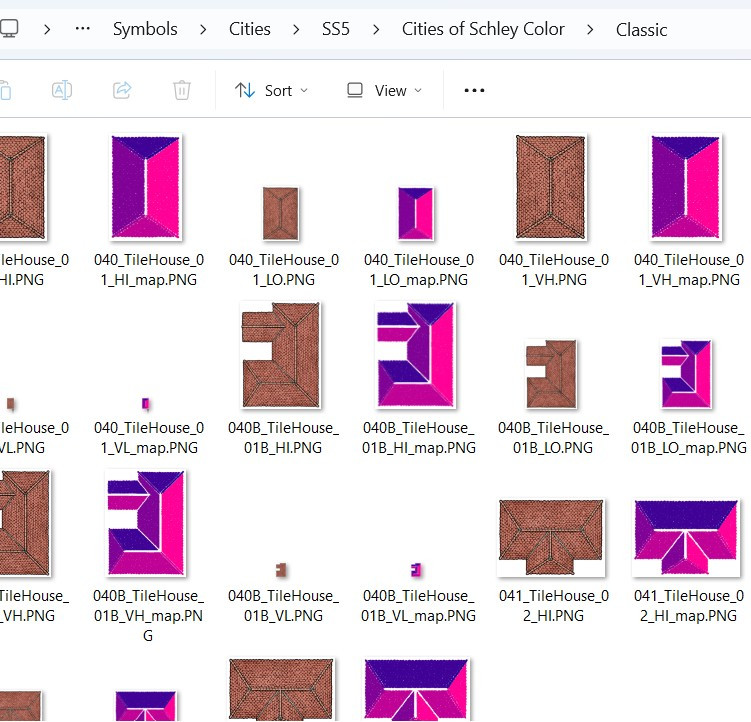
What are those shading files for? (I understand it has to do with how the building reacts to the global sun, but I am curious to learn more.)
These buildings respond to sheet effects that (usually) don't affect other symbols. For example, here's a mockup I did for use on this forum only* showing the RGB Matrix effect on building symbols from different styles. I also included some non-building symbols to show how the RGB Matrix doesn't always work on them (though apparently it does work on some but not all of Mike Schley's symbols).
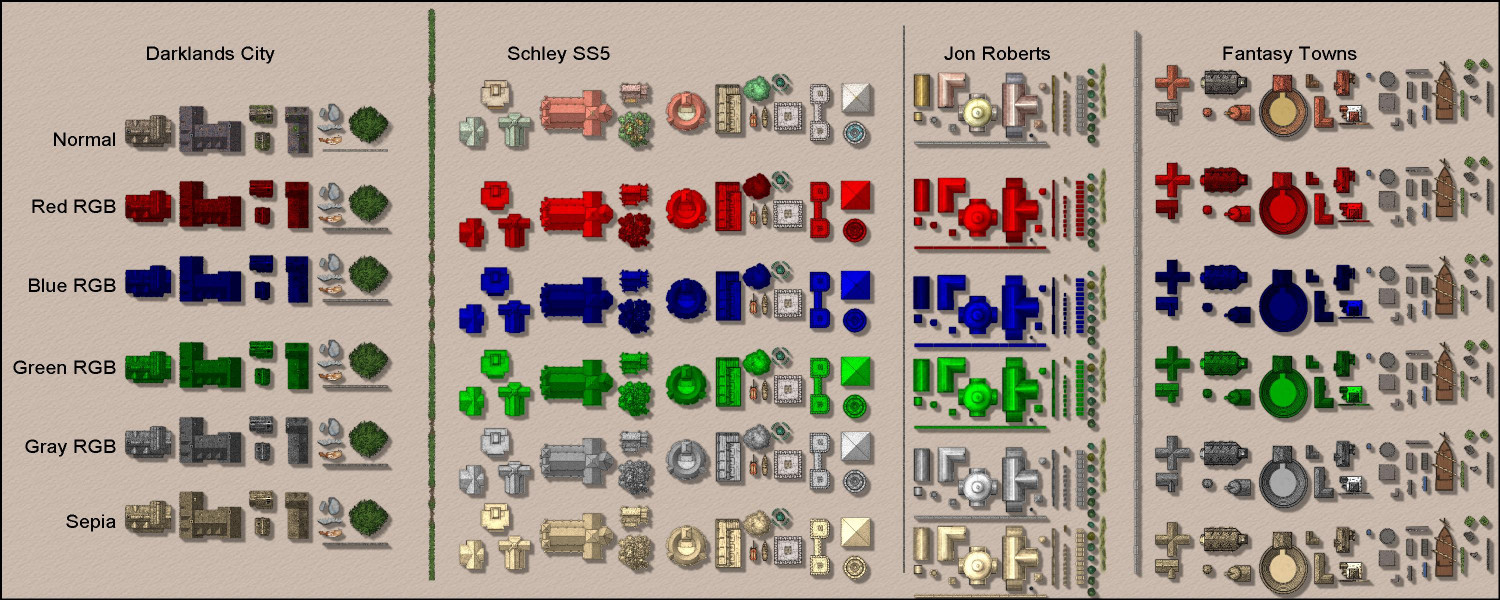
Anyway, a tutorial on how these buildings work and how to create building symbols would be different and super informative.
If folks have other ideas for Live videos they'd like to see, maybe this thread can be used for those suggestions.
Thanks!
* Please don't share this mockup outside of this forum, as it is a violation of the End User Licensing Agreement to share images of rows of CC3 symbols, as they could be used to steal ProFantasy's intellectual property. Admins: please delete this image or thread with my apologies if it itself would be considered a violation of the EULA.

-
[WIP] Haunted Mansion
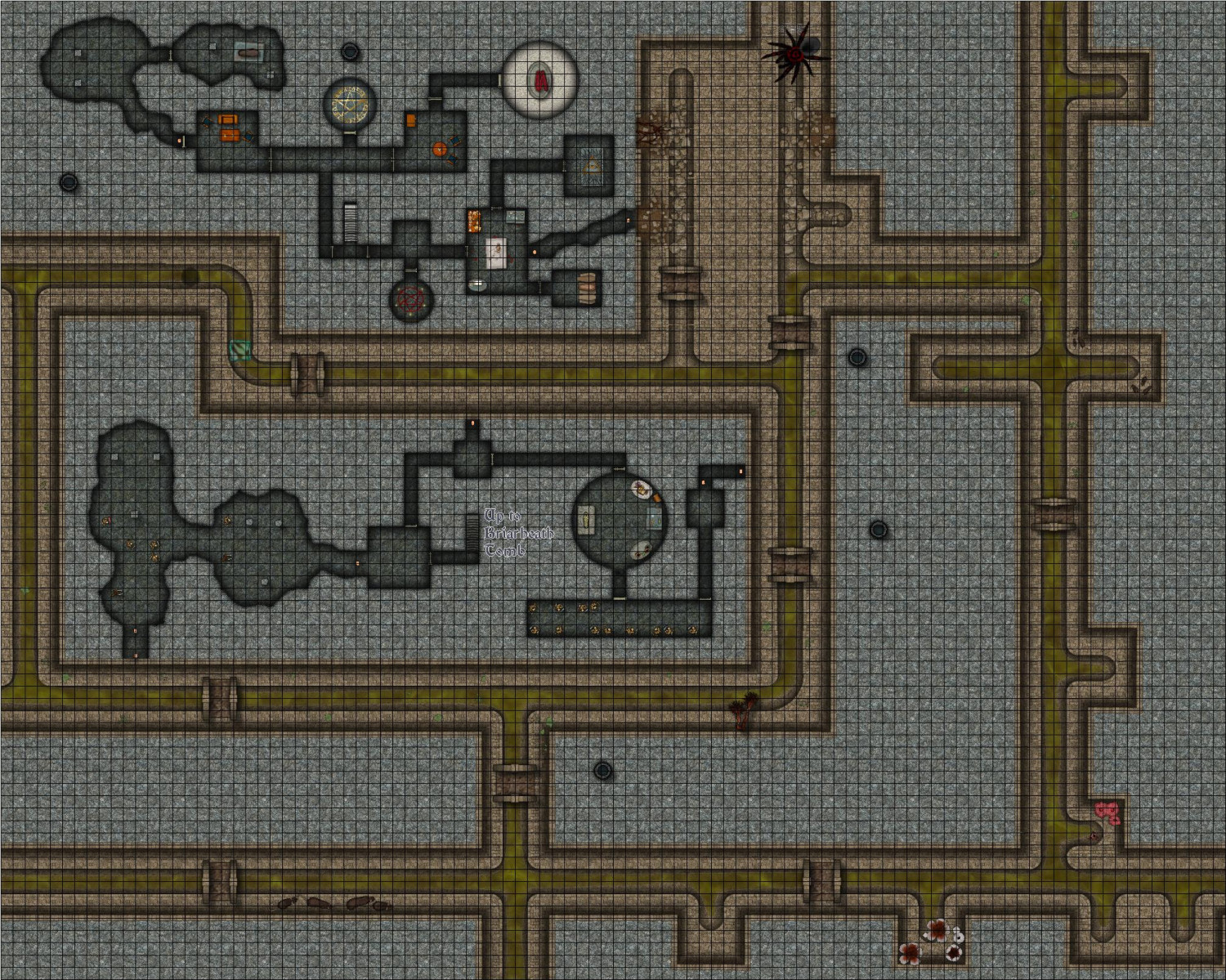
Still writing up the proper description but in the meantime, I figured I'd post what I think is the final version of the final map. More sewer encounters, including a giant spider, some rats (both giant and ordinary-sized), a gelatinous cube, and some hungry foliage. (Of course, a proper battlemap would use moveable tokens, but this is for flavor -- the creatures are on a layer that can be hidden.)
Oh, and a whole bunch of skeletons, and a few zombies -- an explanation for those empty crypts!
-
[WIP] Community Atlas - Eknapata Desert
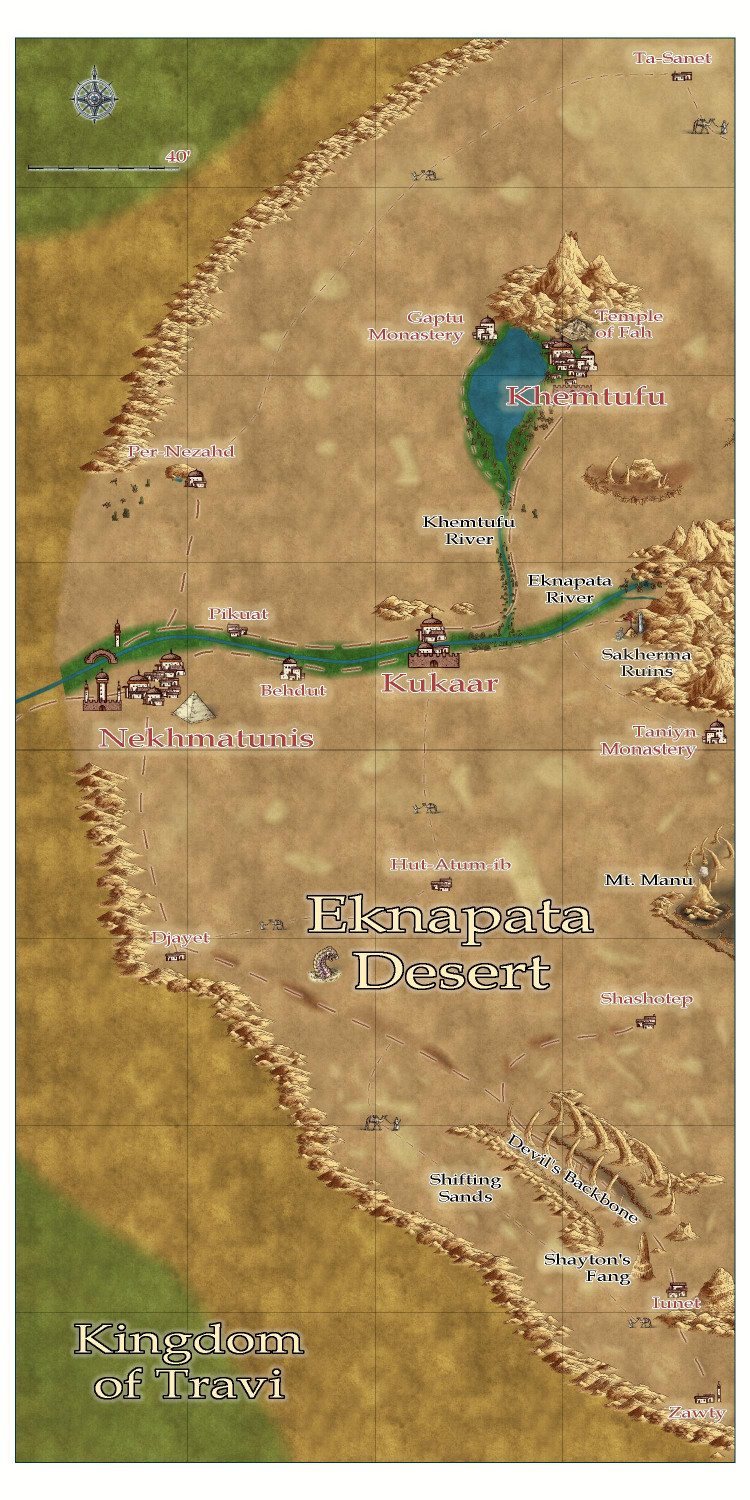
Okay, here's the next iteration.
I tried to use blotchy lighter sands to suggest sand dunes, like the Sahara Desert, and darker blotches to show more solid, earth-packed areas. Not sure if I should try to get them to blend in more with a partial transparency or something?
Tried to make the roads show up a little more, but I can't tell if it was that successful. I liked the idea that the guys with the camels could be used on the trails roads to indicate that it was more of a general route through the sands, where most travelers would need an experienced guide to make sure they don't get lost, since a proper road would be blown away or covered with sand. There is a more treacherous area in the southern part of the desert called the Devil's Backbone, where a proper road on more solid land passes next to a 50-mile long fissure. It's a dangerous route, beset by foul creatures that creep out of the fissure, especially at night. But the road is on solid land, and without a guide, it might be a safer route than braving the shifting sand dunes. (I put a tower next to one of the villages down there -- maybe a wizard is there that the adventurers just have to visit?)
Thoughts?
-
Community Atlas submissions: the Gold Coast (Doriant) and areas within it
I am ready to submit the FCW for the Eknapata Desert for the Atlas, knowing that it won't be processed until after the contest ends (though it is a parent map for a village I am submitting to the contest).
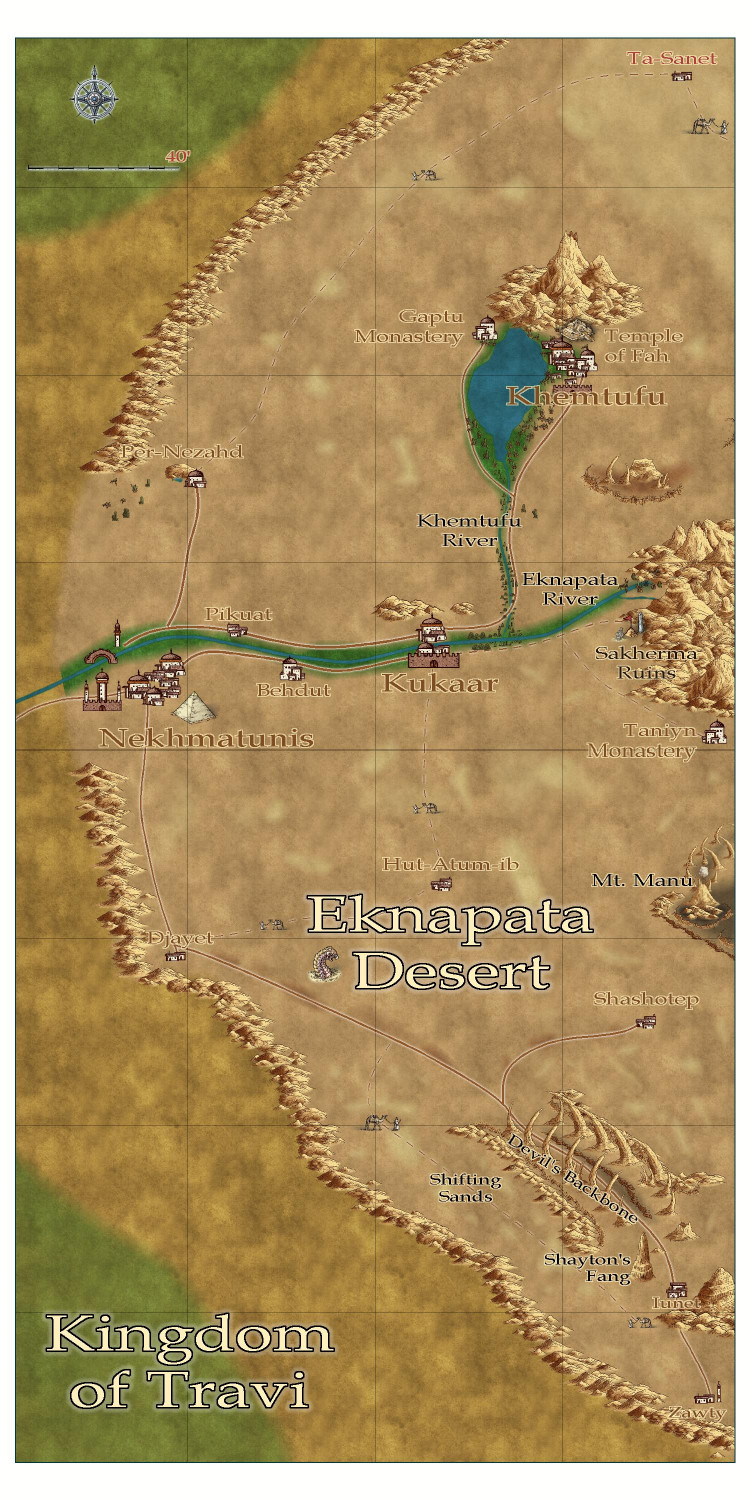
Here is the FCW, along with a PDF Description and a plain text file (with accents replaced with standard ASCII characters).


