


Royal Scribe
Royal Scribe
About
- Username
- Royal Scribe
- Joined
- Visits
- 9,727
- Last Active
- Roles
- Member
- Points
- 3,385
- Birthday
- February 5, 1968
- Location
- San Francisco, California
- Website
- https://legacy.drivethrurpg.com/browse/pub/31814/Royal-Scribe-Imaginarium
- Real Name
- Kevin
- Rank
- Mapmaker
- Badges
- 16
Latest Images
Reactions
-
[WIP] Villa Citri (Roman-style villa)
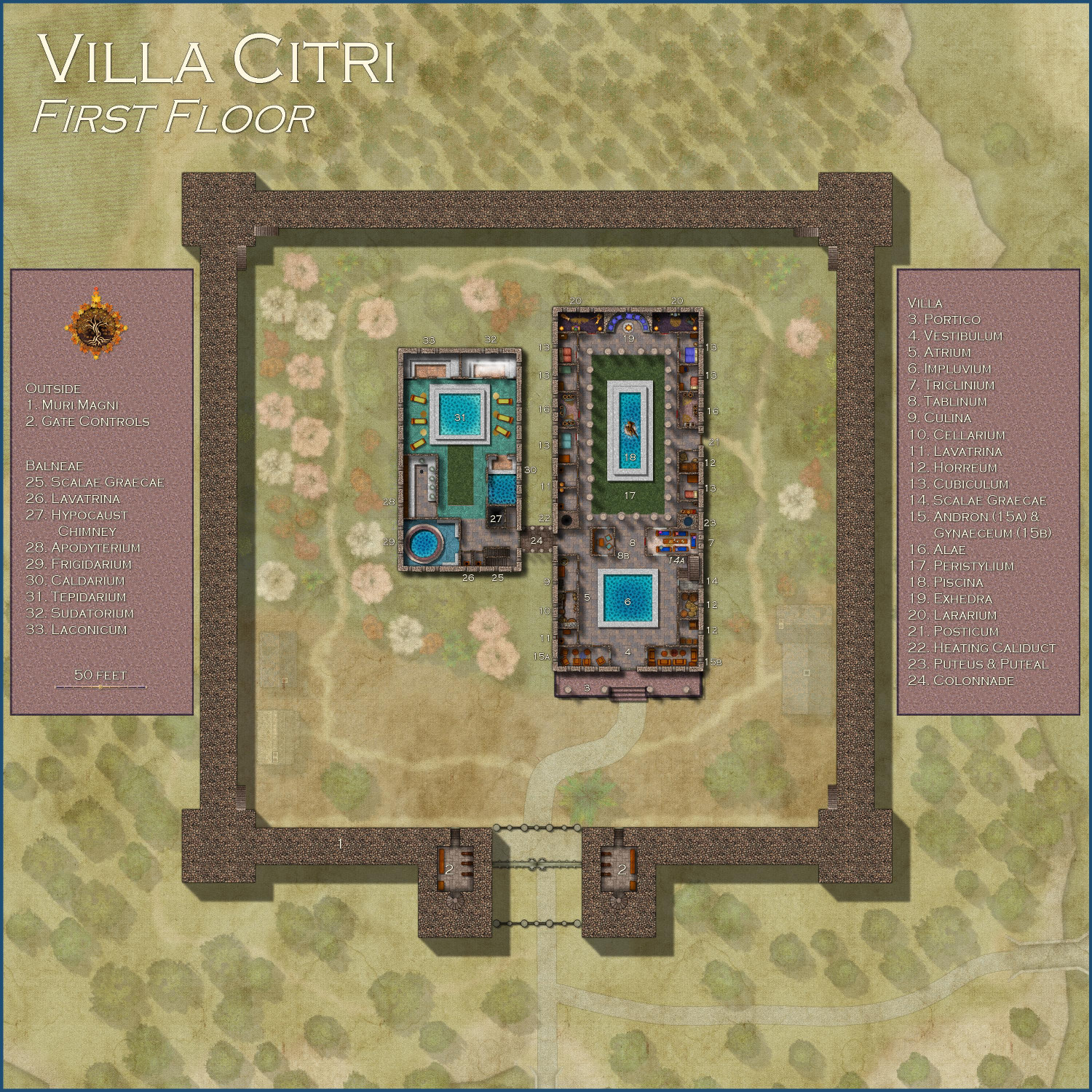
Okay, I have furnished the first floor. Couple of other changes, too:
- I reduced the size of the label numbers and mostly moved them outside the room (and the villa) that's being labeled. I hope it's clear enough what the number is labeling.
- I added a semi-transparent parchment sheet to semi-0bscure the exterior areas, similar to what I did when I mapped the interior of the wizard's tower. (It's a different parchment than that map, though -- the original was from the Beaumaris Castle annual and I didn't want to have the parchment be the only thing from that annual.)
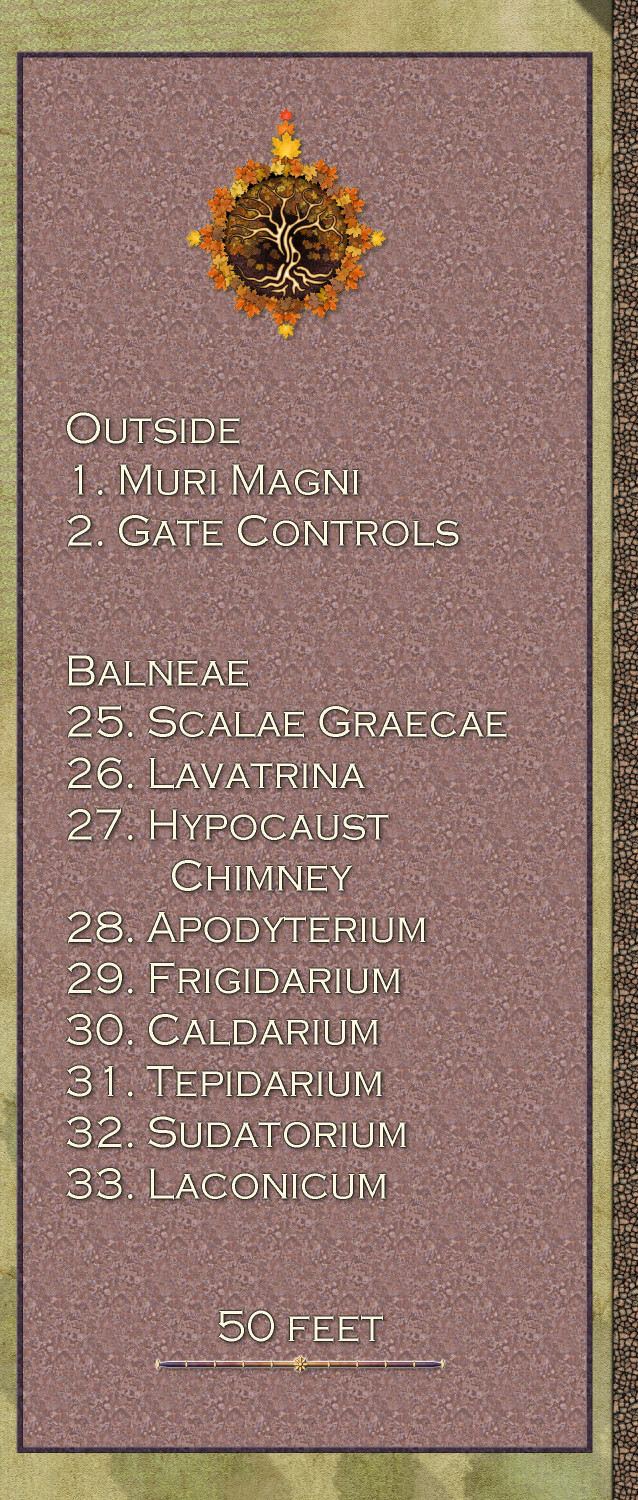
- I split the Legend in half, and because they weren't showing up very well on the parchment, I placed them on a marble background. I tried different effects to really make them look etched in stone (like removing the drop shadow and changing the glow from inner to outer), but it made it harder to read, imo.
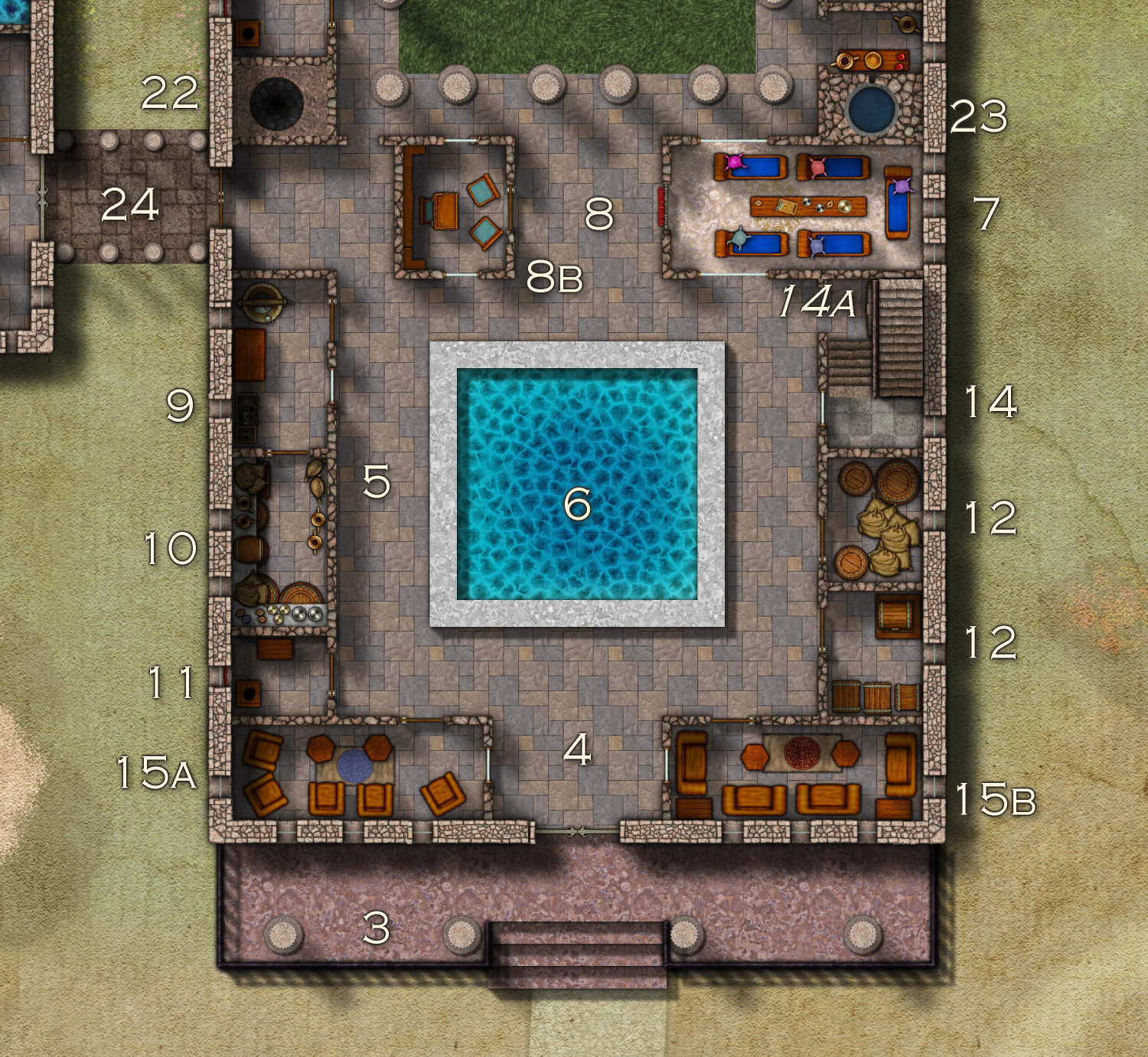
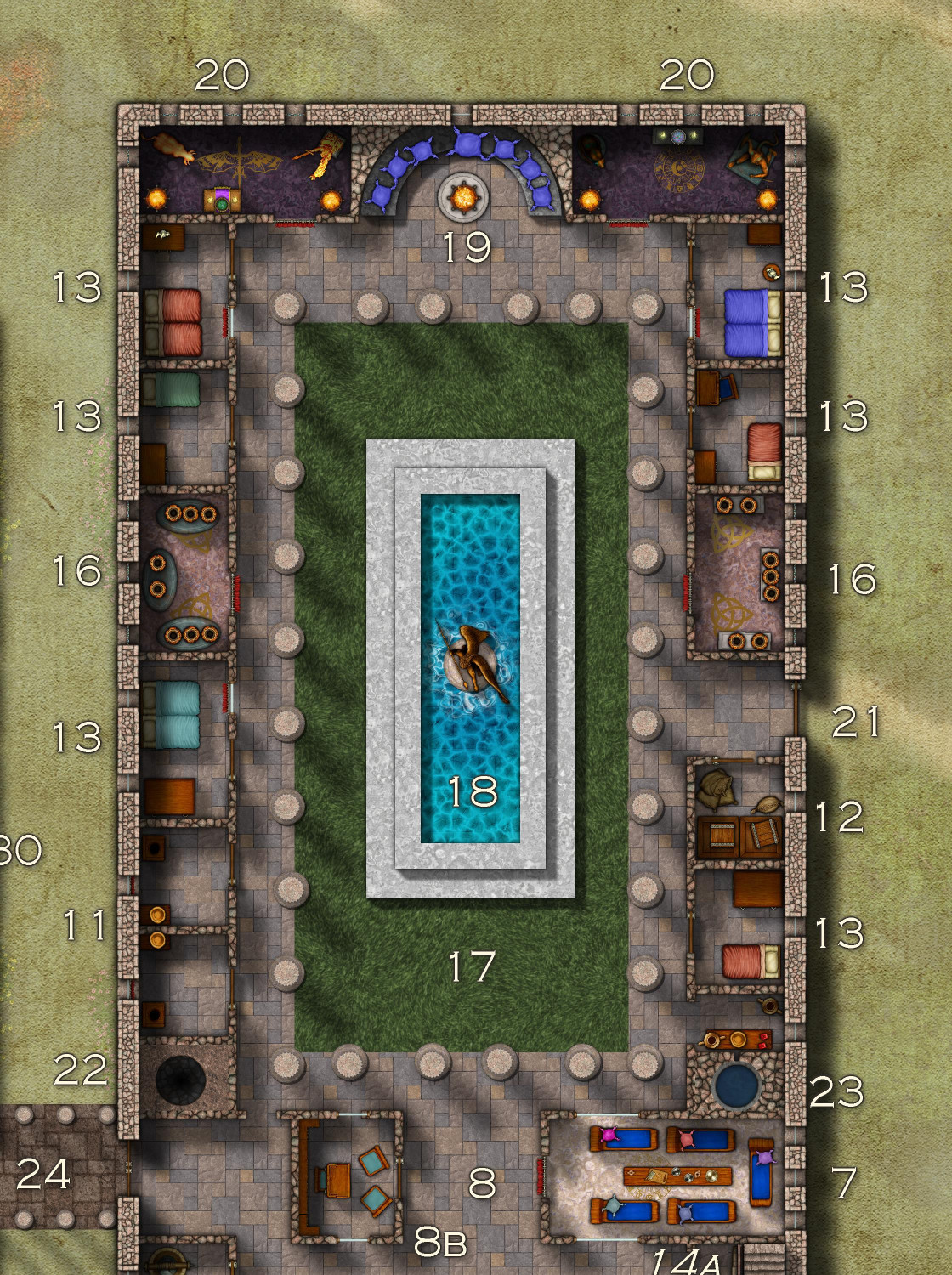
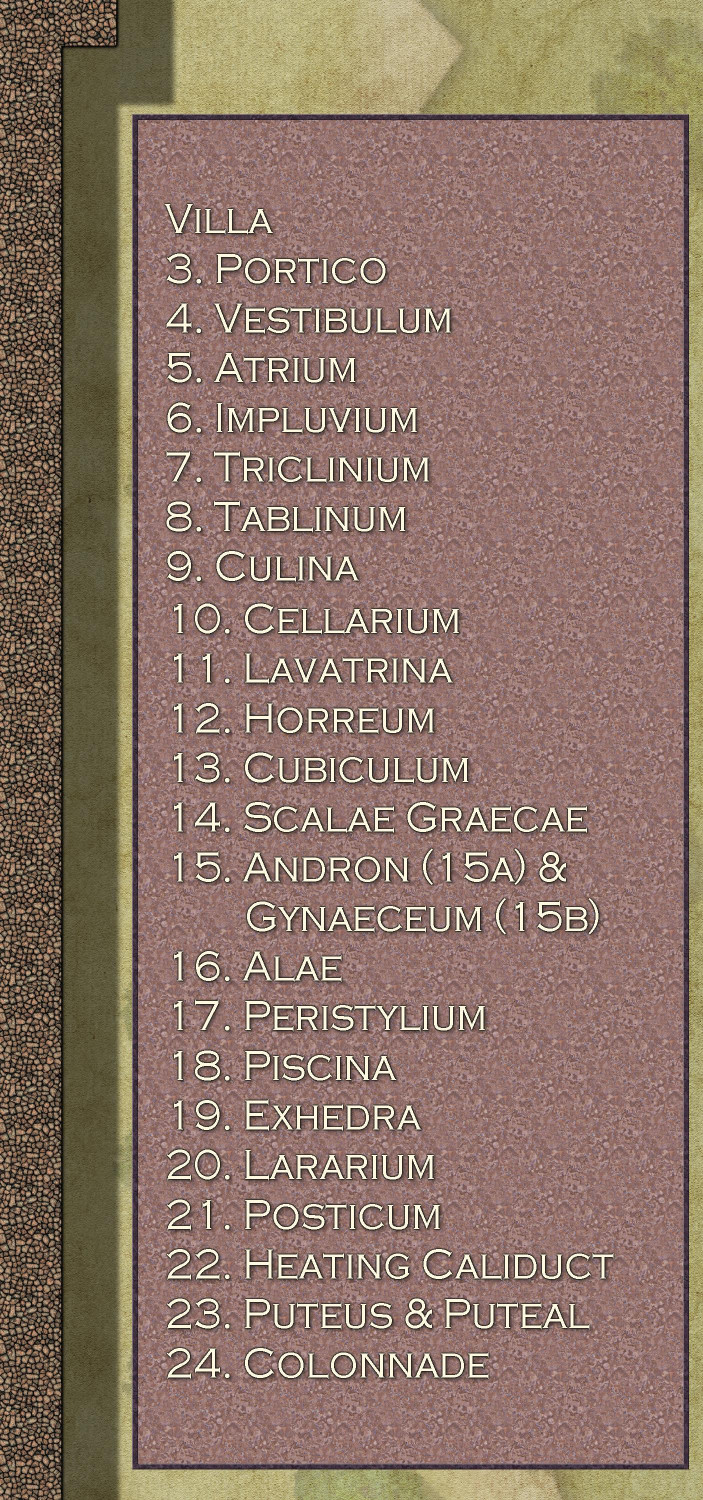
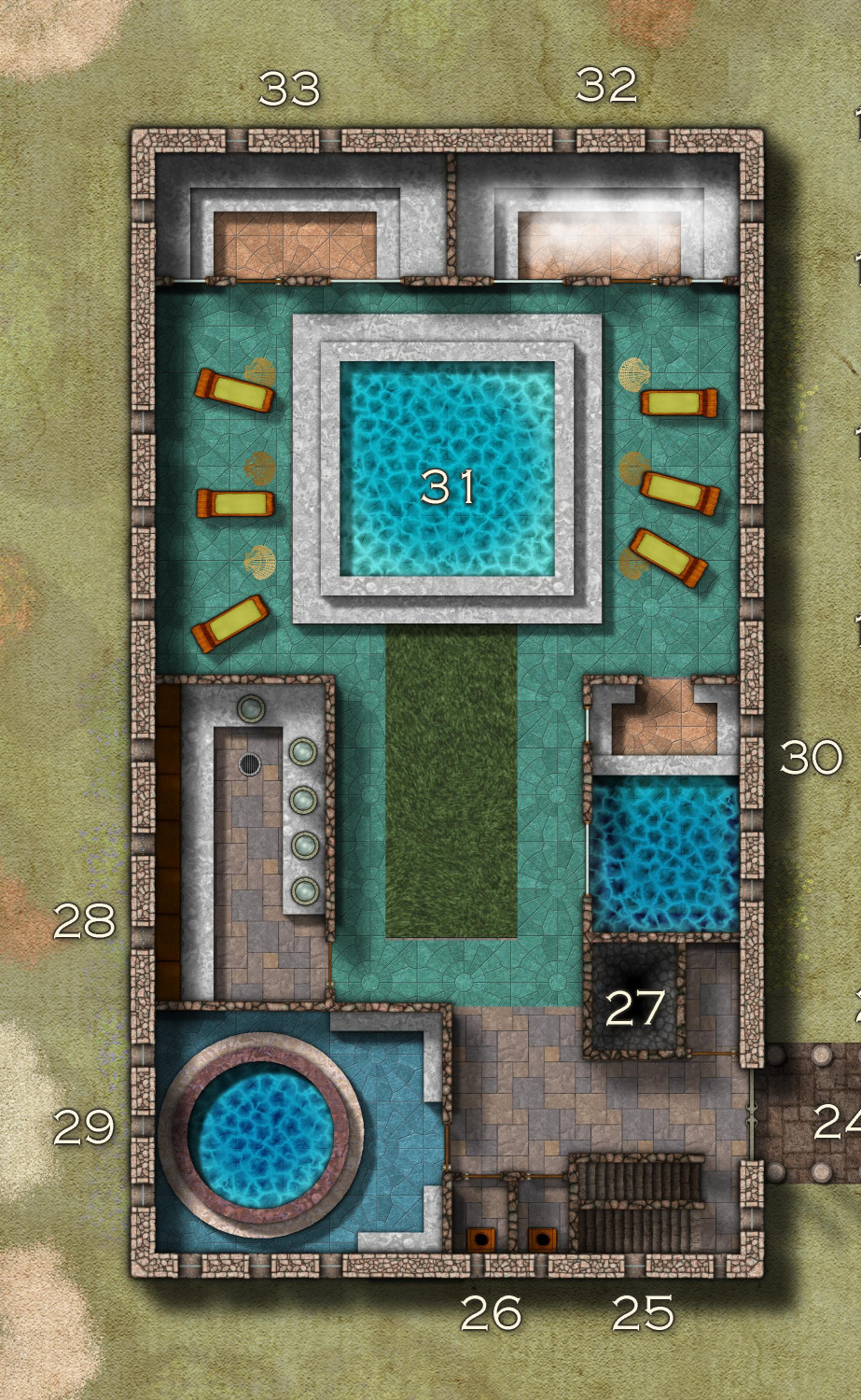




-
[WIP] Villa Citri (Roman-style villa)
Still have to add windows and doors, and furniture. Wish we had some Roman couch symbols!
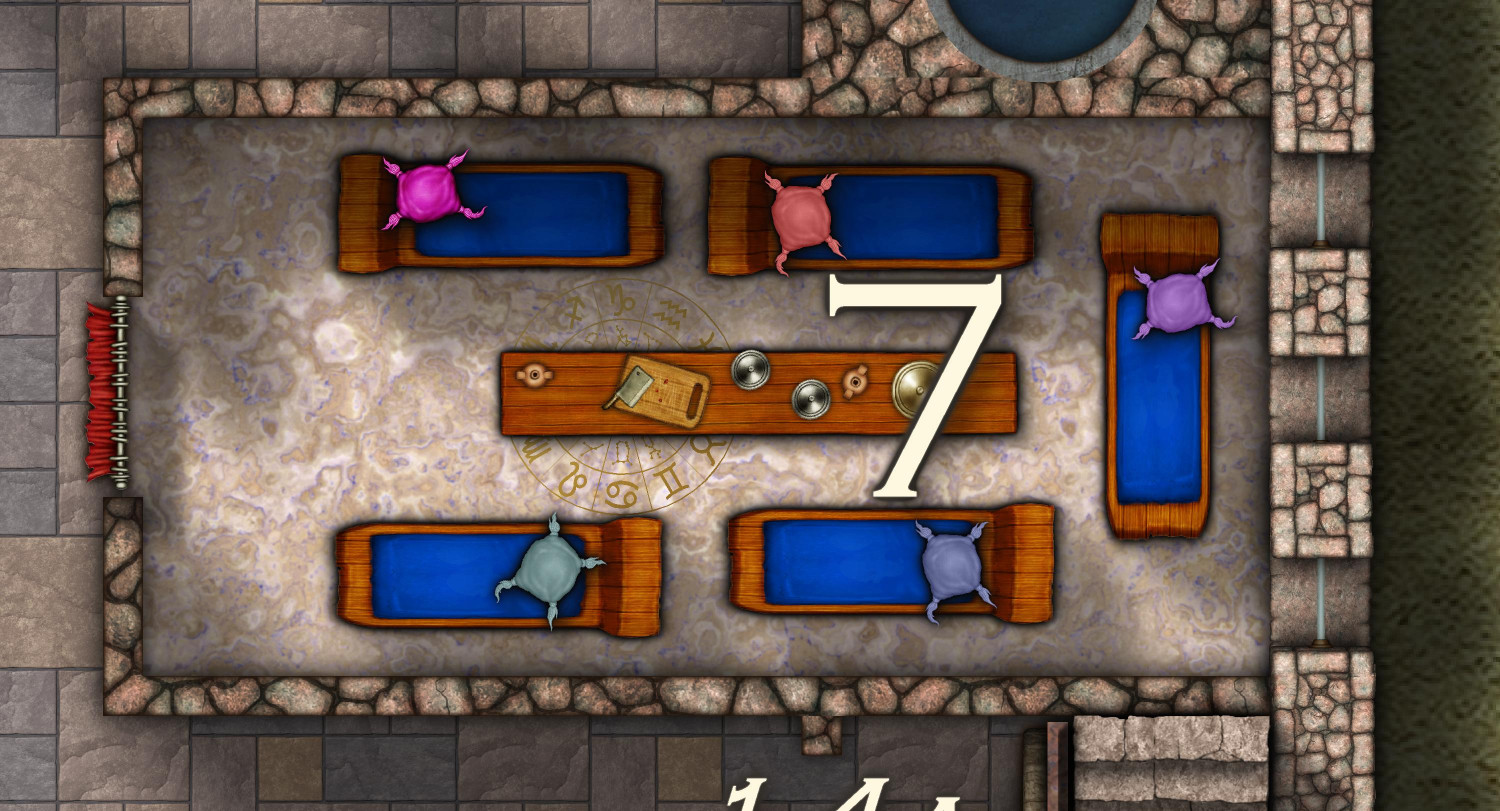
Figured out how to do Roman couches without resorting to symbols that couldn't be used in the Atlas. DD3 has an armless cushioned chair, so I just stretched it x3 on one axis. I know some Roman couches have a partial back on one side, and others have the armrest (or backrest?) on both sides, but unless someone can find a chair with two arms but no back, this will do. Does anyone know how they would have been oriented? I'm thinking that the riser side in this configuration would all be on the left side so that guests could lean back while facing their host on the coach that's along the eastern wall.

-
CC4 Overland Development Thread
However... that doesn't mean you can't set up your own alternative template to make it so ;)
I probably will! I've started doing that when mapping with Mike Schley's overland and city styles.
-
What got you into cartography?
For me, like I guess many others, it was the maps in the Lord of the Rings.
I forgot about my early mapping influences from fantasy/sci fi literature, prior to discovering D&D. The Lord of the Rings was huge, naturally (I even had Karen Wynn Fonstad's Atlas of Middle Earth). And then the maps from Pern, and The Land from Stephen Donaldson's Thomas Covenant novels.
But I forgot that the earliest for me was the maps from The Wizard of Oz books. I was obsessed with those books from around the ages of 7 to 10. I would draw the map from memory over and over again. I started to do a version in CC3 but got distracted by other projects. (The map is now in public domain so no copyright infringement!)
Around the same time, while our teacher was reading stories to us, I would doodle side-view maps of underground mansions inspired by an illustration from the children's book Babar and Father Christmas, which you can see on the bottom of this page:
-
[WIP] Villa Citri (Roman-style villa)
Here's a first pass at the first floor of the main villa. There's more work to be done (like windows, and maybe furniture), but in the meantime, I wanted to solicit feedback on what types of rooms I'm missing. As this is a fantasy world, I'm absolutely fine blurring the lines on what would be strictly Roman, and mixing in things that would be more medieval or fantasy.
Also, bear in mind that this is just the ground floor. The basement will include a larder, wine cellar, and access to the sewers. The upper floors will have bedroom suites overlooking the courtyard. I plan to have a library on the upper floor of the baths next door.
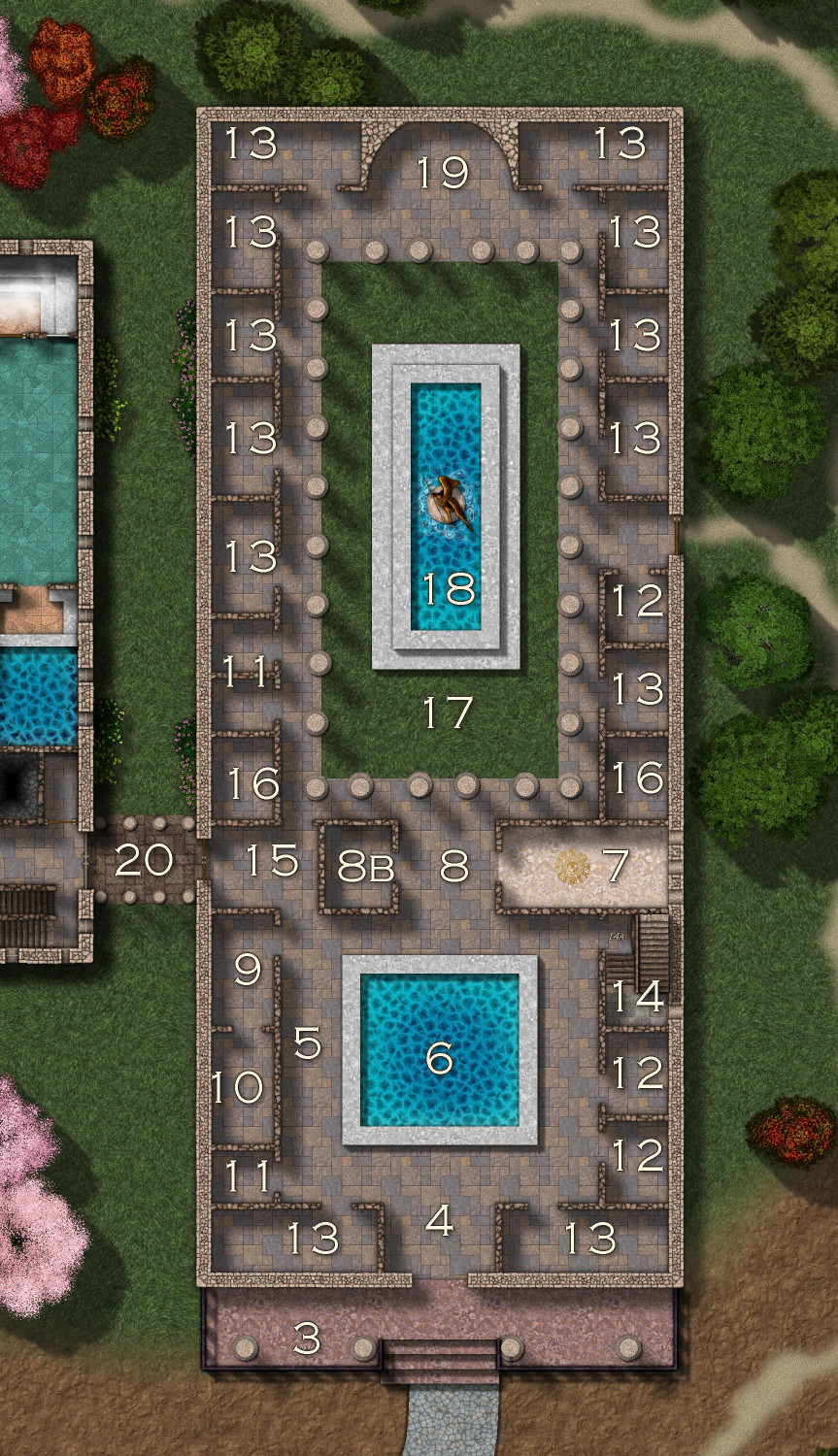
Here's the description for the numbered labels:
- Fortification Walls (not shown here)
- Gatehouse (not shown here)
- Portico - Covered porch
- Vestibulum - entry to Atrium
- Atrium - The central hall, where guests were greeted and the family's household gods were honored. It has an open roof (compluvium) and a rainwater pool (impluvium)
- Impluvium - Shallow pool that collects rainwater which is then carried by pipes to the kitchen
- Triclinium - The dining room where guests reclined on couches to eat
- Tablinum - The office or study of the head of the household, often located between the atrium and peristyle. The floorplans I've seen always show it without doors, so the head of the household can keep an eye on things, but I have chosen to add an enclosed office next to it.
- Culina - The kitchen
- Cellarium - The pantry.
- Lavatrina - Lavatories
- Horreum - Storage rooms
- Cubiculum - Bedrooms. I have a lot on this floor, but since the upper floors are intended to be mostly bedrooms, I am very much open to converting some to other uses if you can think of things I should add.
- Scalae Graecae - Staircases going to second floor. (The term "scalae" referred to a staircase that was open on one side; "scalae graecae" referred staircases with walls on both sides.) You may not be able to see it, but an archway under the stairs going up is meant to lead to stairs going down to the basement.
- Andron - In ancient Greece, this room was a room for men only, with couches arranged in a U-shape. By Roman times, it could also mean a room that was a passway between sections of the villa. (Open to changing this name if my sources are bogus.) In this villa, it provides access between the atrium, the peristylium, and the colonnade so that folks don't have to pass through the tablinum when it's in use.
- Alae - My sources about what this is are all over the place. As far as I can tell, they were once used as chambers with windows to allow daylight to the rest of the villa, but this became less important once the compluvium was added to allow light from the sky. They later became used as storage rooms, or as rooms to honor the ancestors. I've decided to go with the "honor the gods and ancestors" meaning.
- Peristylium - An open-air courtyard, often a garden, located at the back of the house.
- Piscina - Originally a fishing pond, the term later evolved to also refer to man-made pools and fountains.
- Exhedra - Semicircular or semi-open space or room, often found in ancient Greek and Roman architecture, used for conversation and seating. I am going to put in a semicircular bench here, and maybe a cozy brazier. Nice place to sit and chat overlooking the courtyard on those warm summer evenings.
- Colonnade - Unwalled, covered walkway lined with columns that leads to the bathhouse.
- Posticum - I forgot to label this one, but it's the read/side exit.
What am I missing? What would you want to see in the main floor of a wealthy noble's country estate?