
Monsen
Monsen
About
- Username
- Monsen
- Joined
- Visits
- 723
- Last Active
- Roles
- Administrator
- Points
- 9,029
- Birthday
- May 14, 1976
- Location
- Bergen, Norway
- Website
- https://atlas.monsen.cc
- Real Name
- Remy Monsen
- Rank
- Cartographer
- Badges
- 27
Latest Images
-
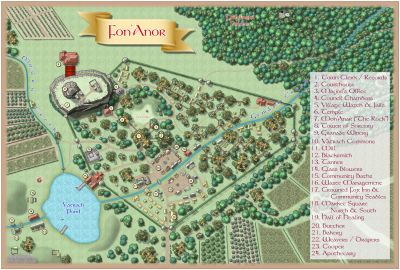
How do you include CC3 button icons in forum posts?
You can include them with the code
:BUTTON_NAME:and|BUTTON_NAME|(With and without text)The list is here.


-
Another one with scaling issues on metric maps
That large scale bar is actually correct, it's just that it is a bit larger than you want.
That particular scale bar is 50 map units large, so at scale 1, it will fill the entire map width. But you can use that knowledge to make it the size you want it. Because if it is 50 at scale one, well, then it will be 5 at scale 0.1.
I might not have been spesific enough when I said scale bars should always be placed at scale 1. What I really should have said is "don't apply metric conversion to the scale for scale bars.". Placing it at 0.3048 will never work. But sensible scaling based on 1 as the default value does, so using 0.1 as I described above, it will be one tenth of it's "intended" size, which should work fine for your map. Or maybe you want 0.2 (which then results in a 10m long scalebar)

-
Help understanding map size and the grid tool
Looks like you have just drawn outside the map border instead of properly enlarging the map. This can cause some issues with certain tools that tries to operate within bounds.
Fortunately, this is easy to fix. If you hide all layers but MAP BORDER, you should see a set of 4 lines forming a rectangle (usually bright green). This is the actual map border. Simply move these, or erase and redraw them where you need them to be. They are just basic lines, on the MAP BORDER layer and BACKGROUND sheet.
(Feel free to unhide more sheets and layers when moving them, I just told you to hide everything to easily see them. You'll probably want to have most stuff hidden though, to make them a bit easier to manipulate without accidentally moving other stuff. Note also that the MAP BORDER layer is usually frozen, if so, it needs to be thawed before you can manipulate the entities on it)
If the lines are already correctly placed, it can also indicate that you have rogue entities on the MAP BORDER layer, ONLY the four lines forming this outline should be there, other entities will confuse the tools
Also note that for the grid in particular, you can also click on Select point in the dialog to place the grid manually to control exactly where it ends up.

-
Another one with scaling issues on metric maps
When working with metric maps, make sure to set the symbol scale to 1 before placing them. Scale bars are scaled in map units, so they should always be scaled to 1 when placed to appear correct.
Other symbols are scaled for imperial by default, and should be placed at scale o.3048. This should already be set as the default value in metric maps.
To manually type in the size, just right click in your map with the symbol at your cursor. Here you can type in the desired scale for the symbol, or just hit the set normal button to go back to the default scale for that template. To scale things already in your map, you can also just type the desired scale on the command line when CC3+ requests it, instead of scaling by moving your mouse, this allow you to easily get the exact value.
-
Changing Background Colors
The easiest is to follow the instruction @Raiko provided above.
But for some more context. The Change background color command is a legacy command from back when backgrounds were solid colors, before we started using bitmap fills. When an entity has a bitmap fill, the color won't be visible (because you see the fill instead), so this command will appear to do nothing. As such, just ignore it unless you work with a map with a solid color background.
As for the error message about "FREEZE BACKGROUND", the cause for this is that the macro behind the command attempts to freeze the background layer, so this is a command, not the name of a layer it looks for. However, if something goes wrong with the macro (like it can't find a background entity [not all maps have one]), that can lead the macro to interpret that line as input to the layer selection instead, thereby complaining it can't find a layer with that name.