


Monsen
Monsen
About
- Username
- Monsen
- Joined
- Visits
- 723
- Last Active
- Roles
- Administrator
- Points
- 9,029
- Birthday
- May 14, 1976
- Location
- Bergen, Norway
- Website
- https://atlas.monsen.cc
- Real Name
- Remy Monsen
- Rank
- Cartographer
- Badges
- 27
Latest Images
-
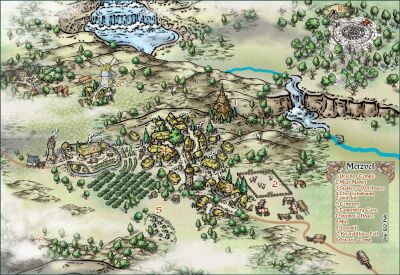
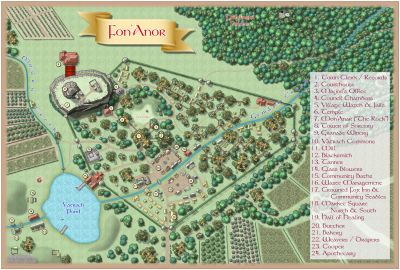
Community Atlas - Artemisia - Spiros Isle - Archnesa Woods




-
Does anyone know of Cosmographer Line Art Symbol Libraries?
Yes. If it is already a symbol in the drawing, go to Symbols -> Symbol Manager, select the symbols from the list, and use the save as catalog to create a new catalog with the symbols.
If it isn't already a symbol, but just loose entities, you can define them as a symbol first using Symbols -> Define Symbol, and then you can export it to a symbol catalog file as described above.
To add it to an existing catalog, do as above, then open up the existing catalog for editing by opening it up using file -> open as opposed to just open it in the symbol catalog window, then go to Symbols -> Symbol Manager, hit Import, and pick the catalog file you created above.

-
The Expanse rpg; several starships, Annual scifi tiles and Cosmographer
They way I am envisioning a huge ship like this isn't huge individual areas dedicated to one thing, but more like divided up into "residential zone A", "residential zone B" and so on, where each individual zone have all the services needed for that zone, such as kitchens, storage, living quarters, recreation, security and more. Each zone being more or less self-contained (maybe even designed to be able to be isolated in the case of an emergency.
Actually similar to how a city today works. You don't find all the kitchens of the city in one corner, they are distributed out so people have access to a local restaurant without crossing the entire city.
Outside the residential zones which contains everything needed for the citicens, you may have some large engineering sections (but even a lot of that would probably be part of a residential zone, you can't risk having all the oxygen production in one part of the ship), maybe a huge hangar deck for the main transport ships bringing supplies and people on board. Maybe a command section, but that again probably would just be a tiny spec at this scale.
-
Deepzoom images for web display
Now to get a 20,000x20,000 pic.
That's doable, but you'll need to export the map in sections to accomplish that. I've done up to 200,000 x 200,000 that way.
![[Deleted User]](https://secure.gravatar.com/avatar/c75d9a245b74d9c59be0999ea81ca541/?default=https%3A%2F%2Fvanillicon.com%2F92add7f8c954488718110edc4896ad39_200.png&rating=g&size=200)
-
duplicating the Tome pdf file
The file is locked for editing to ensure people don't create and publish modified versions of the document. Unfortunately, that also prevents creating personal bookmarks.
There shouldn't be any problem duplicating the file. All the pdf viewers I load the protected file up in allows me to use
save asto save a copy, or I can just go into the directory (@documentation) and make a copy manually using the windows file explorer. But none of this will change the write protection of the file however, it will just give you a second protected copy.To avoid scrolling to the page, I recommend using the bookmarks already there. Every single heading in the book is already bookmarked in the bookmark bar in the pdf file, displayed to the left in most pdf viewers. The entries are collapsed by default to avoid having to scroll through tons of bookmarks, it is easier to just expand the node you need. You can also click on the entries on the Table of Content pages to go directly to the page. If you know the page number you want, most pdf viewers also lets you easily jump directly to the page, in Acrobat for example, the shortcut is Shift+Ctrl+N, or simply click into the page box in the navigation bar and type in the page number there

-
White Boxes, Black X's on my map
I have a blog article about X'es that might help you:
-
Doors don't cut walls
Are your walls on the right layer? The cutting feature uses the layer to identify the entity type so that it doesn't cut the floor instead. The walls have to be on the WALLS layer for the cutting to work.
Also, it is an advantage to turn off snap when working with the cutting symbols, especially if you are trying to hit angled walls or walls not exactly on the snap grid.


-
Subway Station Questions
- That's highly variable. The length of the platform is typically related to the length of the longest train stopping there, which is again dependent on the number of passengers in peak periods. But I've also traveled to subway stations that are actually to small to accommodate the entire train, so they usually announce on the PA system that if you want to get off, the X rear doors won't open, so start moving. But going with a length approximately similar to the train length itself is a good starting point, at least based on my own experiences.
- I'm not an expert on that and don't fancy running the calculations myself, but this wikipedia page has some interesting data and formula: https://en.wikipedia.org/wiki/Minimum_railway_curve_radius
- There is both a dimpled texture (but perhaps not close enough, and it is black) and some nice black&yellow hazard stripes in the @Bitmaps\Tiles\Storyweaver HighSpace folder
-
Odd behavior for layer
When you hide ALL other layers, you also hide the symbol definition layer, which cause all symbols to be hidden, no matter what layer they are on.
-
More Symbols Like SS6 (Isometric Cities)
Individual images makes life much easier. It is also very helpful if the images have good (but not too long) descriptive file names, and for larger collections, organizing the images into different folders (based on the content of the images, not Metadata like file size or resolution) also helps a lot.
Software like CC3+ (and our competitors) all use the concept of symbols that can be placed, and doesn't have image editor features that allows part of an image to be copied and placed, which is why such combined symbol sheets works poorly. Users need to use an image editor to first extract each symbol and save to a separate file, and then insert that.