
Monsen
Monsen
About
- Username
- Monsen
- Joined
- Visits
- 723
- Last Active
- Roles
- Administrator
- Points
- 9,029
- Birthday
- May 14, 1976
- Location
- Bergen, Norway
- Website
- https://atlas.monsen.cc
- Real Name
- Remy Monsen
- Rank
- Cartographer
- Badges
- 27
Latest Images
-
cvtpfimg.exe tagged as a virus
Probably a false positive. This is an old file you're not going to need, but it isn't a virus, assuming your copy is unmodified. Should be 1302528 bytes, last modified June 15th 2007, 04:31 (Exact time may vary due to time zone offset in the display).



-
Quick Move is enlarging/reducing size
I accidentally scale often myself. The solution I find works best with both regular move and quick move is to just keep my hand completely off the mouse until I have released all keys.
The commands for the regular move command is
MOV, but that can also scale, so no different from quick move in that regard.Also note that you can edit menu files and add shortcut keys to any command there, if you need quick access to frequently used commands.
If you don't need to see the object while moving, you can use non-visual move -
MOVE- this command does not allow any kind of scaling, but it is a bit harder to see what you are doing when using it.
-
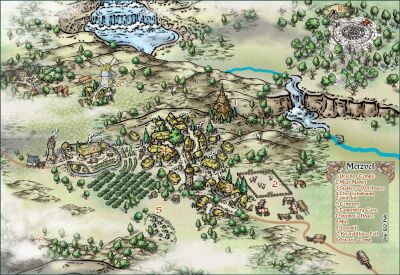
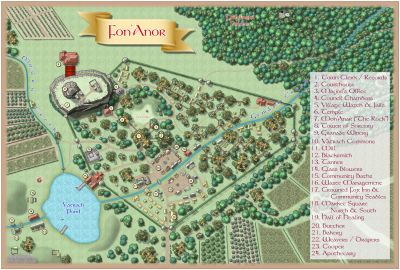
Live Mapping: Fantasy Town
Yes, the important things is the images on disk, not the symbol themselves inside CC3+.
![[Deleted User]](https://secure.gravatar.com/avatar/c75d9a245b74d9c59be0999ea81ca541/?default=https%3A%2F%2Fvanillicon.com%2F92add7f8c954488718110edc4896ad39_200.png&rating=g&size=200)
-
What is Steampunk...
I think it is important to realize Steampunk is fantasy though. And with that I mean, they do fantastic things with the steam that isn't possible at all under real world physics. In many cases, you see them approaching semi-modern concepts (while still being in the Victorian age) but using steam instead of electricity and more practical fuels. So when drawing steampunk, it isn't "will this be possible using steam", but more "does this seem cool and somewhat plausible if we ignore actual physics?" all the way to "this doesn't seem plausible at all, but it is damn cool".
Many steampunk settings uses things like automatons, which are large steam-powered robots, both "human-like" and "this-is-a-big-machine" like. Sometimes intelligent, self-operating, in other settings controlled by an operator.
I like the city-building computer game Frostpunk for it's visuals. It' is basically Steampunk in the cold (concept art) (automatons)
Another interesting omputer game that takes the concept pretty far and some more, is Sunless Skies. Here you pilot a flying locomotive through the void between the remains of a broken world floating as islands in the void. Even the sun itself is an artificial steam-powered contraption.
For overland maps, I think the difference lies much in the symbology used. Steampunk likes to say, "Hey, here I am!". A typical steampunk map would be something in between a modern map and a fantasy map, and would use symbols and map decorations with a steampunk flair. Symbols would look more like the fantasy symbols, i.e. drawn from an isometric view, not the minimalist top-down symbols on modern maps. Instead of a caravan representing a trade route, you would see a train symbol, you may have dirigibles instead of ships, the city symbols would probably have some smoke stacks and visible pipework in the artwork, and so on.


-
Beginner questions
-How do i add a border to land? I have drawn some overland and i want to add a border to it after i made it. I also want to control it's style, colour and thickness. Is that possible without having to trace the whole thing?
With border, I assume you mean an outline and not a political border here. There are several way to accomplish this, but the quickest is usually just make a copy of the landmass using :CC2COPY: or using :CC2OUTLINE: and then just change the properties of the copy/outline to give it the appearance you want.
Another option is to use effects, throw an outer glow on it for example.
-When i try to draw using a custom drawing tool (by selecting a type of drawing on the right and then changing the style and layers on the top), the drawing is not limited to the map border but instead goes out of borders. Is there a way to fix this?
No. The ability to stick to the map border is a feature of the drawing tolls which the basic commands don't have. Of course, you can always make your own drawing tool by going to :CC2DRAWTOOLS: and set it up as you wish. It can be set up to use the current properties, so you can make it behave almost like a basic command, but with the added features of the more advanced drawing tools.
-When i have multiple objects' edges on the same place, how do i select only one of them?
If they overlap completely, use the different selection modifiers like selecting by fill, color or layer. You'll find all the details for this in the editing chapter in the manual, or an even more detailed overview here: https://forum.profantasy.com/discussion/7404/command-of-the-week-selections-week-28
Note that if the entities are on different sheets or layers, you can just hide the appropriate sheets/layers so you only see the right one.

-
Changing road width
Anything that makes two entities do it by adding both a main entity and the outline. In Sue's first screenshot above, you can see there are two buttons, "Properties", which lets you change the settings for the main entity, and Outline, which lets you change settings for the outline entity (Which doesn't actually have to be an outline, it was just named like that because that was it's initial purpose)
When you are dealing with with and outline entities, just change it both places. Keep in mind that the values were probably just a tad different originally, so keep that difference in your changed versions.

-
Transparency Acne - Lesson Learned
This happens because the RGB Matrix effects is vulnerable to TA as well. It won't make gigantic holes, since it doesn't do any edge effects, but it still need to figure out what parts to color, so the same pixels that make giant holes with edge fade are left out by RGB Matrix, leaving the edge fade to produce the known and loved TA holes.

-
WIP: birth of the firedemon battlemap
Are those lines 0-width lines? Try making them a bit wider, thin lines can disappear when output to an image, which again would prevent them from having any effect.
-
Executing a macro from the command line
It is not possible to call such things from the command line. CC3+ wasn't written with batch processing in mind.
You can talk to CC3+ from an external program using the Intercom interface however, which means you can send commands from an external program which are then run as commands inside CC3+. I don't have a tutorial for that on hand. Some information can be found in this old blog by @saunderl http://cc3-developer.blogspot.com/search/label/Intercom
The second alternative is to make your own XP which opens up a lot of possibilities for expanding CC3+ with your own code. I don't think you'll be able to implement more command line options or prevent the gui from loading though, those things are (most probably) beyond what an XP can do.


-
Question re scale.
One way you could approach it is to decide the size of the average house. A medieval or earlier house for commoners were usually a tiny affair, often no bigger than my living room. Then, based on your house size, so you can used that against the sketch to determine size.