

Royal Scribe
Royal Scribe
About
- Username
- Royal Scribe
- Joined
- Visits
- 9,534
- Last Active
- Roles
- Member
- Points
- 3,353
- Birthday
- February 5, 1968
- Location
- San Francisco, California
- Website
- https://legacy.drivethrurpg.com/browse/pub/31814/Royal-Scribe-Imaginarium
- Real Name
- Kevin
- Rank
- Mapmaker
- Badges
- 16
Latest Images
Reactions
-
Aspidochelone
Today would have been my grandmother's 105th birthday (she passed away six years ago). She was fond of turtles, so in her memory, I designed this silly little map of an aspidochelone, a giant turtle.
In mythology, the Aspidochelone was a sea creature portrayed as either a giant whale or giant turtle -- a creature so large that it would be mistaken for an island covered with sand dunes and vegetation. Sailors would camp out on the "island," but when the heat from their campfires awakened the creature, it would plunge beneath the waves, killing the intruders.
In my campaign world, one of my religions is loosely inspired by astrology. There are twelve gods depicted as mythological creatures who are shown in the heavens as constellations of stars. They each consecutively take precedence for one-twelfth of the year, when their constellation is most prominent. Each is assigned to one of the four elements, as well as one of three qualities. Chelys, the Aspidochelone, is one of these gods. He represents Water Resolute, "the great sea depths in their untamed but passive state." (The other water gods are: Tuthose, the kraken, Water Ascendant: water in its wildest, untamed form, like hurricanes at sea; and Melquart, the hippocampus, Water Adaptive: water tamed for use in drinking, cleaning, powering watermills, and the like. Chelys' month is the eleventh month of the Common Calendar at the second month of Autumn. (The calendar begins on the Winter Solstice.)
Anyway, here is an aspidochelone.
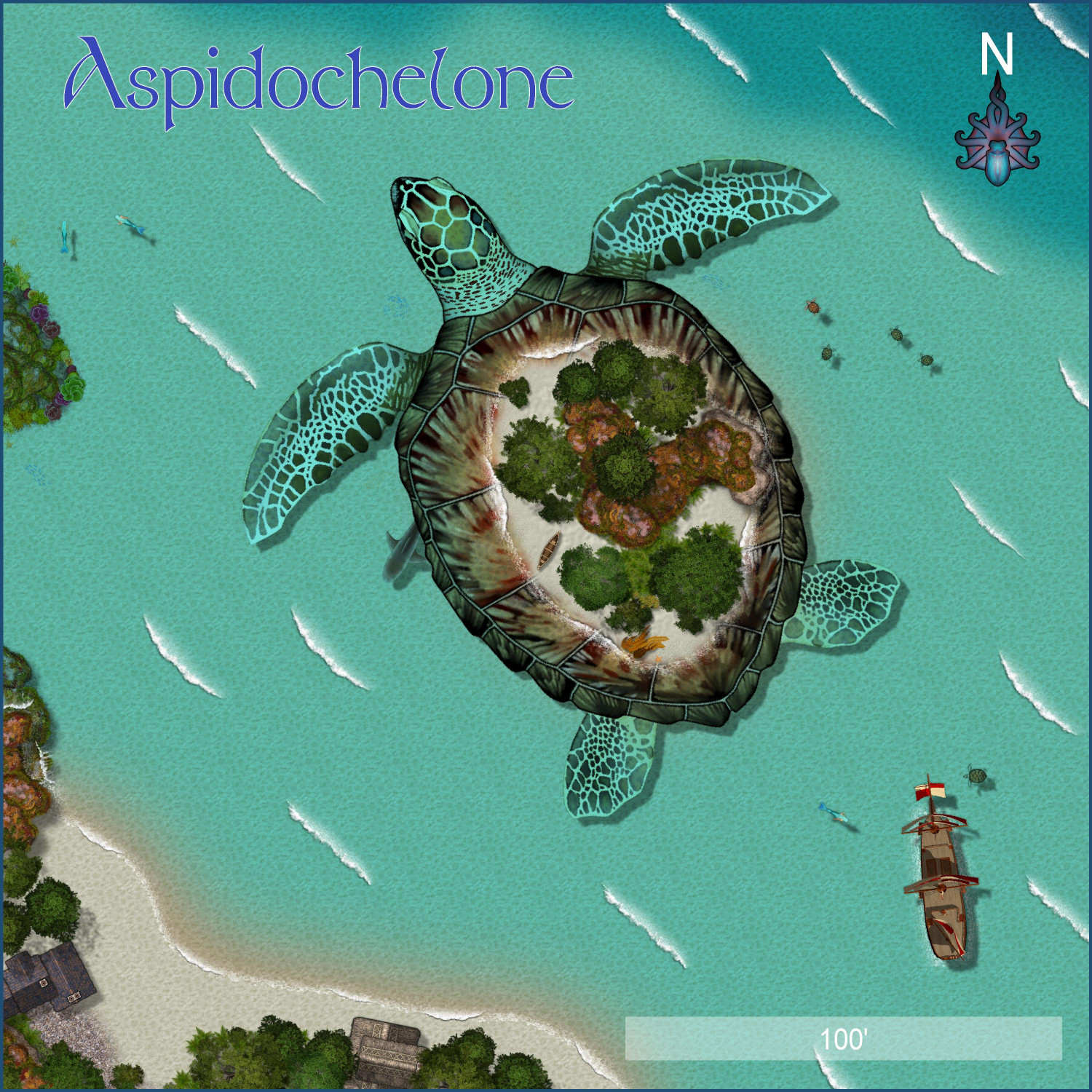
This isn't intended for the Atlas or the village competition, it's just for fun.







 and 4 others.
 -
Community Atlas 1000th map Competition - with Prizes [August/September]
I am also ready to submit Eilân Danaäd, my sea elf village and harbor.
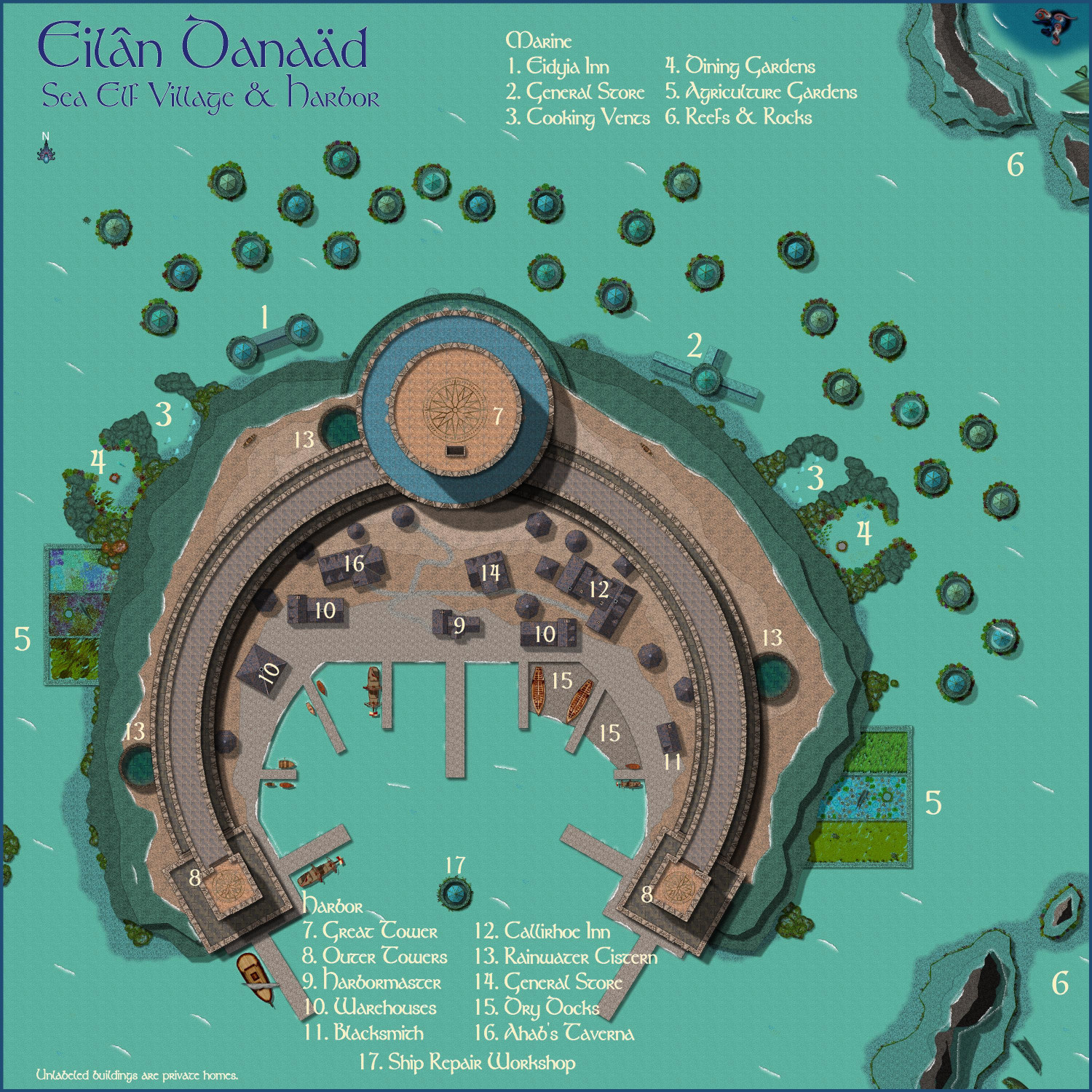
Primary Style: Marine Dungeons
Toggles: "Lighthouse Glow" layer turns on/off a glow indicating where light from the lighthouse emits.
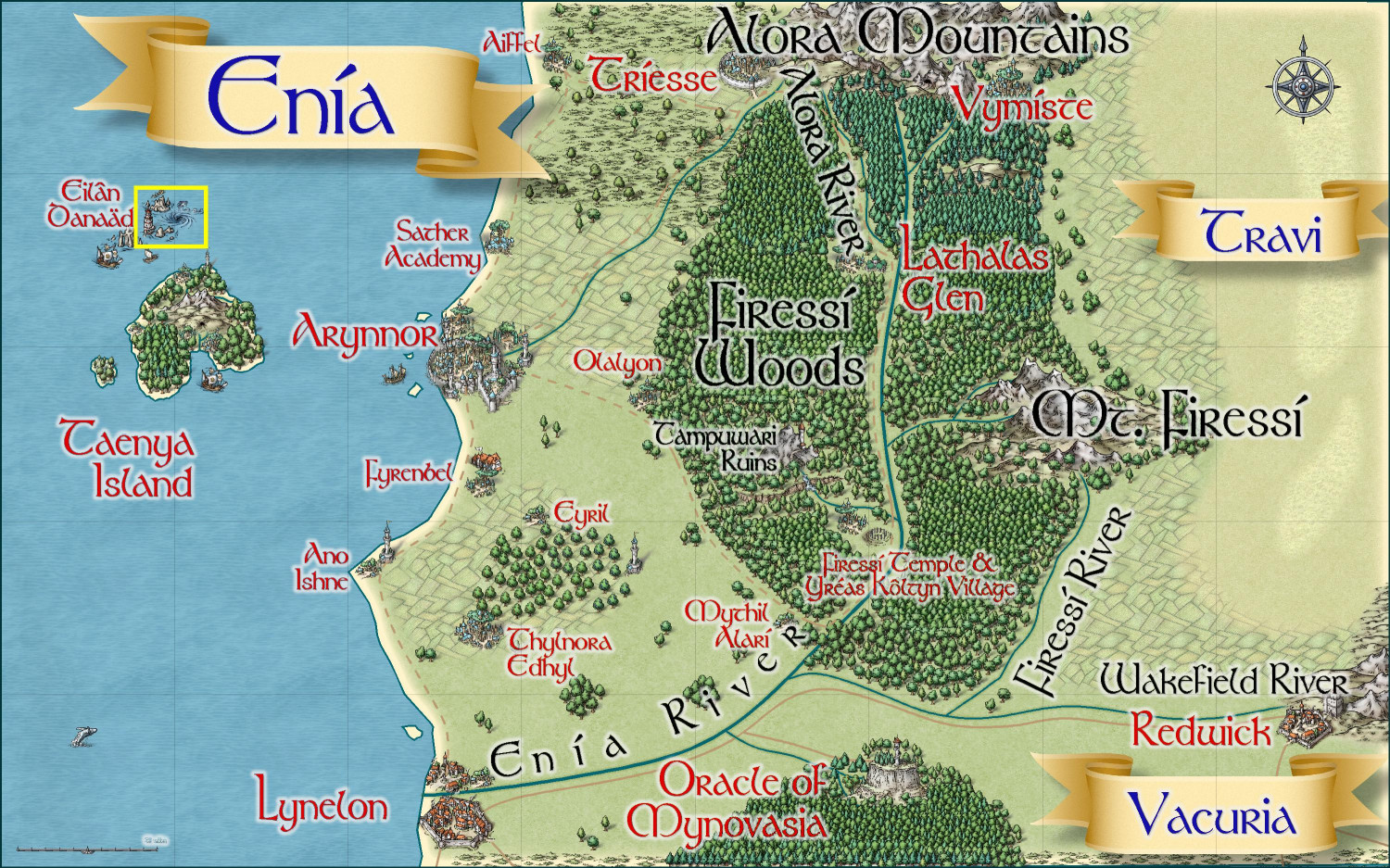
It's located just north of an island off the coast of Enia, the elven kingdom on the north coast of the Gold Coast region previously submitted in this thread, in the area marked with the yellow box.


-
Community Atlas 1000th map Competition - with Prizes [August/September]
I'm ready to submit my desert village of Djayet for the competition.
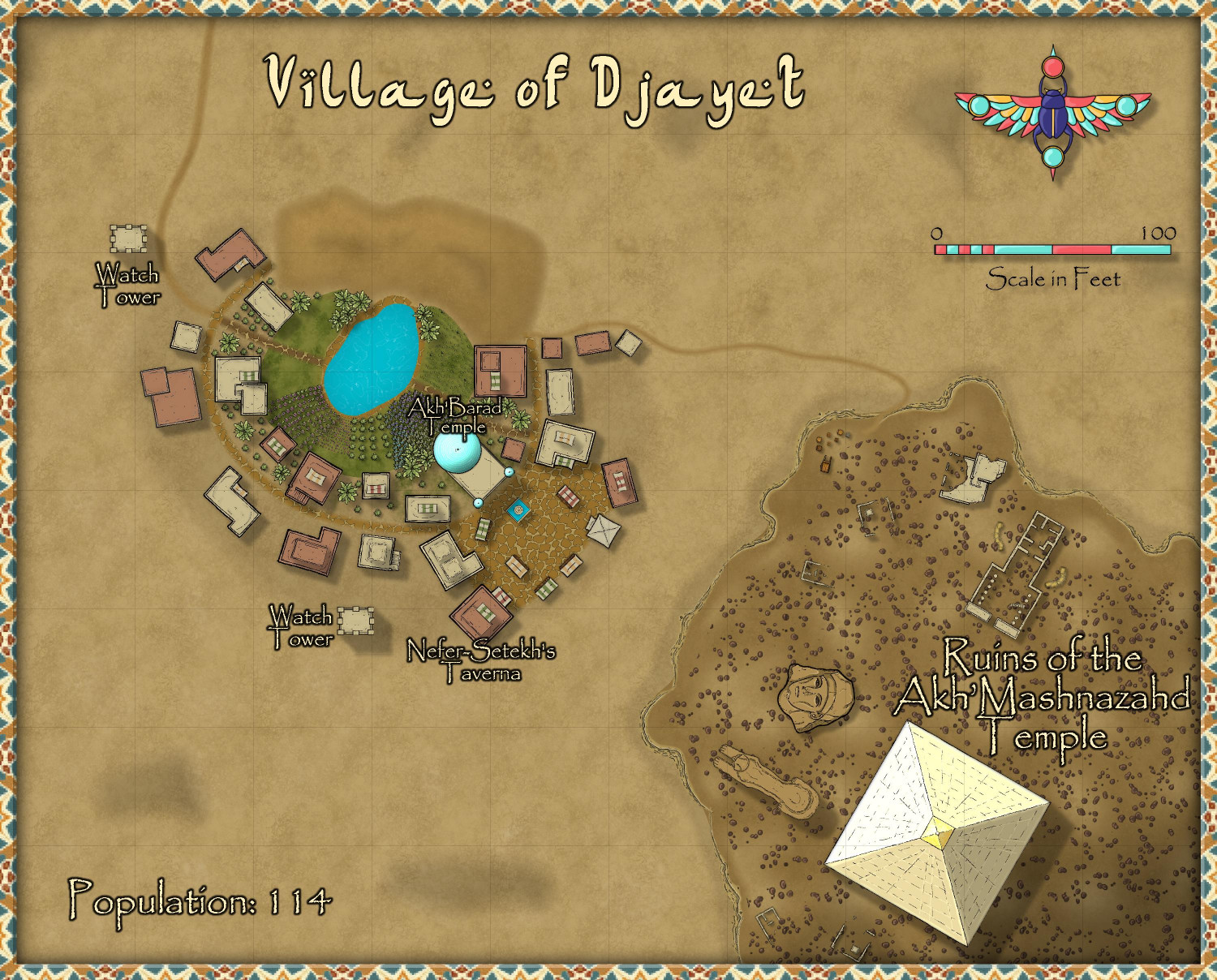
Primary Style: Desert Oasis
Toggles: none
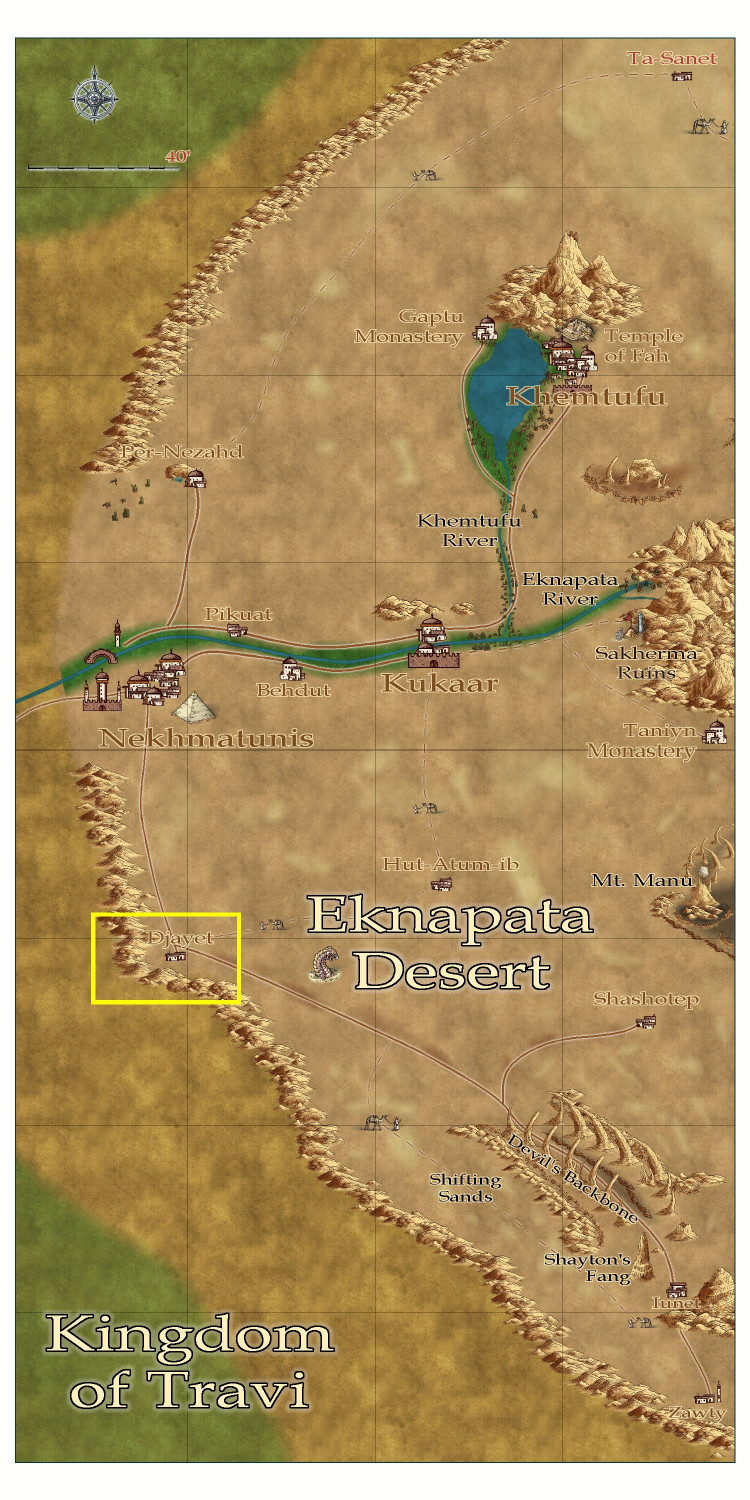
The village is located in the yellow boxed area of this area map. (The area map is the Eknapata Desert, on the eastern side of the Gold Coast -- both were previously submitted in this thread.)
-
[WIP] Atlas Contest - Vildural Village & Mines
Having done (in varying stages of "in progress" and not all submitted yet) an elven farming village, forest village, and underwater village, as well as a desert town, what other unusual village environment could I tackle. How about...underground?
I decided to build out my dwarven kingdom in order to find a home for a dwarven mining village. It ended up being more above-ground than below. I did it in the Mike Schley style because it's compatible with Monsen's Mines.
The village is more fortified like a town, but I figured that was more to protect the mine, but it's still a small village.
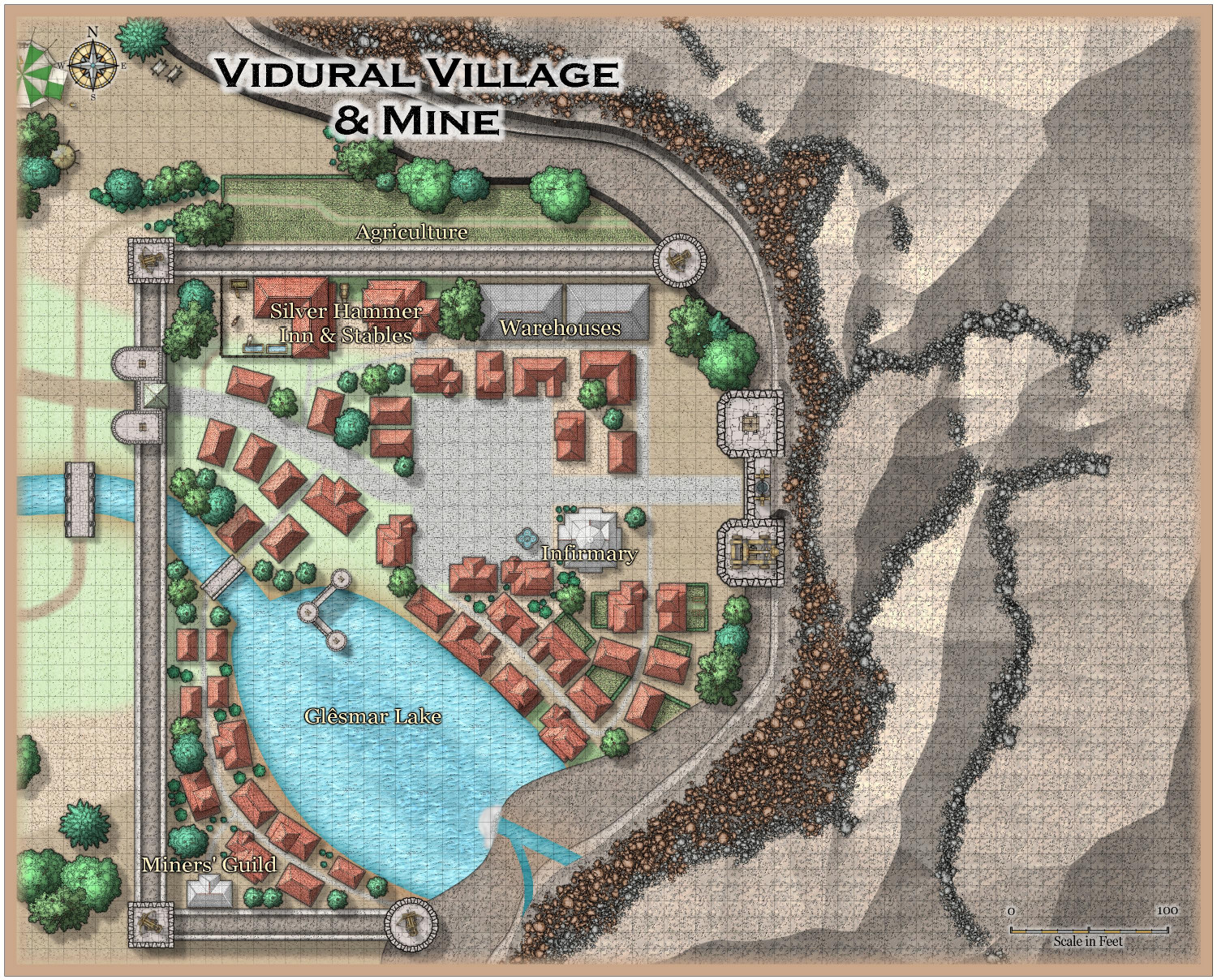
Villages don't usually have many specialized shops, so I didn't label any of the potential-retail buildings around the town square. There's a little bit of agriculture, and a few villagers have gardens, but most of the village's food is bought or traded with the wealth generated from the mines. Pretty much every family in the village has at least one family member who works in the mines, and anyone else who doesn't has some job that supports mine workers. The Miners' Guild is more like a union rather than a what we might think of as a guild, as it represents the workers rather than the mine's owners.
But no blacksmith in the village. That can be found in a (well-ventilated) space within the mines.
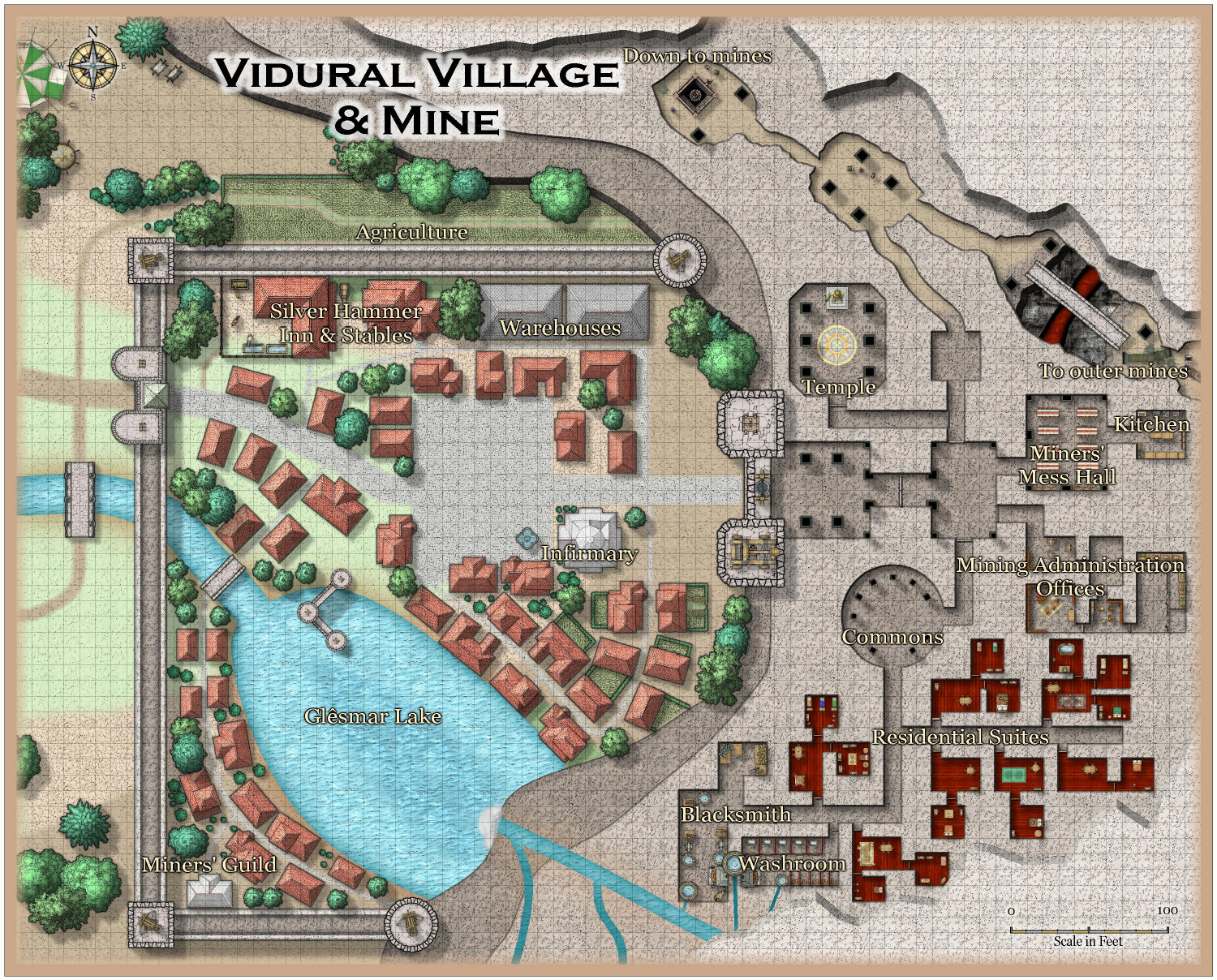
If we hide the "Roof" layer (that is, the top of the mountainside), we can peek into portions of the mine operations. (I still need to finish furnishing this area.) There's a temple used by the entire village, and a blacksmith. Miners can eat in the Miners' Mess Hall during the day, fed by those who work in the kitchens. There's a set of offices for the Mining Administration, where the mine's accounting and payroll are managed. One room has several locked cages to provide extra security for the mine's ore and treasury. In a pinch, it can also serve as the village jail. (One wonders if the mine administrators will come to regret putting the lockup in the treasury.) There's a washroom where miners can get cleaned up before going home, but it's mostly used by the dwarves who live underground.
The furnaces in the blacksmith's and next-door washroom also heats water. The dwarves have created a cunning pipe system throughout this level of the mines that brings both hot and cold water to the residential suites and the kitchen.
There are six luxury residential apartments underground. Most of the underground residents use the common washroom, but the Mine Administrator's family has their own private bathroom with bathtub.


 and 1 other.
 -
[WIP] Atlas Contest: Eilân Danaäd (Sea Elf Village)
After doing a dark elf farming village and a wood elf forest treehouse village, how could I resist revisiting my sea elf outpost and using it as inspiration for a sea elf village?
This is Eilân Danaäd, a harbor and village in a rocky reef area north of an island off the coast of Dóriant. The village includes both dry ground structures on the harbor side as well as below-water residences on the other side. The sea elves created the harbor as an opportunity to trade with sailors from the Dóriant mainland, as well as sailors traveling to Dóriant. The elves sell or trade deep sea fish and marine vegetation that would be difficult or impossible for surface-dwellers to get to. They also provide ship repair services for ships damaged at sea, and help sailors navigate through the rocky reefs.
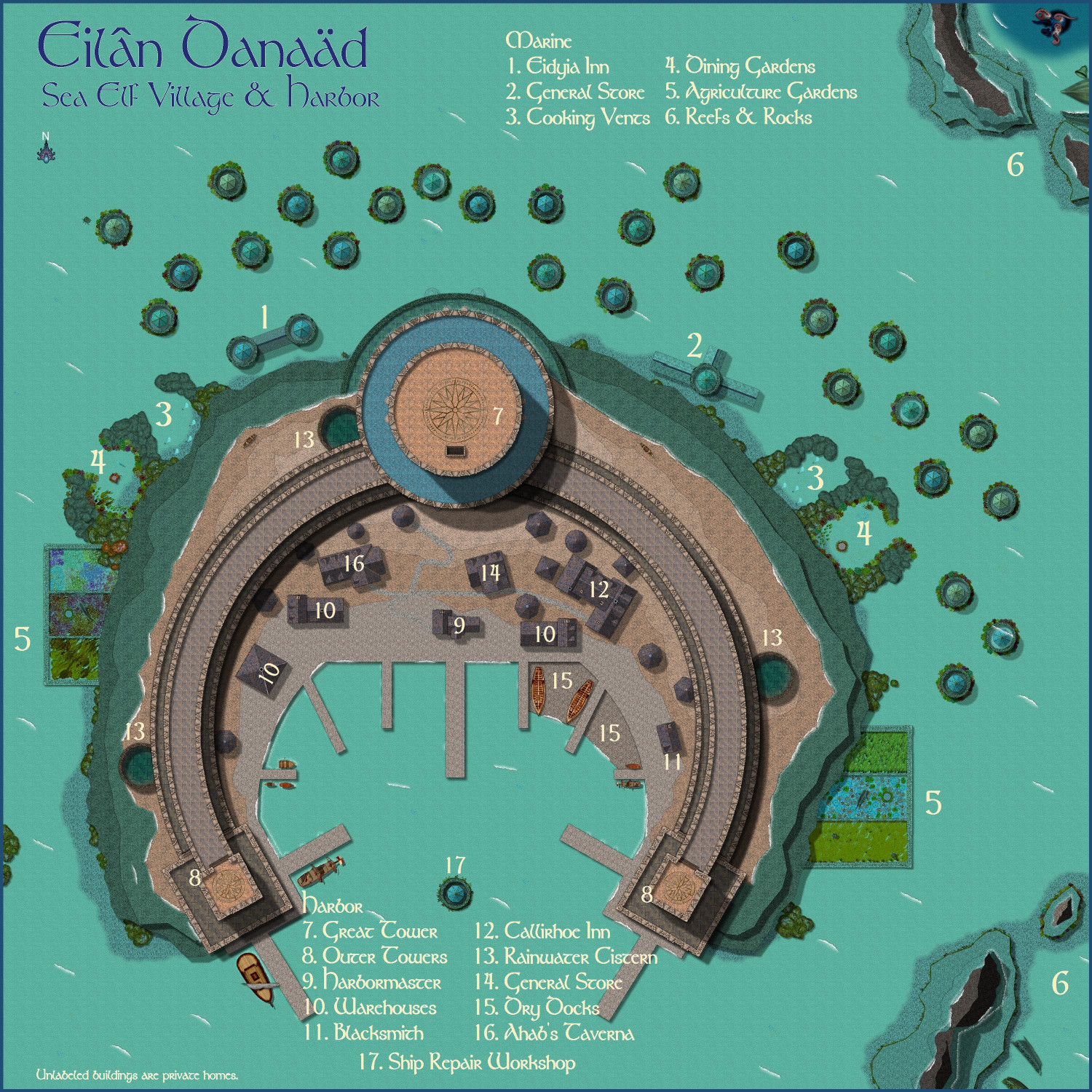
The harbor consists of a horse-shoe shaped tiered great wall, with a great tower in the center and two somewhat shorter outer towers. Each tower has a landing pad on top to accommodate aerial visitors who ride pegasi, griffons, or other flying mounts.
The Great Tower in the center extends all the way down to the sea bed. It contains the villages government, and has plenty of space both below and above the surface of the water for the sea elves to hunker down during the strongest storms. (The sea elves wouldn't drown in the storms, but they could be blown miles out to sea.)
The harbor includes an inn for sailors eager for a bit of dry land and a bed that doesn't rock. It also includes a tavern, where sea elves can imbibe with visiting sailors. (Drinking alcohol -- or any other liquids -- isn't possible below the waves, though in their marine environment, the sea elves do imbibe with hallucinogenic fungi, fermented sea cucumbers, and other intoxicants.)
There is no natural source of fresh water at the harbor, so the elves have created several cisterns to capture rainwater. Sprinkles of rain occur nearly daily, and storms (usually mild) occur frequently throughout the year.
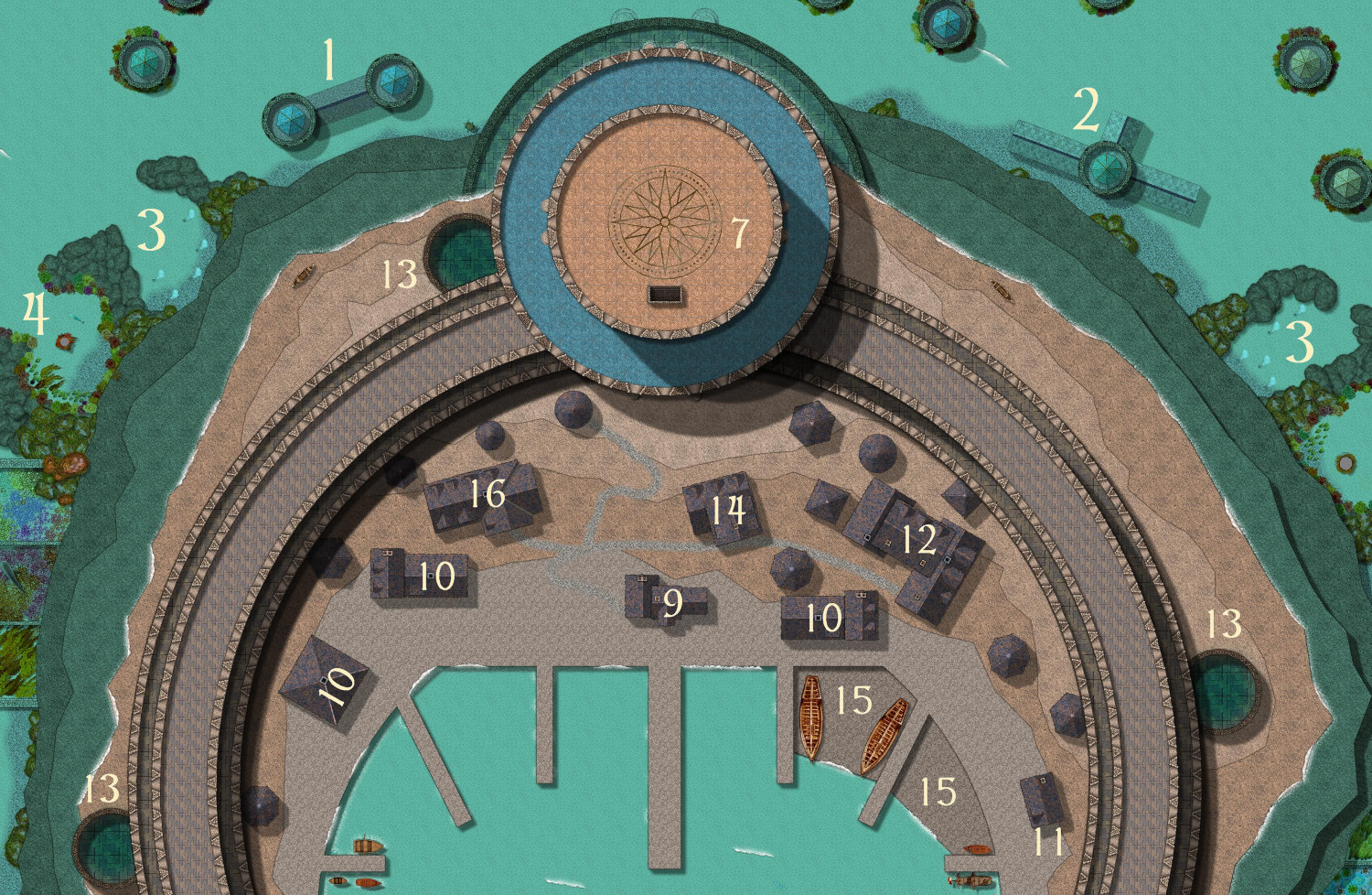
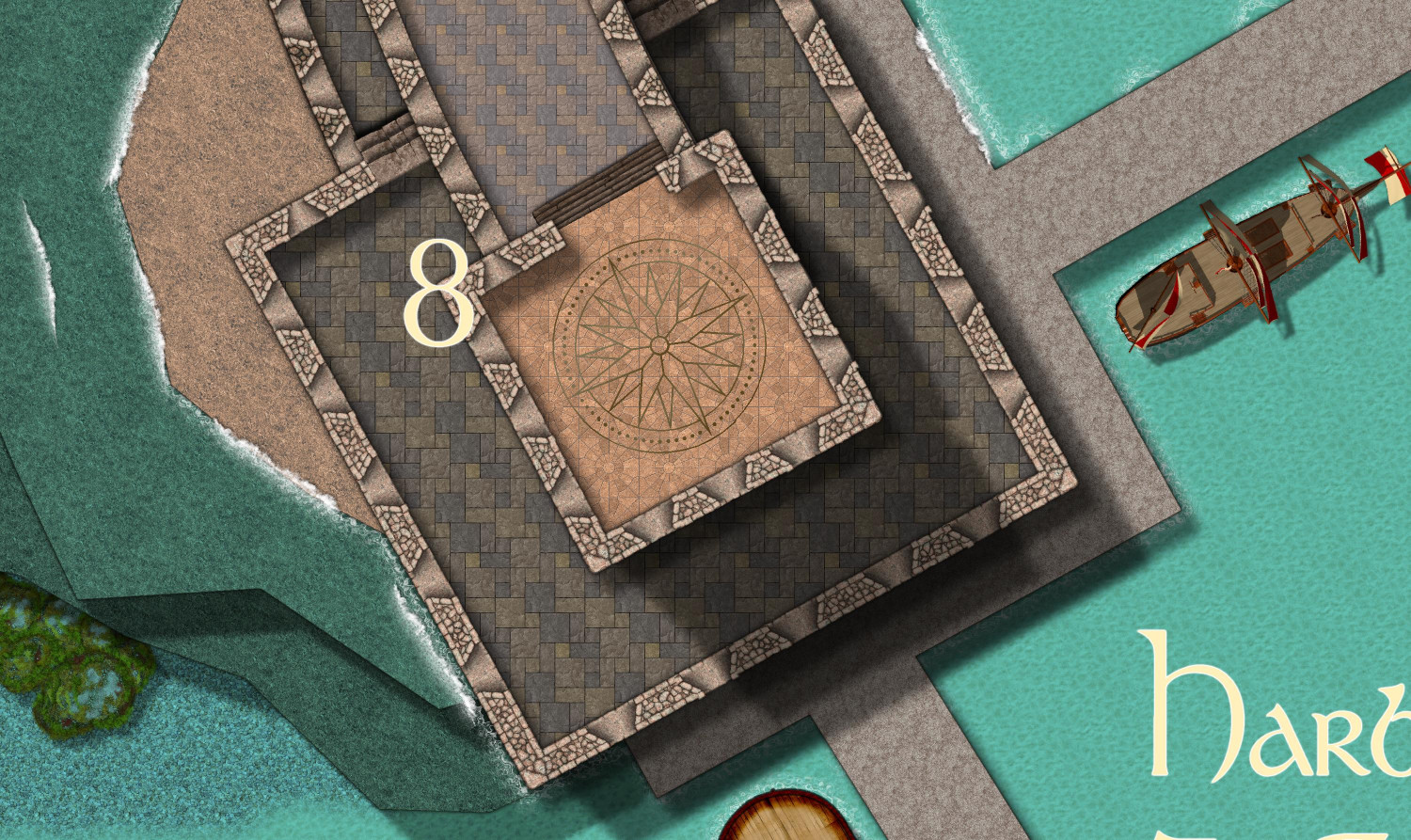
Both the towers and the wall are in two tiers, with the lower tier rising about 50 feet above sea level and the upper tier another 30 feet above that. The wall provides protection for the above-ground part of the village for all but the strongest of storms.
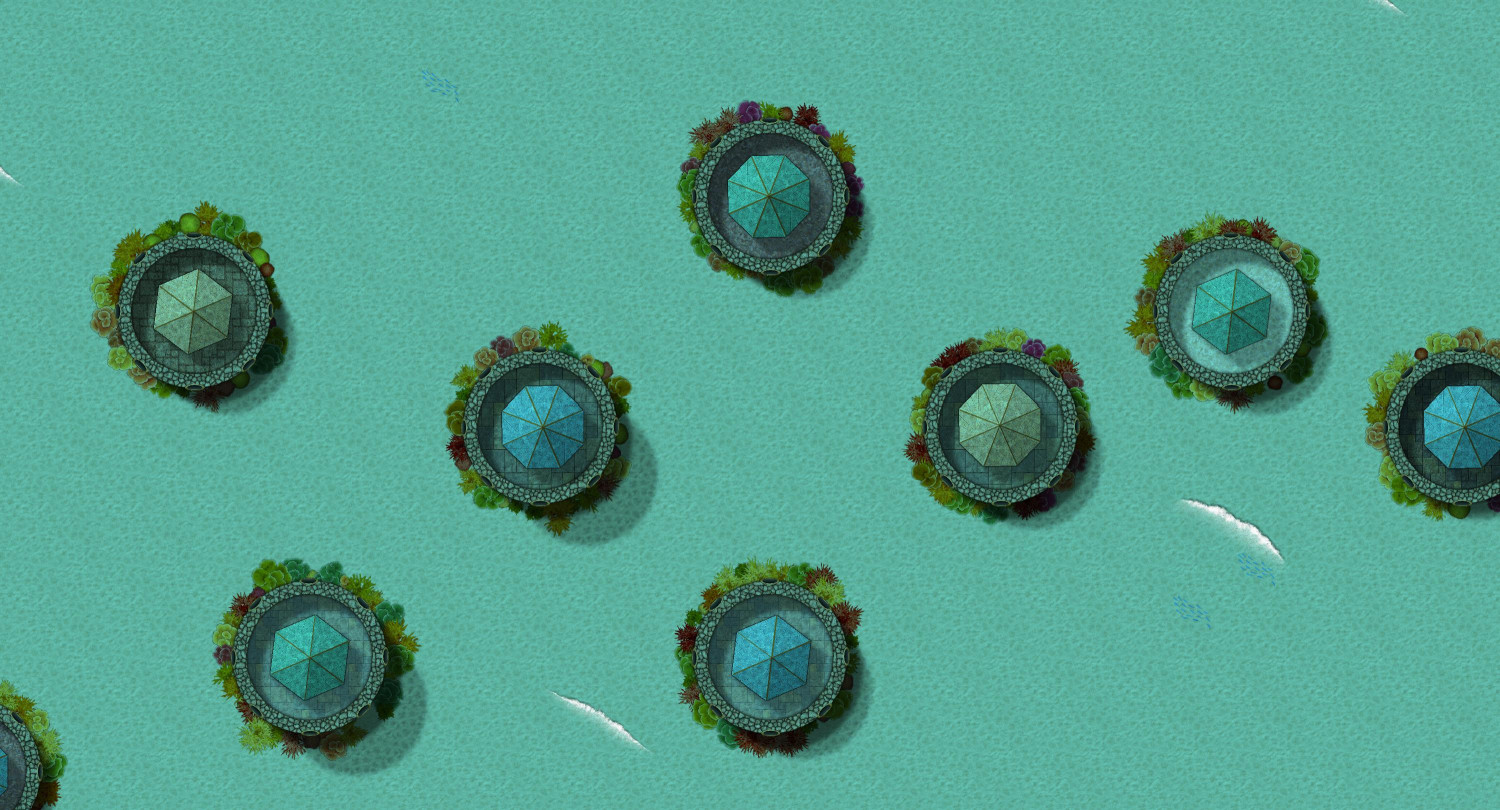
Below the waves, most of the village residents live in private homes topped by either a hexagonal or octagonal turret. Each residence is either one, two, or three stories high, not including the turret. (Note the shadows of different lengths.) The entrance to each residence is through a doorway at the turrets. There's no need to swim all the way down to the seabed to disturb the coral gardens surrounding each residence, as the entrances are at the top.
The one-story residences are basically studio cottages, with sleeping and living spaces all at one level. The taller residences will have a common area off of the turret's entrance, with bedrooms in the levels below.
None of the residences have cooking facilities. Dining at home requires food that can be eaten raw, or previously-cooked food that can be served cold. Instead, cooking is done at common cooking spaces (#3), where residents bring food on long skewers to cook over geothermal sea vents. The cooked food can then be brought back home, or can be brought to one of the dining commons (#4) for a picnic.
The sea elves do have a few marine agricultural gardens. Each of these has a pillar in the middle, where gardeners can activate an enchantment that helps keep pests away. The enchantment creates the illusion of a shark swimming around the area. The illusory shark radiates a low-grade Fear spell. Elves are immune to the spell, and it's low grade enough that most intelligent creatures only experience a mild feeling of foreboding at best. But for fish and other low-intelligent sea creatures, the spell triggers a flight reflex, which helps the elves keep their crops from being nibbled away by marine pests and predators.
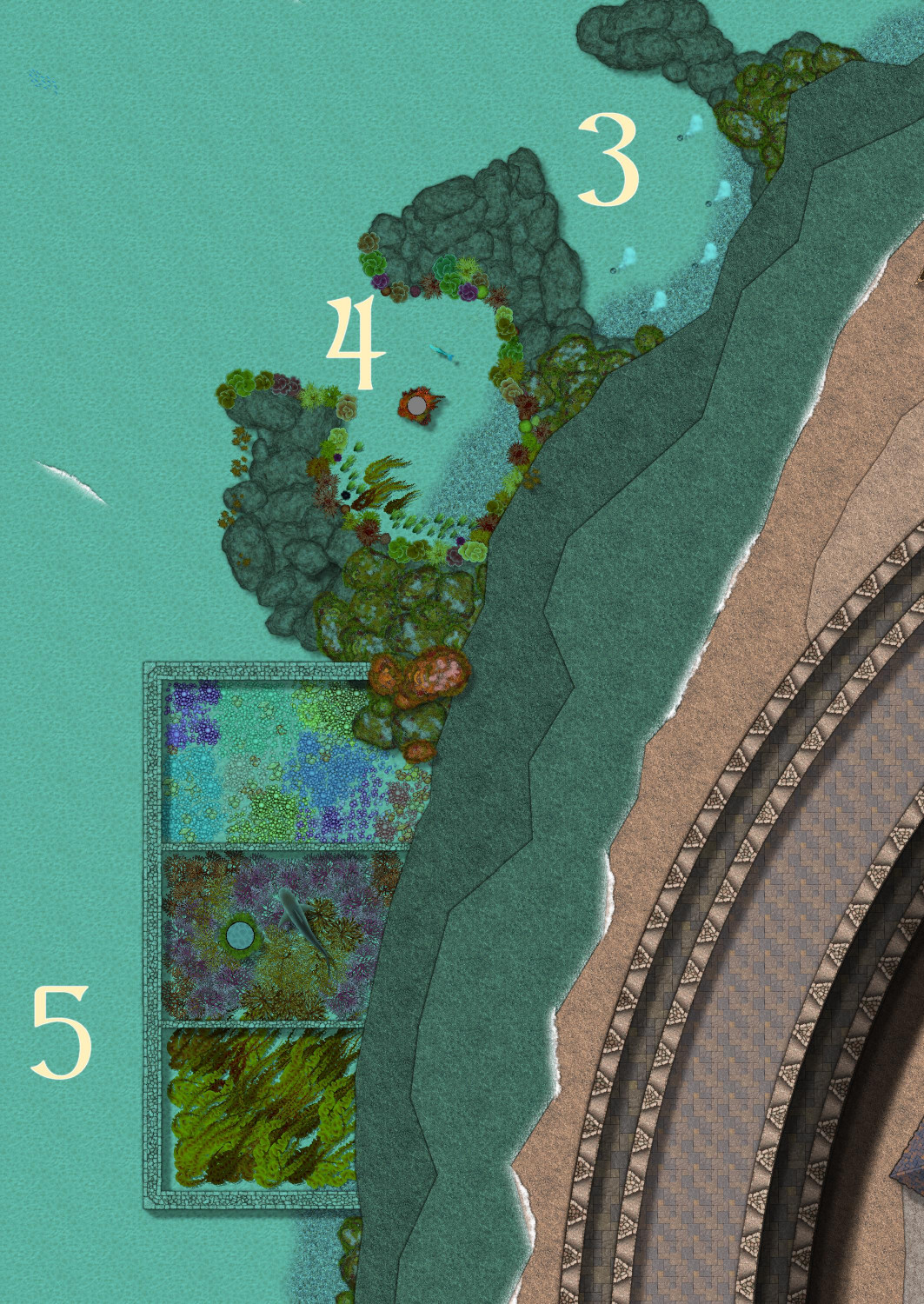
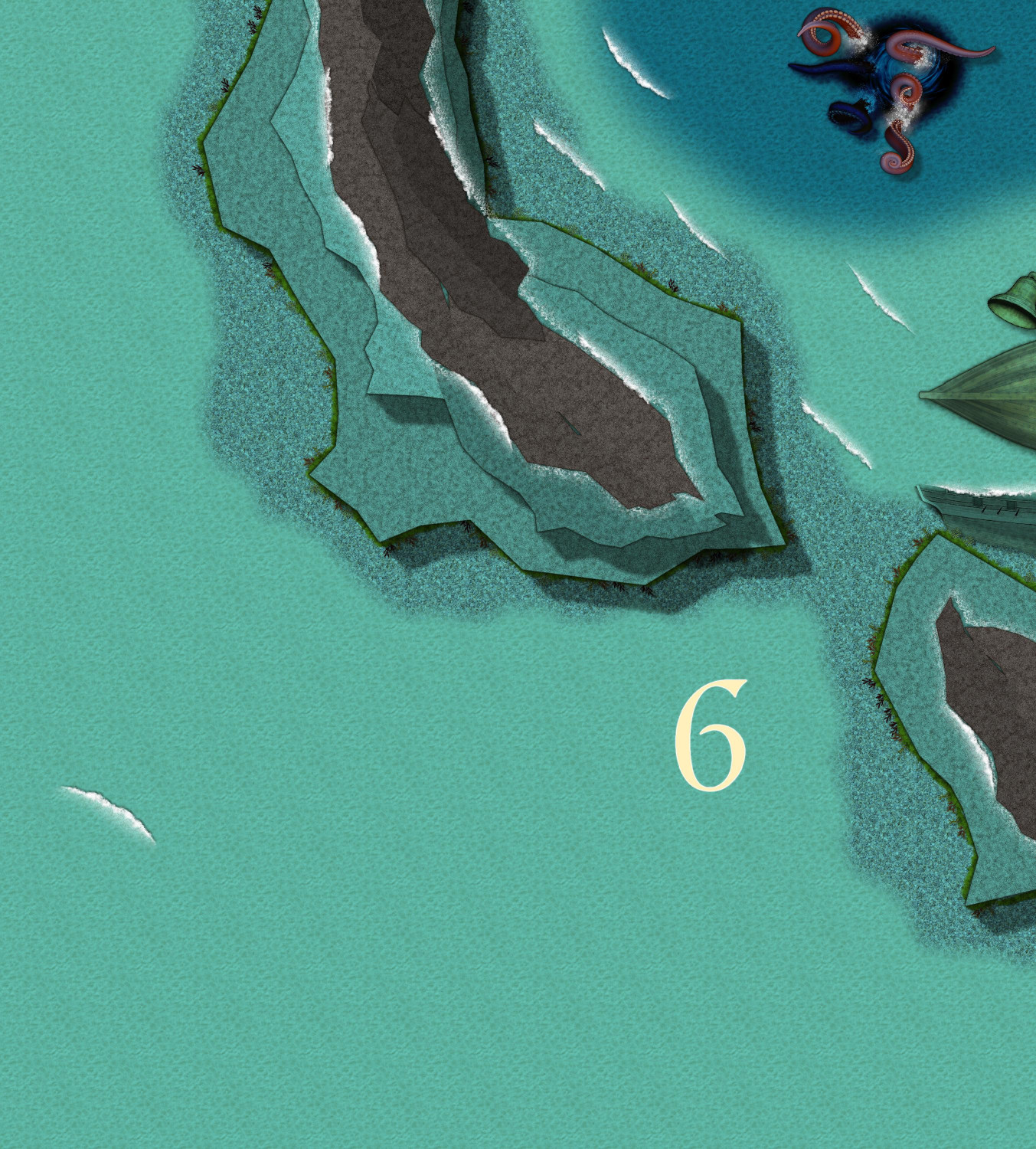
Farther away from the harbor, I created a few examples of the rocks and reefs. I tried a different approach to creating them. Instead of using polygons with a sharp bevel, I instead used several polygons with a "Shaded Polygon (Angled by Edge") effect, each with different angled slops. Let me know if you think I pulled it off.
Some sort of tentacled sea creature has taken up home near one of the reefs. The sea elves can help sailors navigate around it to avoid a Scylla v. Charybdis catastrophe.