
Wyvern
Wyvern
About
- Username
- Wyvern
- Joined
- Visits
- 3,240
- Last Active
- Roles
- Member
- Points
- 5,519
- Rank
- Cartographer
- Badges
- 24
Latest Images
-
Are there steampunk resources for CC3+?
We've had several discussions on the Forum here (and these have happened elsewhere too) over recent years as to exactly what this or that RPG/fiction genre term actually means - including Steampunk, Grimdark and Cyberpunk. The problem with all these is they mean different things to different people, which can be tied sometimes to what they are taken to mean by specific RPG systems. This makes it hard to say what assets a given person might consider satisfactory, aside from this also depending on what scale of mapping is intended - whole country/region (what we often call overland in CC3+ discussions), entire settlement (CC3+ "Cities"), or individual buildings ("Dungeons"), for example - and what the map is going to be used for (an individual building map might be used as a tabletop battlemap for miniature figures to move and act across, say).
Some kind of loosely 19th-century or "Victorian" mapping options might be easier to find, though there isn't a standard set of options even looking there, as most 19th century real-world styles started out in the previous century, and their 19th-century developments carried through into the first third or half of the 20th in different places. In terms of CC3+ assets, there are overland styles such as the late-18th century Ferraris Style from the February 2020 Annual, which general look of maps was still being used in places into the early 20th century, and some elements still feature in maps today. It works well for local areas/small regions and settlements. The August 2009 Annual covered Napoleonic battle maps, again suitable for relatively smaller areas, and a style used from the late 18th through to the early 20th centuries.
The Early Modern Cities style in the 2007 September Annual will fit with some later 19th-century city maps. For 18th-early 19th century sailing ships, try the March 2009 Annual, updated with additions in April this year. Although strip maps (May 2009 Annual) were a 17th-century development that was a method still being used well into the mid-late 19th, showing details just along and near a specific roadway.
These are only a few examples that come readily to my mind. I'd recommend taking a look at this Forum topic, which shows thumbnails from every Annual issue, and gives a simple guide to the general style presented in each issue, with a link to the PF website where you can find more information, including examples of the style in use.
@JulianDracos makes a good point regarding the vagueness of the genre, in common with what I've noted here. RPGs such as Castle Falkenstein and Space 1889, and also Cthulhu By Gaslight, which to me would fall into the loose Steampunk genre, tended to prefer clear, black-and-white line-drawing styles for their maps, sometimes with straightforward simple colours used to highlight particular things, which also seems comparable to how many 19th century maps come across to me.

-
CA style development - "Darklands City" (issues for September and December 2021)
If you have fence lines, I've learnt they can be placed below a hedgerow to look enough like a gate to work as such in the Fantasy Town style. As long as there's an end-piece for the hedge, that should work OK. It also works with walls too, of course.

-
Seeking map of Burgundy
Hi @Johann !
My recommendation would be to try to see the Barrington Atlas of the Greek and Roman World (Wikipedia link). This has details on the landscape and landforms in contour maps and text descriptions, with lists of identified places known to have existed in specific periods (including late antiquity, which is where c.450 CE would fall in their categorisation). Where this can be established, changes in landforms (coasts and river courses primarily) have been allowed-for, though I don't think the area of Germania Superior that you're interested in features in that too much, as little work has been done on things like the ancient river courses in this area, unfortunately.
-
Dungeon Designer 3 Light Tutorial?
I think the third video @roflo1 was meaning was this one by Remy Monsen (it's on Remy's YouTube channel, rather than the main ProFantasy one):

-
John Speed Victory
I think it's this one Sue? :CC2MODEPT:
[EDIT - Ooh, it worked! First time I've tried this on the Forum!]
-
Mushroom Symbols
If you can live with top-down view of mushrooms, there are plenty of options among the Dungeon Designer symbols for CC3+, and the add-ons for DD3 from various issues of the Cartographer's Annual. You should also check out the free downloadable Vintyri symbol collections as well.
If you want side-on views, that may be more difficult. However, Symbol Set 1 has a couple of options among its Handdrawn symbols, and there may be a few more elsewhere that I've not come across yet. You could also look at some of the styles with simpler tree drawings, and experiment with varicolor versions of those that look sufficiently mushroom-like. Might have to get creative though!


-
Coastline
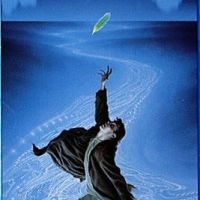
I note how short this stretch of coastline is, presumably as a contrast against the Truly Evil and Impenetrable Coast around the rest of the continent, lost in the mists of the map here to lull the players into a false sense of security.
😉
-
How do I _actually_ edit a Scale Bar?
When you say "edit a Scale Bar" do you mean you need to change the number at the end of the bar from what you originally set when you placed the symbol, or do you want to make changes to various elements of the Scale Bar symbol itself beyond this?
I ask, because if you need to just change the number you typed in, if it was wrong, say, I think the only way to do that is erase the original symbol and add a new one, with the correct number for the length of Bar you need typed in.
If you want to make more changes to other elements of the Scale Bar symbol, you can go to Symbols -> Symbol Manager... from the drop-down menus, select the Scale Bar symbol from the illustrated list there (assumes you have already used the Scale Bar in your CC3+ drawing, however - if not, do that first!) and then use the Edit button. This asks you to draw a new window on-screen, and when you've done that, the symbol will appear in that and you can edit any part of it, just as you would with any other drawn element in CC3+. Depending on the style, there may be limits to what you can change (you can't edit the look of a bitmap fill style used in the symbol like this, as far as I know, for instance), but it should let you make some changes at least.
When you're done, click the little "X" box in the top right of the editing window, and you'll be asked if it's OK to keep the changes you made to the symbol. It also has the slightly disturbing note "This is NOT undoable", but this will only change that specific symbol in your current drawing if you save it this way, not in the main symbols catalogue for that style.
That will change the symbol(s) used in your current drawing to whatever your edited symbol looks like, and any fresh versions of the same symbol you use in it.
Hope this helps.


-
"Dimensional" Trees
Yes, it's possible to do this with quite a number of the top-down tree symbols, adjusting the sizes sometimes, and to slot in other symbols - such as houses (or use wooden docks as aerial walkways, for instance) - so they end up partly hidden because they're "partway" up the tree too. Worth seeing of the style you're using has any smaller bush and shrub symbols as well, as they can add extra interest. And if you want something unusual, try making any varicolor tree or shrub symbols much smaller than usual, and in bright colours, to look like flowers - perhaps like orchids, say - half-hidden among the greenery.

-
Canvas map development
I seem to vaguely recall we may have had this conversation previously, but the mountains look a little insubstantial right now, as if many of the arête limbs are only paper thin. I appreciate that wasn't necessarily what you were asking about right now, but it is what first occurred to me!
Zooming-in to the enlarged image, I agree with the notes made earlier, where it looks as if the canvas effect is more pronounced on the paler colours, and not at all (as far as I can tell) on the water. Oddly though, the effect is quite obvious on the tree symbols, which is a curiosity, given they're the darkest objects on the whole map. That could suggest it may be more an issue with the texture on some of the bitmap fills which is causing the canvas effect to disappear, rather than simply the darkness of the hues.
I'd agree that it would be useful to have the canvas effect as an option, rather than a fixed default.
Just to be contrary (well, not JUST...) I rather like the pale desert, but then I can see that would be interesting to use as a cloudscape texture (especially the way the mountain peak seems to be coming up through it), which I suspect may not be everyone's first choice as a setting.
☁️🏰☁️