

Avatar

Ricko

Ricko

About

Username
Ricko
Joined
Visits
6,698
Last Active
Roles
Member
Points
10,516
Birthday
February 7, 1977
Location
merlo san luis argentina
Rank
Mapmaker
Badges
22

Latest Images

  • Battlemap collection for personal use

  • Battlemap collection for personal use

  • Community Atlas - Drachen Temple Battlemap

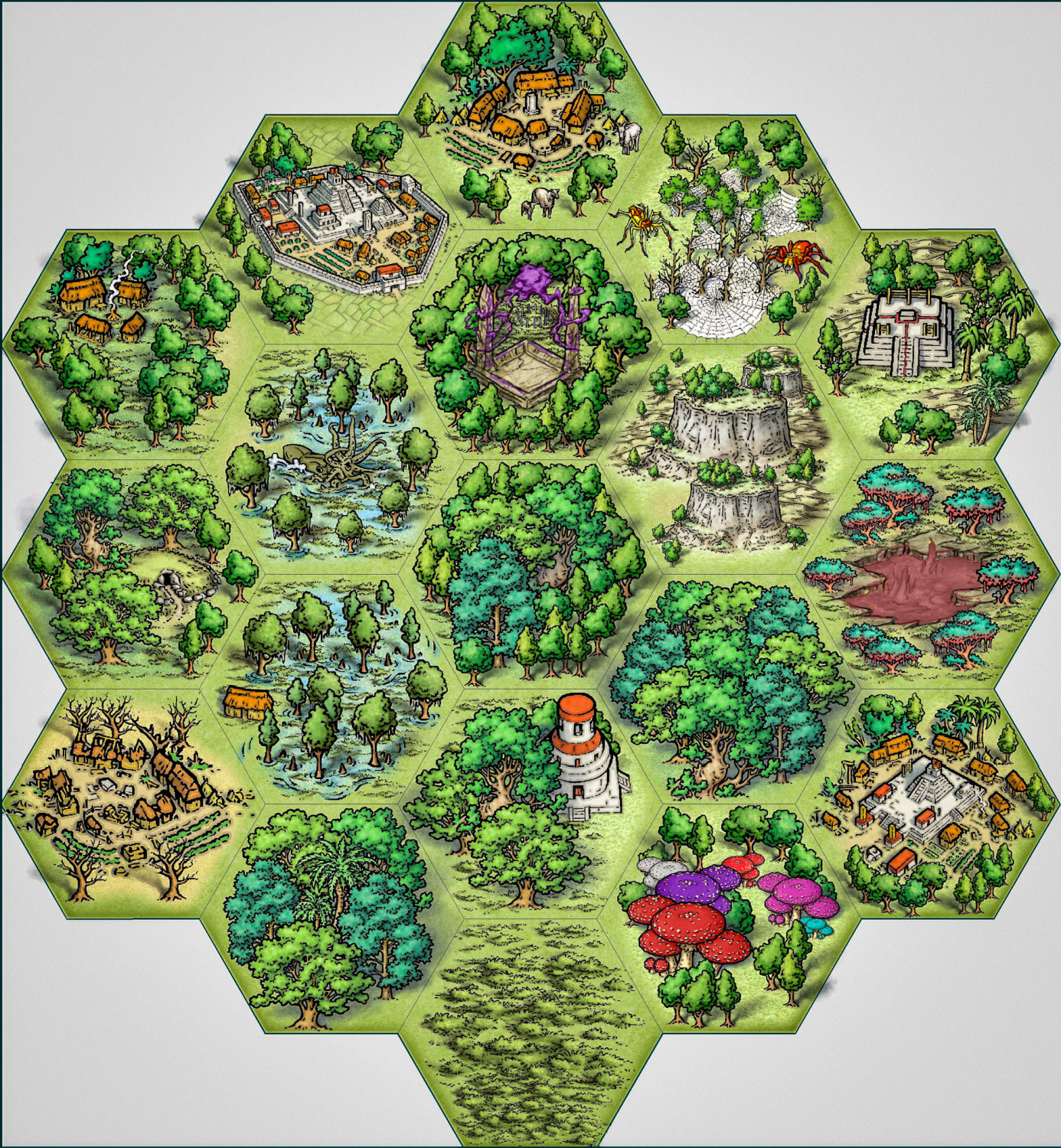
  • Hex map

    lets go jungle! 😅

    LoopysueRoyal ScribeC.C. CharronJuanpi
  • Insect Realm

    I'm trying out a new possibility:

    1. Create AI-generated images of maps that come with interesting decorations.

    2. Use this image as a Trace and add Transparency to this Sheet.

    3. Place the Sheet Trace under the Land, and draw the outline of the Land on top of the image.

    4. Arrange the map as I see fit with the chosen motif and keep this sheet trace transparent when I export the JPG.

    I'm attaching the image and the file; I think you'll just have to "fit" the image back into the trace to get a better idea of ​​what I'm talking about.


    Royal ScribeMapjunkieJuanpi
  • De Rust + Alyssa Faden clouds

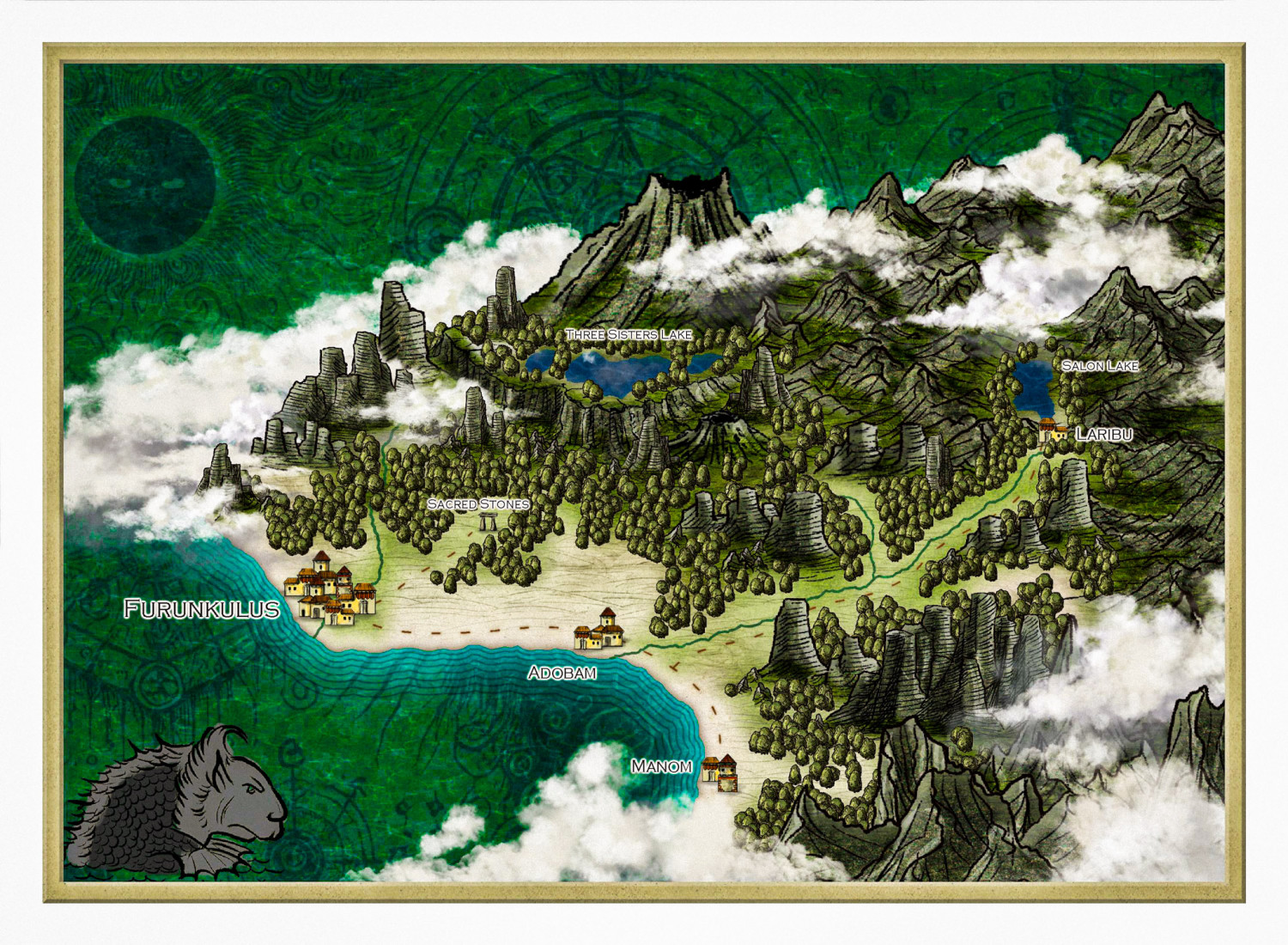
    Furunkulus Zone

    Cheers

    Royal ScribeQuentenJuanpi
  • Herwin Wielink Series

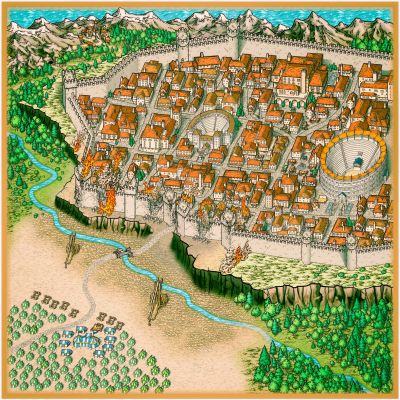
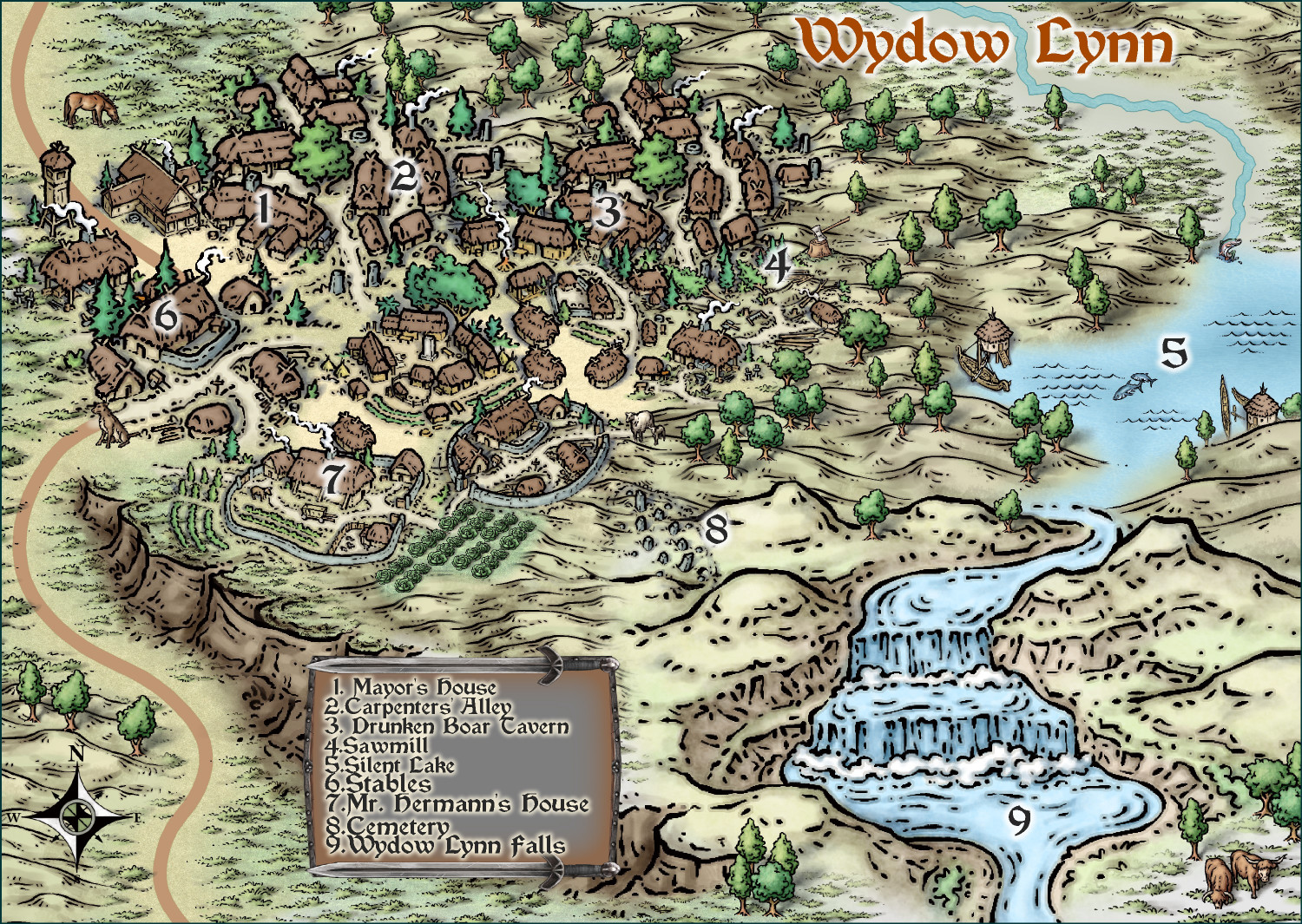
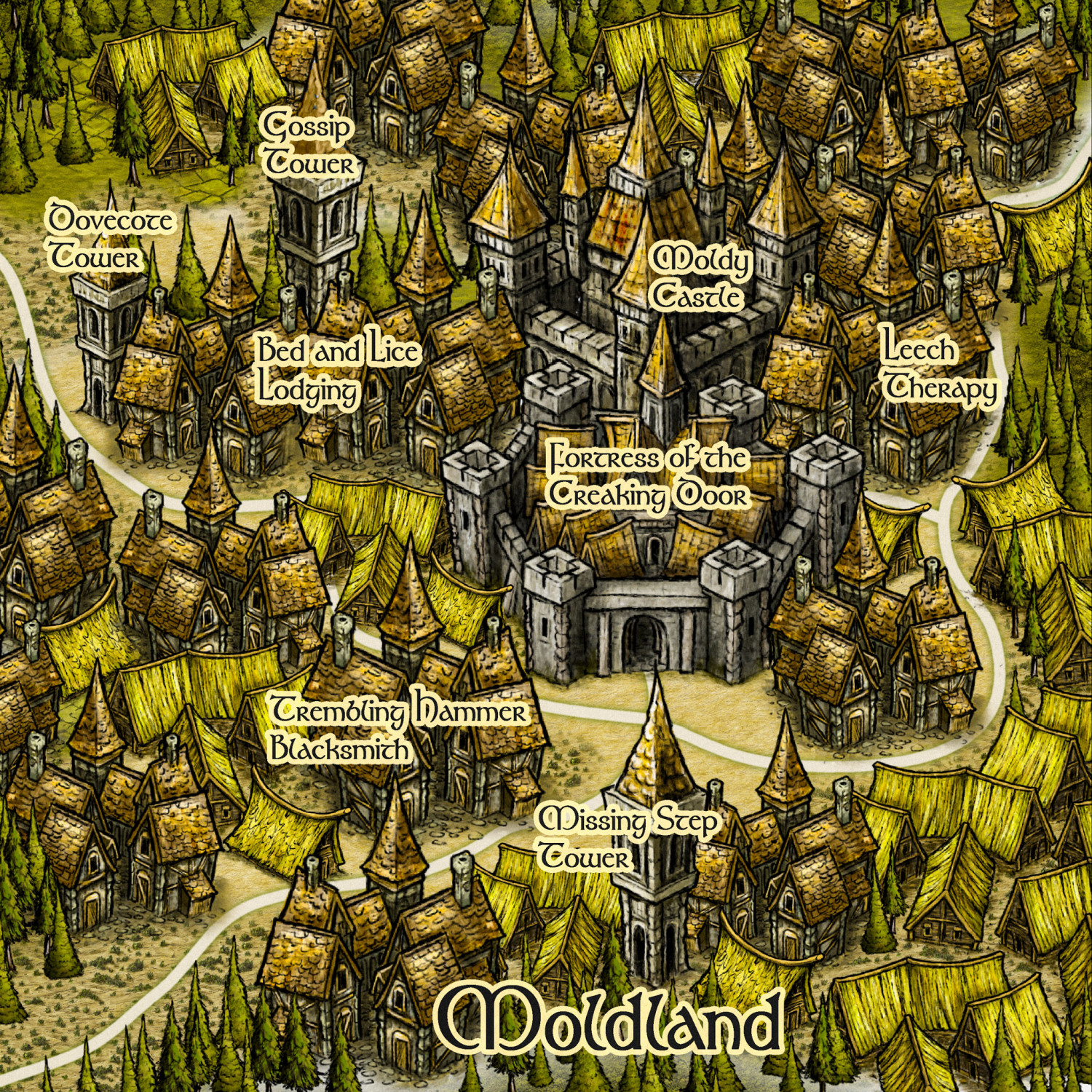
    A friend of mine from Brazil asked me for a small map of a city in his campaign. Taking advantage of my Wielinkm moment, I told them to give me a map with the names in Portuguese, and here is a map with the literal translation - sorry for any mistakes.

    Royal ScribeJuanpiQuenten
  • Ricko's Questions

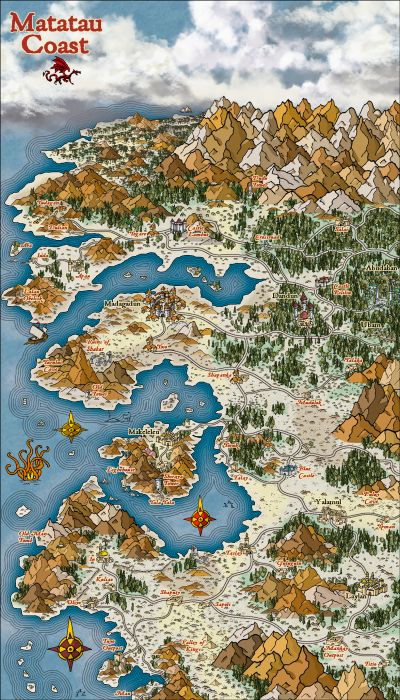
  • WIP: Bleakmoor Harrow - Continent of Estonisch

    Deforestation in Brazil began with colonization, when the Portuguese extracted brazilwood (no shure is the right name for "pau brasil") for export. Since then, fire has been the most accessible and effective way to clear large areas of vegetation, preparing the soil for sugarcane plantations and, later, coffee and livestock. Burning temporarily fertilized the soil, but with the loss of nutrients, new areas were cut down, accelerating the destruction of the Atlantic Forest and other biomes.

    In the 19th century, livestock farming expanded, mainly in the Cerrado (in the center of Brasil) and, later, in the Amazon, with large areas of forest being burned to create pastures. In addition, the extraction of hardwoods such as mahogany, rosewood and ipê increased, feeding the great demand in Europe and the United States. In the 20th century, countries such as China and Japan also became large consumers, often acquiring illegally extracted timber.

    Despite new clearing techniques, fire continues to be one of the most widely used methods for deforestation. Its low cost and the speed with which it transforms the forest into arable land or pasture mean that it is still widely used. The burnings, as we call them here, have always occurred before, during and after the infamous (J.B.), sometimes a little less, sometimes a little more. Incessant.

    roflo1Royal ScribeCalibre
  • [WIP] Community Atlas: Kumarikandam - SE Tiantang Region


    Yu Shi Gu – The Jade Stone Valley

    Situated east of the Great River, Yu Shi Gu is the main city of the eastern region and a place of contradictory beauty, where fertile fields and lush hills hide the scars of a bloody past. Its fertile soil produces abundant crops, and the city benefits from the famous Lianguang Jade Mine, located in the heart of the forest, a natural resource that sustains both the local economy and the greed of nobles and merchants.

    A Bloodstained Past

    During the conquest of the region, Yu Shi Gu was a symbol of resistance. Its noble family, the Liangs, were revered by the population for their wisdom and generosity. When Ji Wenzhao led his troops to subdue the city, he encountered fierce opposition that delayed his campaign for months. Furious at the delay, Wenzhao ordered the summary execution of the entire Liang family after his victory, turning the family's former palace into ruins as a grim reminder of his power.

    The disciplinary massacres that followed were brutal. Hundreds of peasants and artisans were killed or enslaved, and the survivors bore the burden of a deep-seated hatred for the crown for generations. Even today, the city maintains a tense relationship with Tiang Long Du, marked by mistrust and occasional revolts.

    A Valley of Riches and Intrigue

    Despite its tragic past, Yu Shi Gu has prospered thanks to its productive agriculture and the Lianguang Jade Mine. The stone extracted from the mine is renowned for its purity and shimmering greenish color, considered the best in the region. However, the mine is also a source of tension and suffering: directly controlled by emissaries of the Tiang Long Du crown, the site operates under a regime of brutal oppression.

    Local workers and slaves captured in regional conflicts are forced to work in unsanitary conditions, often without seeing the light of day for weeks. The mine is a maze of narrow, poorly ventilated tunnels, where toxic gases from the depths cause respiratory illnesses, and constant cave-ins claim lives without warning. Armed overseers keep a tight watch, punishing any attempts to slow down with floggings or summary executions.

    The forest surrounding the mine offers no solace. Those who attempt to escape face an equally grim fate: those who are not devoured by mysterious beasts or killed by jade smugglers end up lost forever, enveloped by enigmatic whispers that many attribute to the vengeful spirit of Liang Heshan. The belief that the last Liang patriarch protects the jade reinforces widespread fear, and some workers claim that shadows with glowing eyes watch them from the depths as they extract the stones.

    The entire city lives in the shadow of this oppressive system. Jade from Yu Shi Gu is the basis for the luxuries and ornaments of Tiang Long Du's elite, but the price is paid in blood and suffering. For many, the mine is not a source of wealth, but a dead-end abyss, fueling murmurs of revolt and legends of imminent revenge against their oppressors.

    Challenges and Legends

    . The Ghosts of the Liang Palace: The ruins of the palace are avoided by locals, who believe that the spirits of the Liang still roam there, lamenting the injustice suffered. Residents say they hear ancient chants and see shadows dancing on the warmest nights.

    . The Lianguang Mine Forest: The forest surrounding the jade mine is rich in animal life, but also in danger. It is said that dark creatures – a mix of man and beast – lurk along the paths, luring the unwary with whispers that imitate human voices.

    . The Curse of Liang Heshan: Locals believe that the death of any local noble is the work of the curse cast by the last leader of the Liang. As a result, few nobles from Tiang Long Du dare visit Yu Shi Gu, preferring to send representatives instead.

    . The River Smugglers: The region's jade is so valuable that it attracts smugglers who use the Great River to secretly transport the stone, either for their own profit or to finance local rebel groups.

    Current Events

    • The Mystery of the Missing: Mine workers are disappearing at an alarming rate. Could they be bandits, forest creatures, or something more sinister?

    • The Liang Relic: The Liang family's jade amulet, lost on the night of the massacre, is said to bestow great power upon its possessor. Daring explorers search the ruins for the artifact, facing ghosts and ancient traps.

    • Rebels on the River: An insurgent group plans to steal a shipment of jade destined for the Tiang Long Du court. The mission is to infiltrate the city and decide whether to aid or detain the rebels.

    MonsenLoopysueRyan ThomasJuanpi