
Wyvern
Wyvern
About
- Username
- Wyvern
- Joined
- Visits
- 3,238
- Last Active
- Roles
- Member
- Points
- 5,517
- Rank
- Cartographer
- Badges
- 24
Latest Images
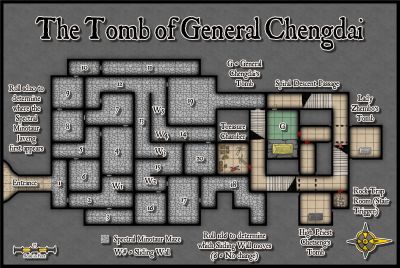
-
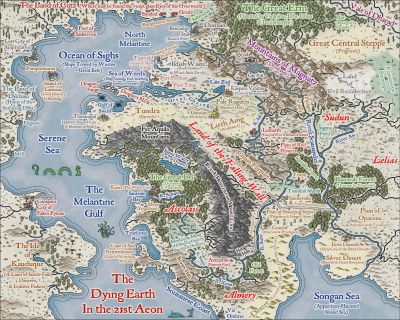
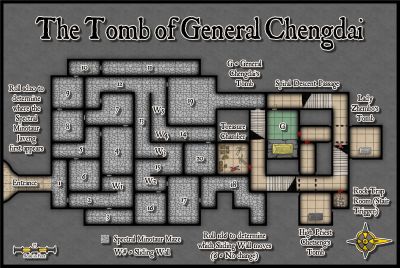
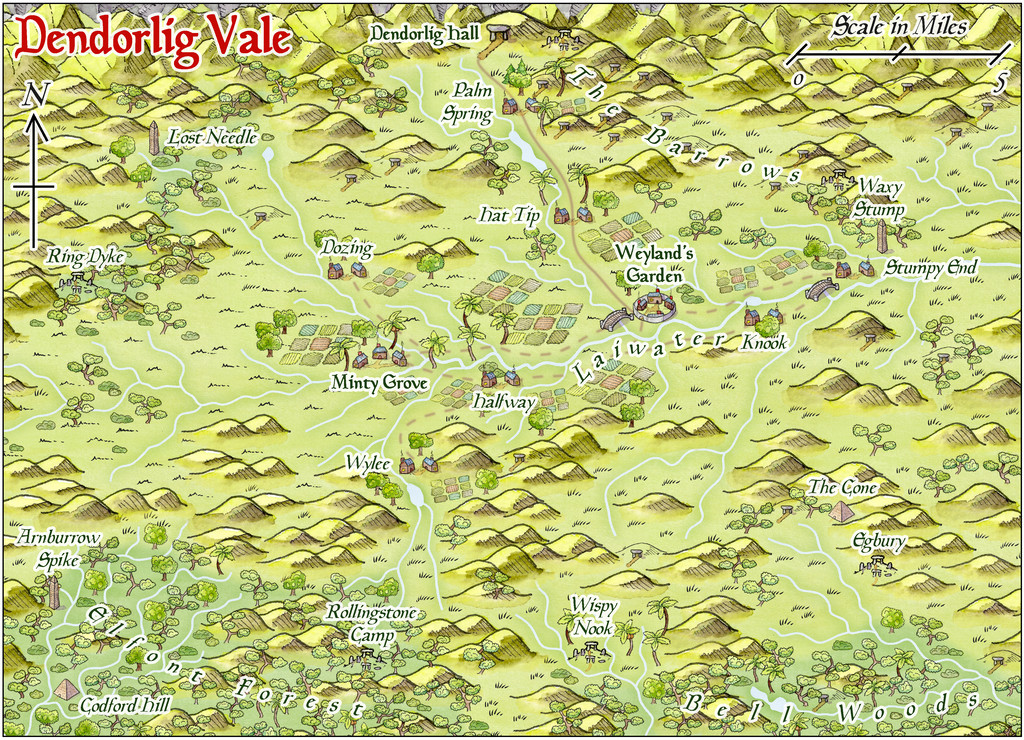
Community Atlas: Dendorlig Vale, Malajuri
It's been a while! However, I've completed the PDF notes for this map now, have made a couple of minor tweaks to it, and have now submitted it for the Atlas.
This is the final map version (larger version updated in my Gallery too):
And this is the descriptive PDF:
Although I had fairly clear ideas of what features were going to be where in this small area, some additional elements were added randomly from a new paid-for product available on DriveThru RPG by Atelier Clandestin, called "Sandbox Generator". While this allows the construction of entire regional or larger hex maps, together with many items that may be found in such areas, including settlements and dungeons suitable for a low-magic, more-or-less pseudo-feudal, world, I chose just a few of the more interesting "decorative aspect" tables, plus one or two from the settlement options, to spice-up some of the places in the Vale. Not everything rolled made it into the final notes of course, as not everything randomly-selected always fits well enough. This seems to be an interestingly detailed system, even if I was only able here to test a few parts of it. Long a fan of trying-out random systems, as I may have mentioned on the Forum previously 😉 .
In case anyone's wondering, I have been continuing with the write-up for the large Dendorlig Hall subterranean map as well, although other things (including this map's notes!) have slowed progress there over the last couple of months. Hopefully though, I'll have an update for that too shortly.



-
Hexcrawling starter maps
There's an obvious couple of problems here. One is there isn't a great enough diversity of symbols to cover even the fairly small range of non-settlement features that might be useful, and which only an expansion of the style (either by PF or personally) would solve. [There is a further issue here too, in that none of the location symbols actually work to the standard snap grids used in this Annual. I'm not sure if that may have been amended since I downloaded my copy, however. I ended up having to place most by eye alone, certainly.]
The other is that anything placed in a coastal hex looks as if it's really in the sea, because that's just how hex maps of this sort work. That though is something I could resolve. Plus as I'd been randomly rolling terrain up, I'd noticed there was no "Hills" option in the current ShadowDark tables, so decided to tweak that a little to include some.
So the maps, and additional keyed terrains, came to look like this:
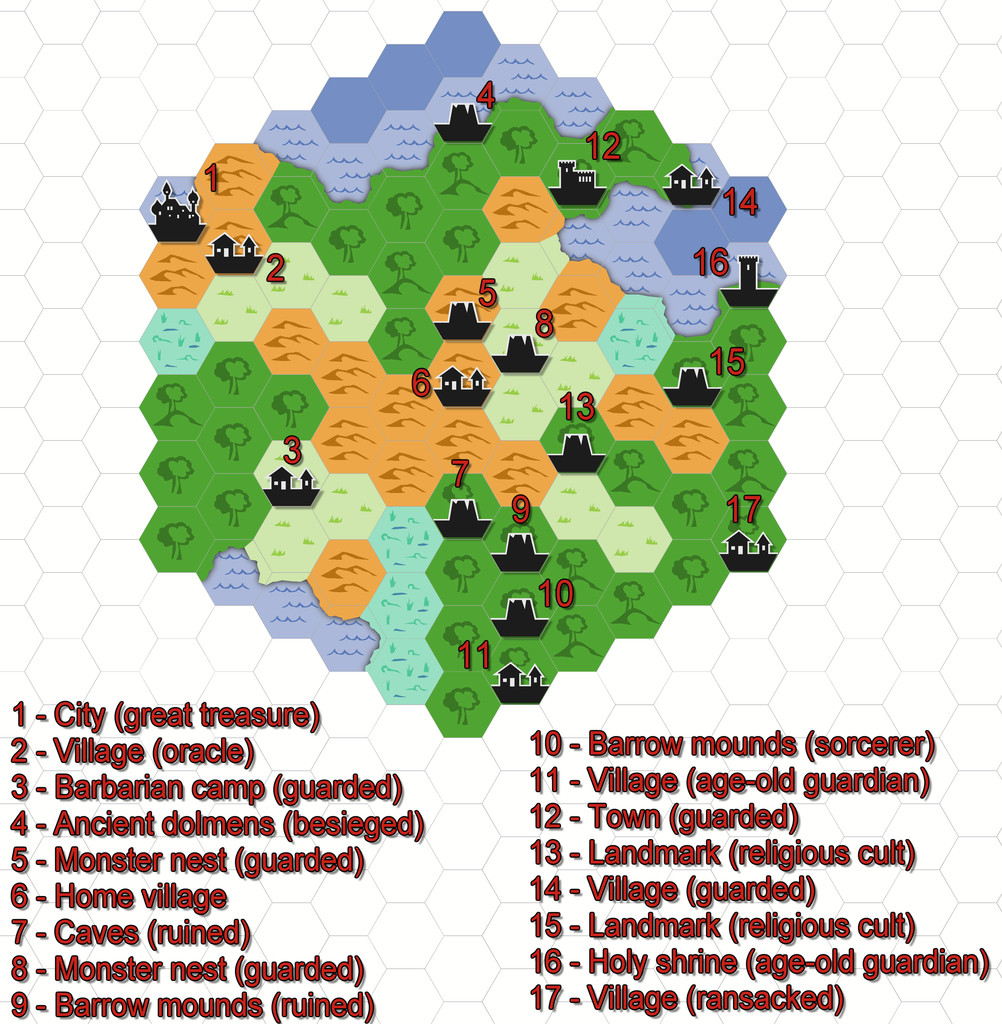
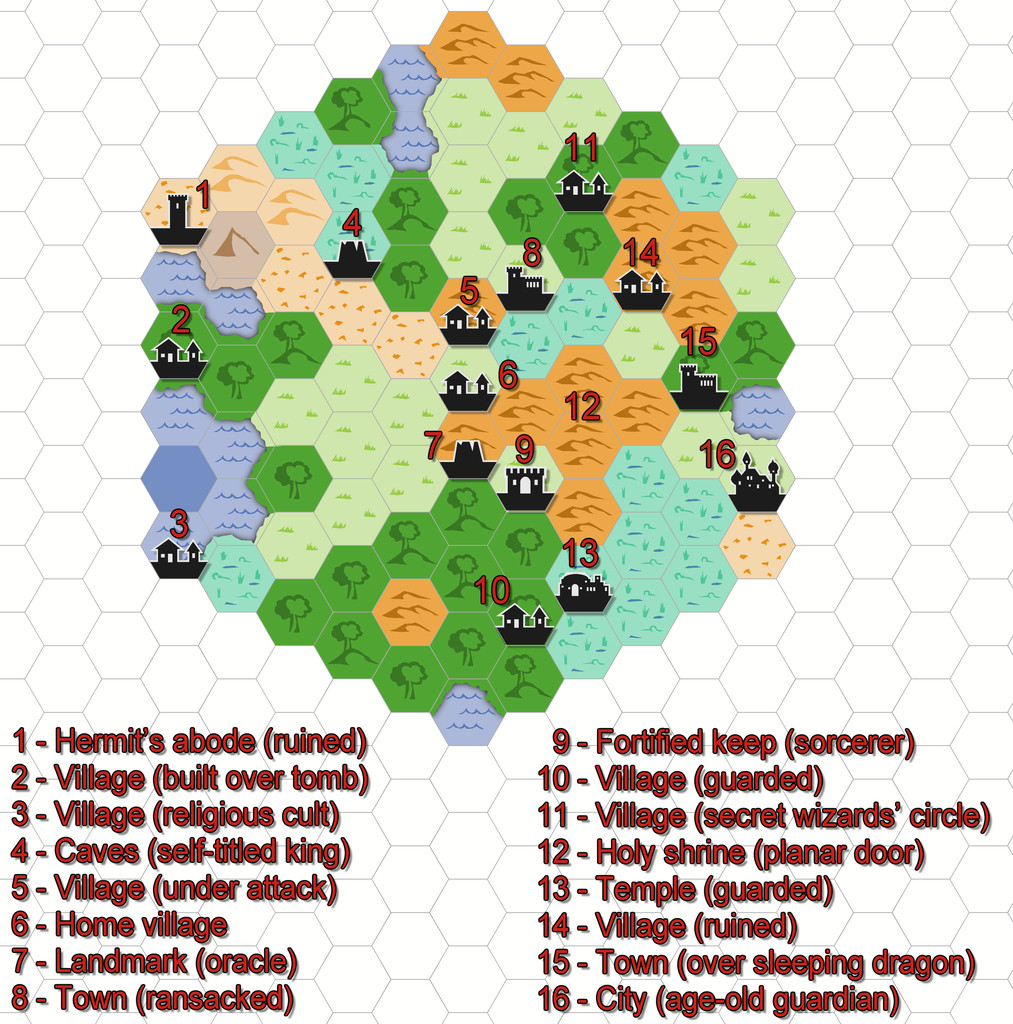
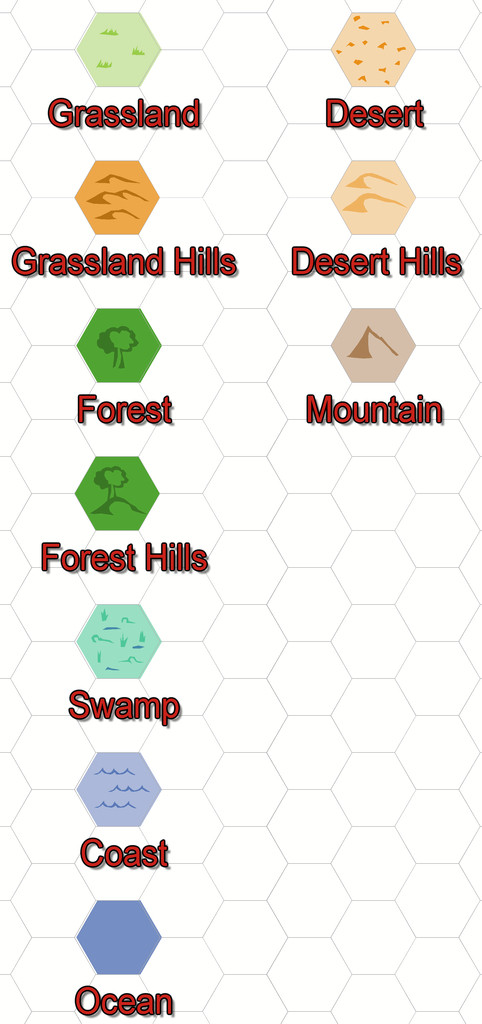
All I did for the coasts was add a small section of land from each adjacent hex over the coastal sea.

-
Hexcrawling starter maps
Just to make sure I'm not leaving anyone behind here, some brief explanation. From the early days of RPGs, those running the games have been encouraged to design areas for the players to explore, frequently using random generation systems to do so. "Hexcrawling" is the overland version of this, where each hex represents a fixed distance (if sometimes a little vaguely defined, given a hexagon is not the same size from its centre all around), commonly 5 or 6 miles, though larger or smaller sizes than this are not infrequent. What are now called "Old School Rules" (OSR) RPG systems often make use of this technique, and these have seen a particular upsurge in popularity this year, following ongoing problems from the current owners of "Dungeons & Dragons".
One of the unexpectedly phenomenal successes of recent times in the OSR line has been a new RPG called "ShadowDark", which presents a very streamlined update on the OSR theme, that incorporates improvements from modern RPGs more generally. I've been very taken with the whole ShadowDark RPG conception, particularly as the Core Rules include everything needed to play the game, such as a random generation system for hexcrawls.
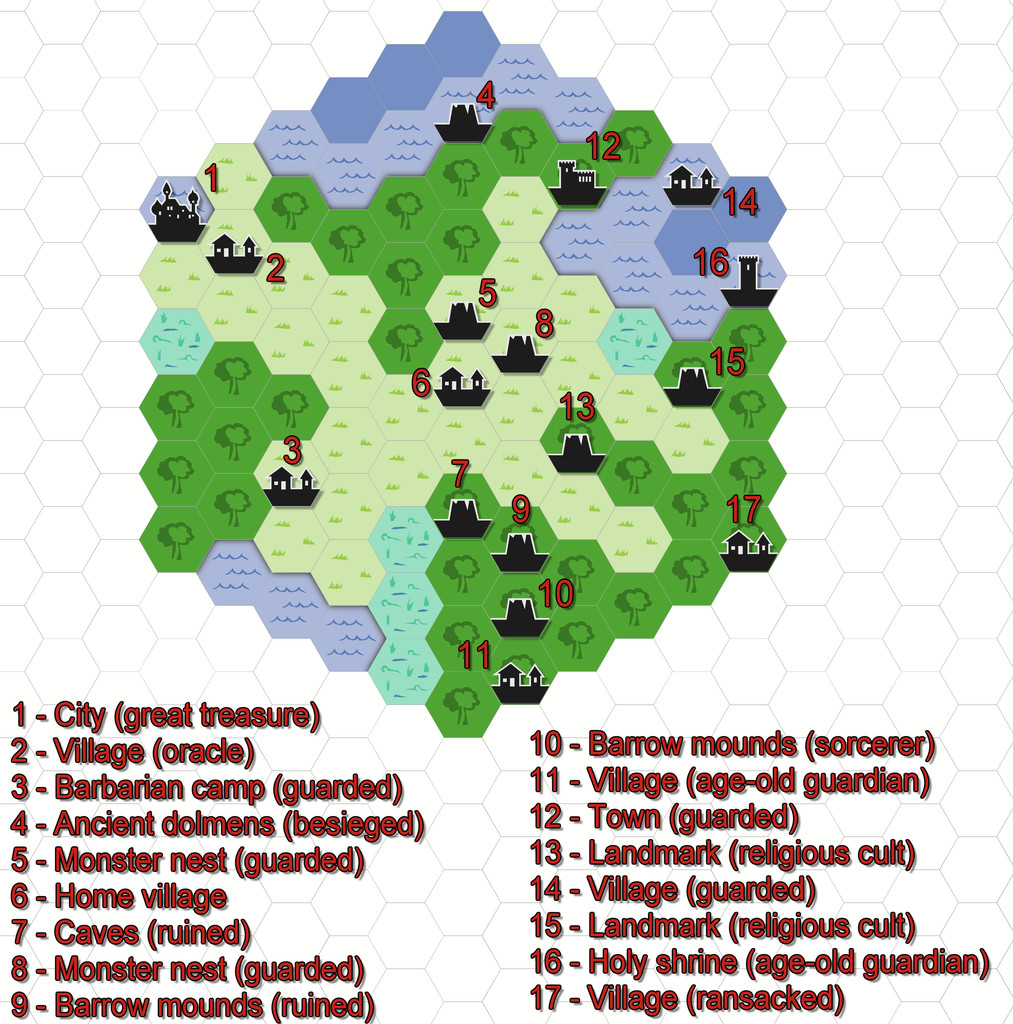
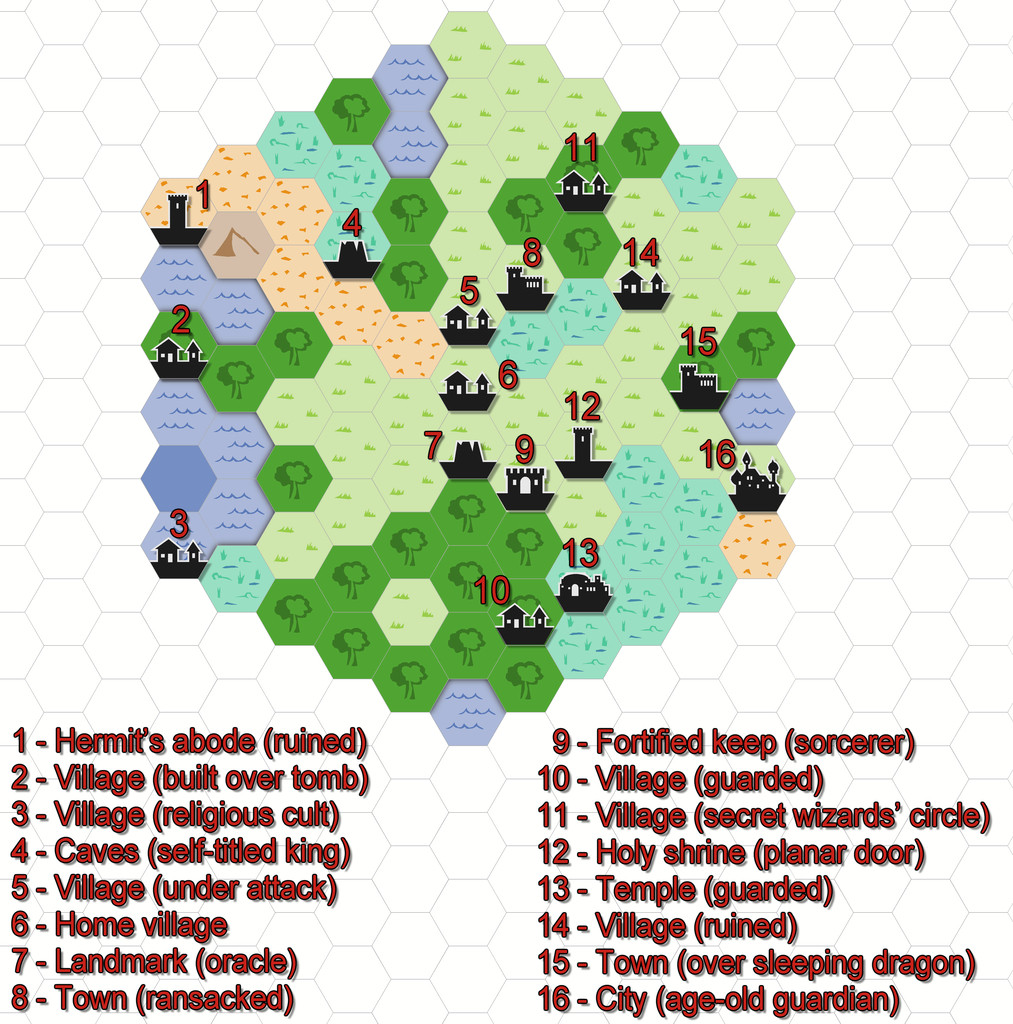
Last weekend, I did a couple of small test areas, to see how the system worked (hexes here are 6 miles in size), and although the system which will appear in the printed Core Rules has been tweaked a little since then, I prepared the maps in CC3+ through the week, to see how they'd look, using the 2010 Overland Hex style. These are the basic maps as generated by the random system rolls, with a list of their contents, and a separate key:



-
[WIP] Continent Map using CC3+ MS Overland and other resources
Map labelling's always tricky. There's an inevitable trade-off between clarity, precision and how much information you need to/want to present. Colour-coding the settlement names, as you've done here, is a useful trick, and maybe just using that with a map legend to say which colour means what realm might be sufficient at this smaller scale. The larger-scale text labels still seem a little too distracting, for all their faded transparency, to me, but the important thing is that you're happy with the end result, of course! And the maps DO look good!

-
Expansion to Ellis Prybylski Watercolor Style
Yes please to the Elf, Dwarf, Halfling and Orc structures, plus ruins, ships, icy elements, a volcano-mountain, variant settlement features (including for different cultures)! And after those, also perhaps:
- Magical site markers
- Battlefield marker, and a more general flag-style marker, to highlight important sites that don't fit to specific structure types.
- Oasis symbols for the deserts.
- Two more bridges at different angles to the current one - one running straight down the page, the other angled down from top left to lower right.
- I really like the Henge and Tomb hill markers, as they look good on any terrain. Another such marker with a cave mouth would be very useful.
- Some Mountain Peak symbols without the snowy tops (so grey mountains, just no white caps).
- Seeing the animal and creature comments, just the actual creature without any associated terrain would be better, as usable anywhere. Snag is, going down this route is liable to lead to requests for a lot more "resources" style markers - domesticated creatures and crops, minerals, etc.
- Some jungle-style trees, perhaps including mangroves, as well as the fruit trees Monsen mentioned.
I'll probably think of others later, but these are what're coming to mind right away. It's a wonderful style, and it would be excellent to see it expanded as far as possible in future, I think.
And thank you very much for creating it!