
Ricko
Ricko
About
- Username
- Ricko
- Joined
- Visits
- 6,716
- Last Active
- Roles
- Member
- Points
- 10,548
- Birthday
- February 7, 1977
- Location
- merlo san luis argentina
- Rank
- Mapmaker
- Badges
- 22
Latest Images
Reactions
-
[WIP] Applevale
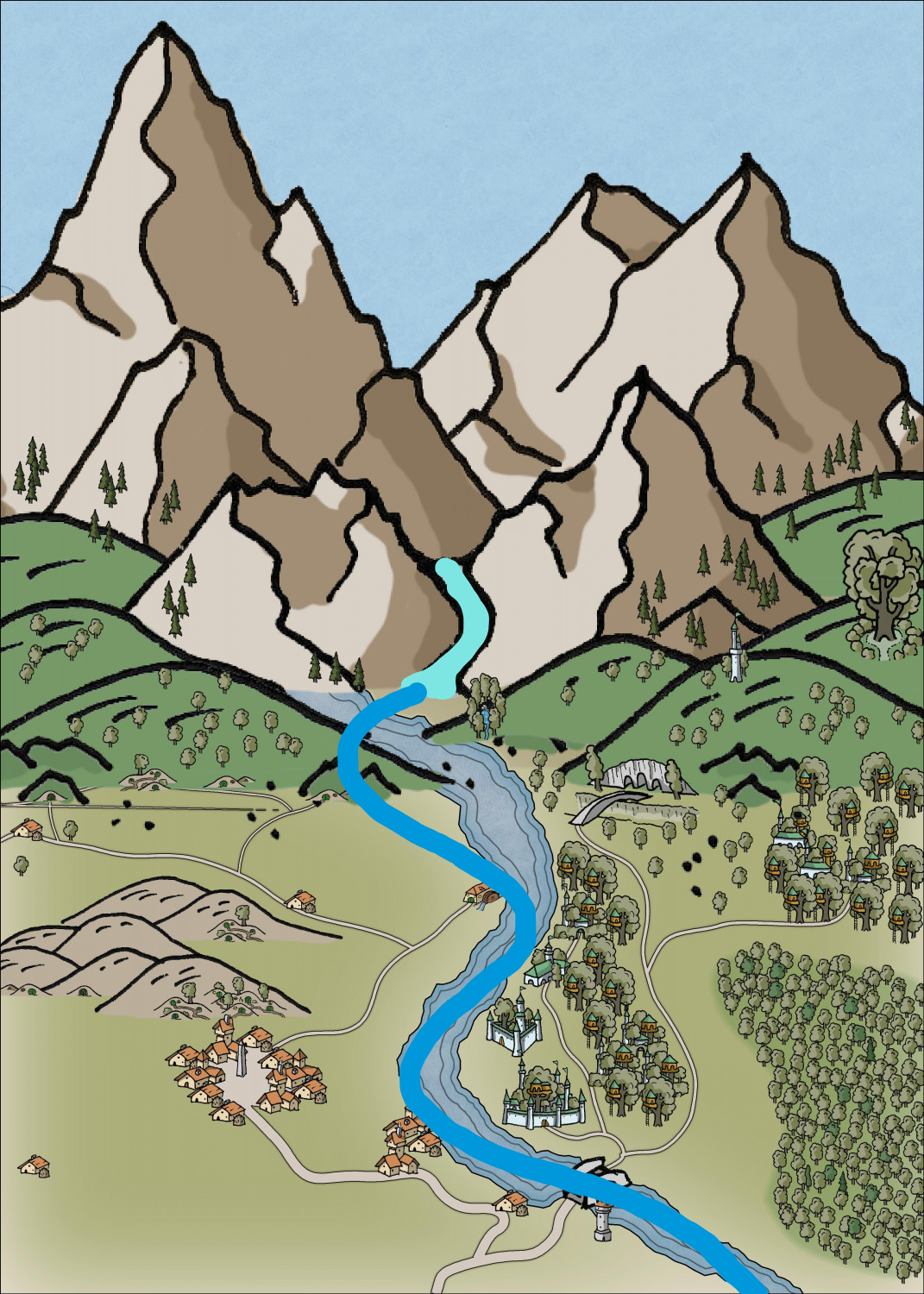
Hey Royal, why don't you use a "water" sheet over the images to cover this passage and turn it into a waterfall?
-
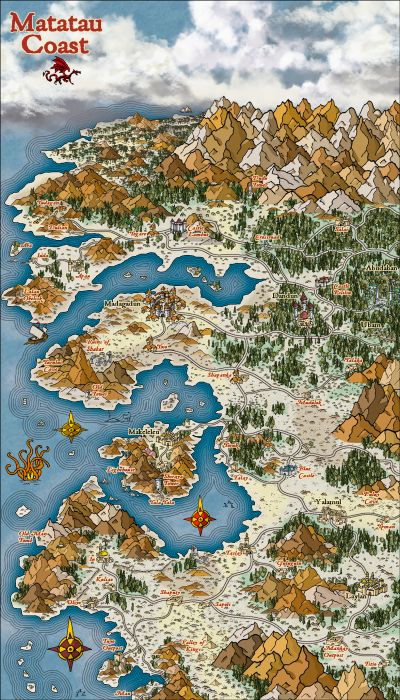
Matatau Coast - Trace from IA map
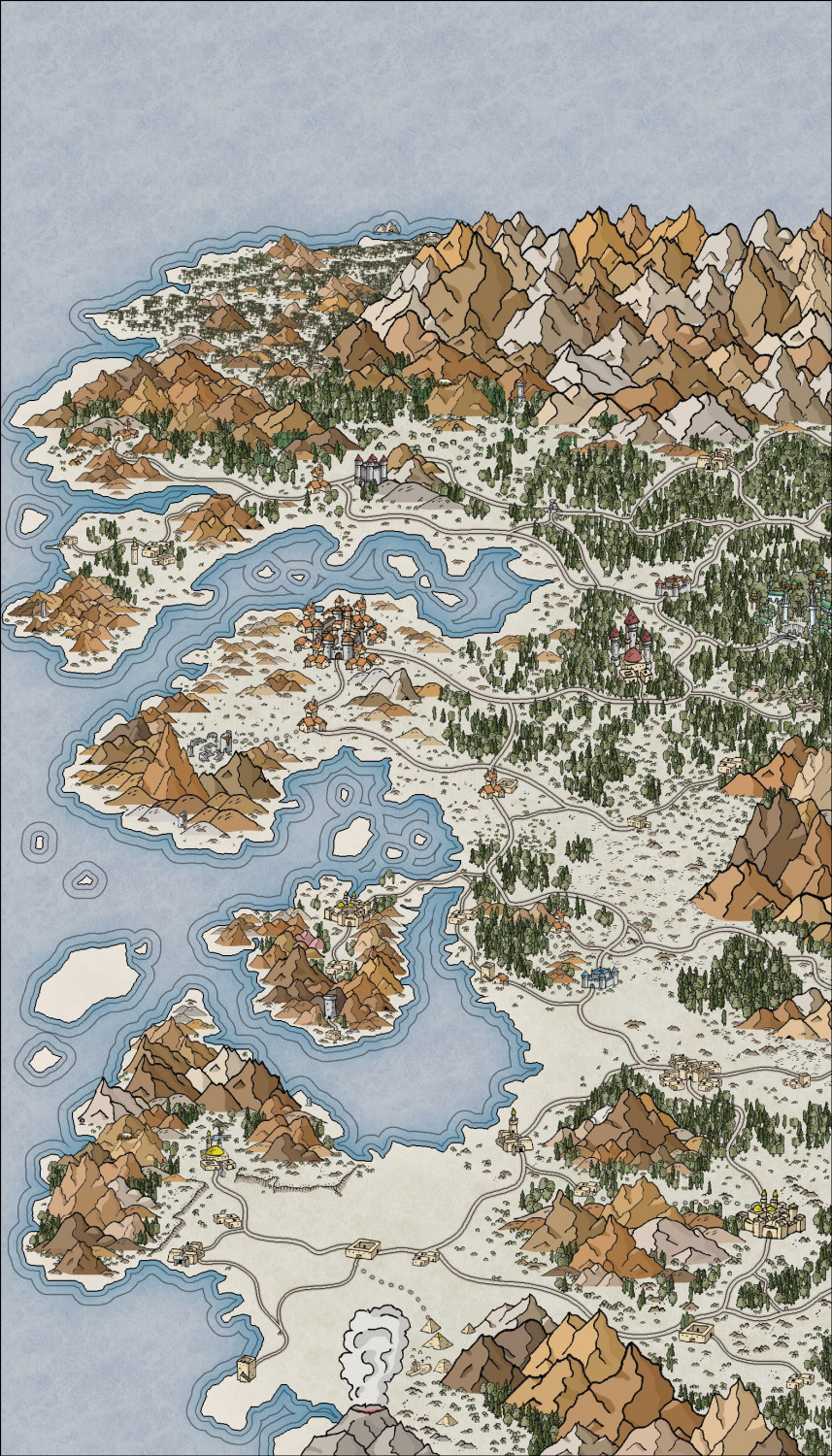
Already in save 5, with the work well advanced, I was finally able to shape this coast.
-
cOMMUNITY ATLAS - The Bucesi Nations - Wlomisl the White
Wlomisl the White:
From an early age, Wlomisl was a reserved boy with a watchful eye, someone who preferred the quiet shadows of libraries to the noisy circles of play. His shyness almost alienated him from others, and some say he saw the world in his own way—attentive to details invisible to the naked eye, lost in the vastness of his thoughts and observations. His intelligence shone subtly, like a faint light that, though discreet, flickered brightly in the depths of his soul.
As a young man, the heir to a line of Novaluda merchants, he felt a tragedy touch him too soon. A shipwreck took his father, brother, and mother to the bottom of the sea, leaving him an orphan and marked by a silent grief that only he bore. Despite his grief, the society his family had built continued to operate. Wlomisl, unwilling to inherit the business and wearing an expression seemingly devoid of color, began to manage the warehouses and accounts with a morbid arrogance, while his heart yearned for something different.
Wlomisl's reputation grew among those who crossed this trade route, not so much for his face or his presence, but for a distinct aura—a shadow of incompleteness, an almost spectral whiteness that seemed to envelop his figure, as if his essence were made of petrified silence. Thus was born his nickname: Wlomisl the White. A subtle reference to his pale, almost translucent appearance and his cold, distant gaze.
His fascination with the heavens and nature consumed him more and more, leading him to decipher the mysteries hidden in the stars and in the alchemical processes that the Earth itself held. Filled with a disquieting calm, he decided to abandon everything that society and fortune had afforded him—even if it meant accepting a modest percentage of the profits, paid annually. Thus, he set out far from civilization, to the edge of a landscape that seemed on the brink of oblivion: the borders of the Arum Nur Mountains.
Inspired by the barren and mysterious landscapes of a forgotten place, he built a four-story tower on a secluded hill, in the heart of a world that seemed on the brink of oblivion. A place dedicated to his silence and his passions: celestial observation, the alchemy of nature—and a shelter where he could take refuge from the insane noise of the world.
The tower has an underground cavern, intended for a wine cellar and artifact storage. On the first floor, there is an austere reception area and a simple kitchen, where Wlomisl prepares his food amidst the aroma of herbs and spices. On the second floor, his personal sanctuary: a room and a small library with walls filled with books, celestial maps, and formulas, where he wanders between dreams and discoveries. The third floor is his alchemical laboratory—an arena of experiments that almost seem like a gamble with Earth's forces. There, he mixes minerals and ancient ingredients, seeking answers that shape the interface between magic and science. And, at the top, the astronomical observatory, equipped with its own telescope—the product of his skilled hands—that scans the sky in search of ancient secrets and forgotten stars.
To ensure his safety and defend his sacred refuge, Wlomisl commissioned the construction of four iron Golems—automatons of immense strength and unshakable endurance. Each of them was programmed to protect the tower from any intruders, from human forces to the darkest manifestations that might arise from the shadows of the universe or from the forgotten lands around it. In this solitary refuge, Wlomisl lives with the certainty that the universe is an open enigma, a nearly forgotten door between the real world and his darkest dreams. And while the stars continue to spin above him, the silence of his tower holds memories of an eternal search—for knowledge, for meaning, for something that transcends life itself.
-
Community Atlas - The Ruins of Shurublau
1200!!? lets go for 1500 maps now :)

-
Community Atlas - Alarius - Environs of the Southern Scar - Haas
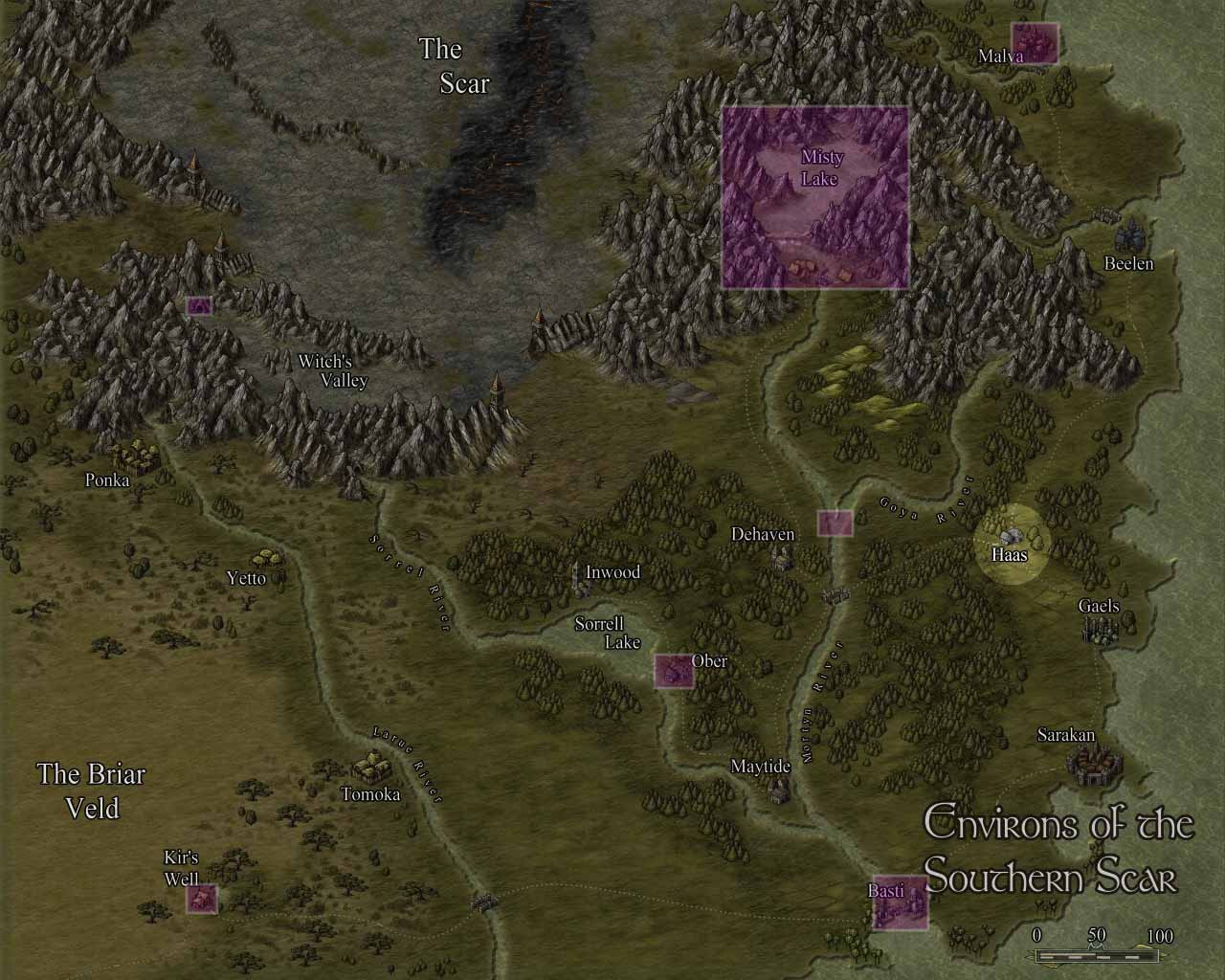
During this F1 race weekend, I found a small village named Haas (one of the 10 current teams in the competition).
Taking advantage of the same style, I decided to create a small local village strategically located within easy reach of larger cities in various directions. A must-see for anyone traveling through the region.
-
Community Atlas - Berenur - Urtrah Desert - Khala-te Talkh Oasis - Paphnutis Cave
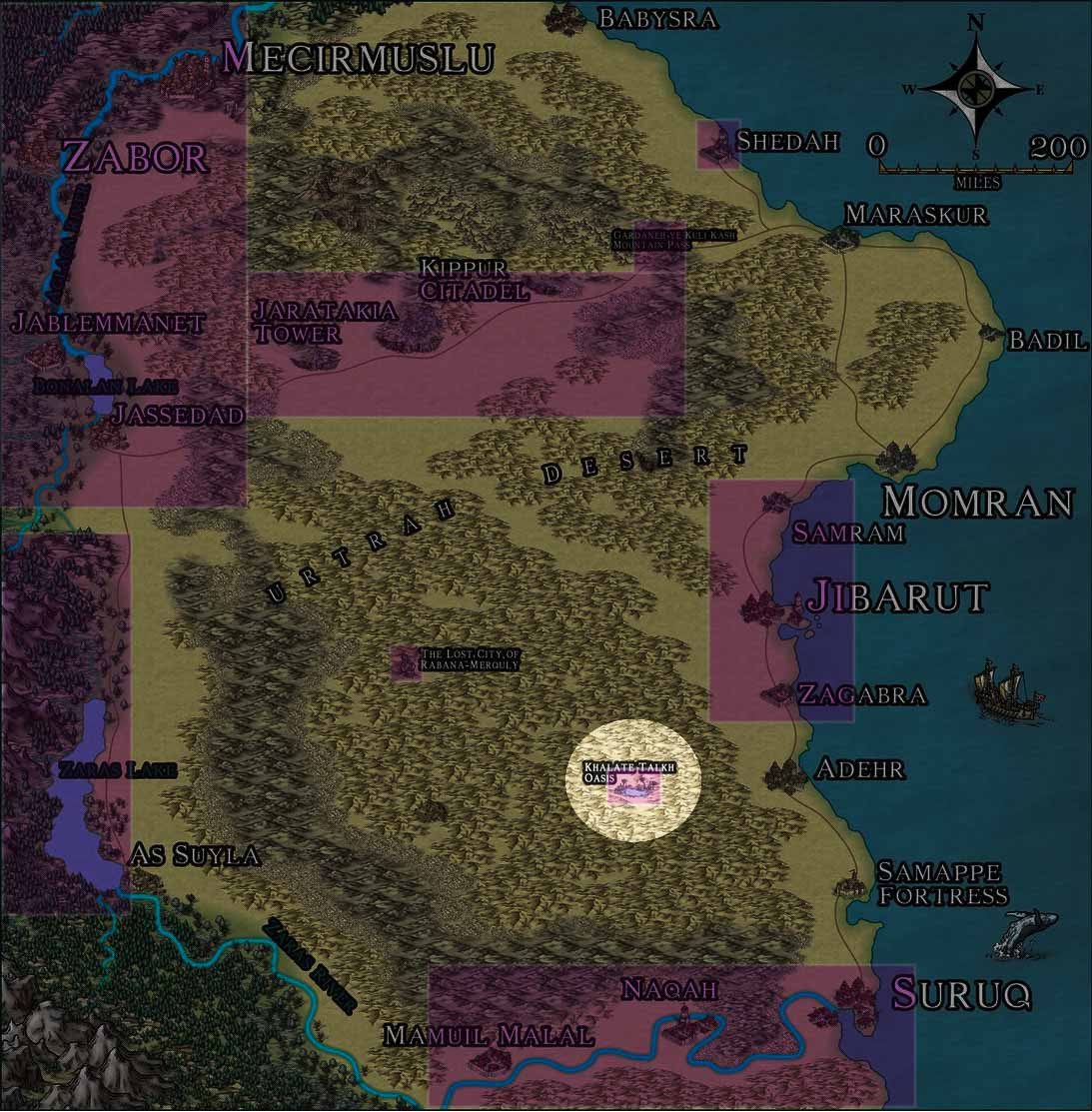
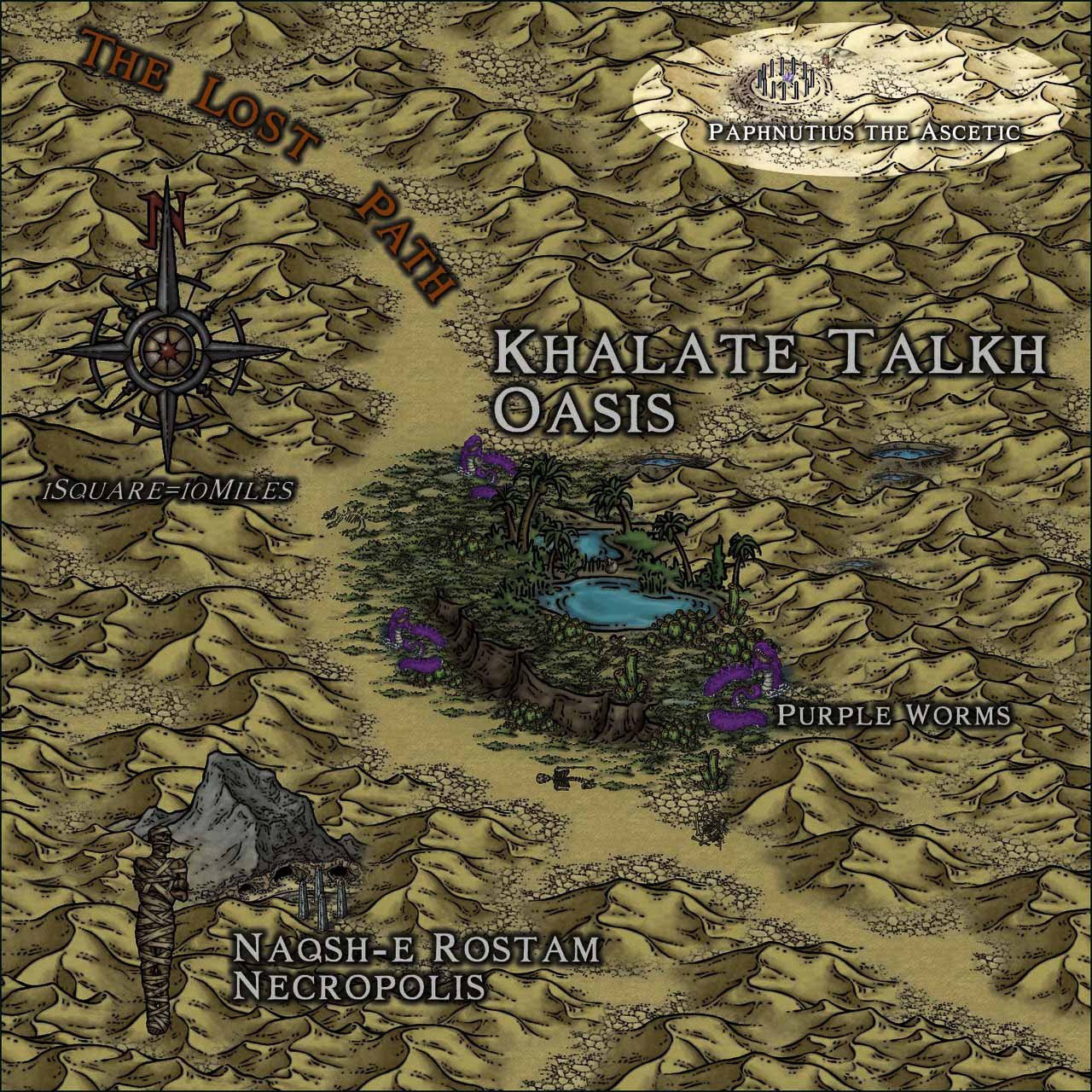
A friend recently asked me for a map and the story of an ascetic for one of his chapters. I then remembered an old map on which I had already marked the exact location of one of these hermits. I killed two birds with one stone: I accepted the request and, as a bonus, gave Remmy more work by preparing another map to climb the Atlas Mountains. I'll send the story soon—which always requires a little more time than the map.
-
Community Atlas - Berenur - Urtrah Desert - Khala-te Talkh Oasis - Paphnutis Cave
Paphnutius, the Ascetic – Guardian of the Desert's Secrets
On the edge of the known world, where the winds of the Urtah desert shape even the hardest stone, lives Paphnutius, the Ascetic. His cave, a small opening in the ochre-hued, striated wall, is a sanctuary of silence and austerity. Nearby lies the Khala T Talkh Oasis, this treacherous body of water surrounded by sands that conceal predatory worms, creatures that ripple beneath the surface and whose presence threatens even the most daring. Further south, the Necropolis of Naqsh-E Rostam rests like a sleeping giant, a labyrinth of sacred tombs and forgotten curses.
Paphnutius is a man of fierce devotion, a guardian of archaic practices that date back to times when gods and men still walked together through the desert. They say he traveled to other lands before settling in the desert, where he acquired knowledge of other cultures, magic, and philosophies that he now applies to his rituals. He lives not only on the edge of civilization but also at the intersection between the sacred and the profane, between the human and the divine. His lean body and deep gaze carry lost wisdom, and his rituals, inspired by ancient traditions, are a testament to his relentless pursuit of purification and balance.
The figure of the elder hovers between the human and the divine, between the hermit and the guardian. He lives in harmony with the desert but also in constant vigilance, keeping ancient forces under control. To the few who encounter him, he is a mystery—an ascetic whose devotion is not only a personal path to enlightenment but a responsibility that keeps the entire world in a precarious balance.
The Ancient Rituals of Paphnutius
Paphnutius' rituals are a synthesis of physical, spiritual, and mystical disciplines. He sees his body as an instrument of communion with the divine; his practices are marked by extreme discipline and profound reverence for the mysteries of the world.
Fasts and Purifications
Paphnutius follows rigorous cycles of fasting, abstaining from food and water for days at a time. During these periods, he consumes only a handful of dried dates or a sip of water he brings from the oasis. This sacrifice is not only a demonstration of discipline but a ritual of communication with the desert. He believes that by emptying his body, he opens space for the truths of the world to flow into him.
Before each ritual, he washes his hands and feet in small clay bowls, using water sparingly. It is not just a physical cleansing but a symbolic act of separation between the profane and the sacred. He recites chants as the water flows, intoning ancient words that he believes are capable of purifying the spirit and warding off evil influences.
Chants and Vigils
During the long desert nights, Paphnutius keeps vigils by the light of a lamp fueled by oil from seeds and resins he collects. He chants in a forgotten language, whose syllables resonate with the wind among the dunes. These chants, learned from fragments of ancient scrolls and inscriptions on stone, have hypnotic rhythms that echo like a mantra. He believes that these words sustain the harmony of the world around him, as if they were the invisible foundations that prevent chaos from consuming the world.
The Runes and the Bones
On the tip of an ancient bone, Paphnutius traces runes on the cave walls or on worn scrolls. These inscriptions, extracted from the forgotten tombs of Naqsh-E Rostam, are not mere symbols—they are arcane formulas that communicate and manipulate hidden forces. Each line and curve he draws demands precision, for a single wrong stroke can invoke unimaginable disasters, unleashing ancient curses that patiently await in the shadows.
Paphnutius's eyes gleam with the light of knowledge as he concentrates, aware of the spiritual weight and responsibility of his actions. The ritual he performs, known as the Rite of the Bound Souls, is a clash between life and death, where sacred runes are drawn on the stones surrounding his cave, invoking protection against restless spirits that, according to him, feed on the fear and vulnerability of beings. As he traces the characters, the air around him seems to vibrate with a dense energy, as if the cave itself were slowly breathing and whispering forgotten secrets.
Rituals of Silence and Isolation
During the days marked as taboo, the old man withdraws completely from the world. He enters a state of absolute silence, communicating only with gestures or through Khab, his amber-eyed dog. During these periods, he meditates deeply, focusing on his breath and the memory of the oaths he vowed never to break. These days are intended to strengthen his mind and align his soul with the invisible forces of the desert.
The Secrets Guarded by the Ascetic
Paphnutius is not just a man, but a living repository of ancient knowledge. He knows secrets that could change the balance of the region, but he guards them with an ironclad determination, aware of the dangers they represent. Some of these secrets include:
• The Pacts of the Necropolis of Naqsh-E Rostam: Paphnutius knows that the tombs of the Necropolis not only hold the dead, but also imprison ancient entities. He knows the rituals necessary to reinforce these pacts or, in extreme cases, to release what is sealed in the depths.
• The Language of the Sands: He is able to interpret the furrows that the wind traces in the dunes and stones of the desert. For him, these patterns are messages sent by invisible forces — warnings of danger or revelations about destiny.
• The Lost Names: Paphnutius recites ancient names that, according to him, hold the world in balance. These names are not just words, but keys that open or close paths to forces beyond human comprehension. He believes that if such names fall into the wrong hands, chaos will be inevitable.
• The Truth of Khala T Talkh's Oasis: The oasis is not just a source of water, but also a portal to something dormant. Paphnutius knows the ritual necessary to seal or open the portal, but he knows that it demands a terrible sacrifice.
Khab, the Amber-Eyed Dog 🐶
He is no ordinary dog, but an enigmatic and almost mystical presence that accompanies Paphnutius on his solitary journey through the desert. With a coat as dense and dark as the shadows in which he lives, his amber eyes shine with an intelligence that seems to go beyond comprehension. The connection between them is deep, almost telepathic, allowing a level of communication that transcends words.
The animal's origin is shrouded in mystery. He appeared in a moment of despair, when the ascetic was about to give up the search for a purpose in this life. It was on a starlit night that the dog materialized, as if summoned by the desert itself. In a silent gesture, he clung to Paphnutius's soul, promising protection and companionship.
Many believe that this companion is more than just an animal—he may be a manifestation of the spirit of the desert or a mystical guardian sent to guide the ascetic on his mission. Some say he is an incarnation of an ancestor of Paphnutius, acting as a link between destiny and the present.
Extremely sensitive to changes in the environment, he possesses the ability to detect the presence of supernatural beings, restless spirits, or hidden dangers in the desert. This perception of disturbances in the air, in the sands, or in invisible energies makes him a valuable ally.
Furthermore, he has an almost supernatural ability to accompany his master during deep meditations, sitting beside him in a state of calm that reflects ancestral wisdom. In these moments, he seems to connect with the essences of nature, bringing wisdom from the earth to his master.
The animal's loyalty to the ascetic is unwavering. He is more than a companion; he is a friend who protects his master from dangers, be they desert creatures or other threats. His presence brings comfort to the ascetic, a reminder that, even in the desolate solitude of the desert, he is not truly alone.
-
Maps of the day
I used the mosaic image (as a symbol flat) from monthly content #5 (temples) to create the base of the design. After that, I superimposed the images, one inside the other, using the orange floor circle as a boundary.
One after the other, each time with less image showing, leaving only the outer circle of the mosaic visible, with light and dark yellow floors, one inside the other.
-
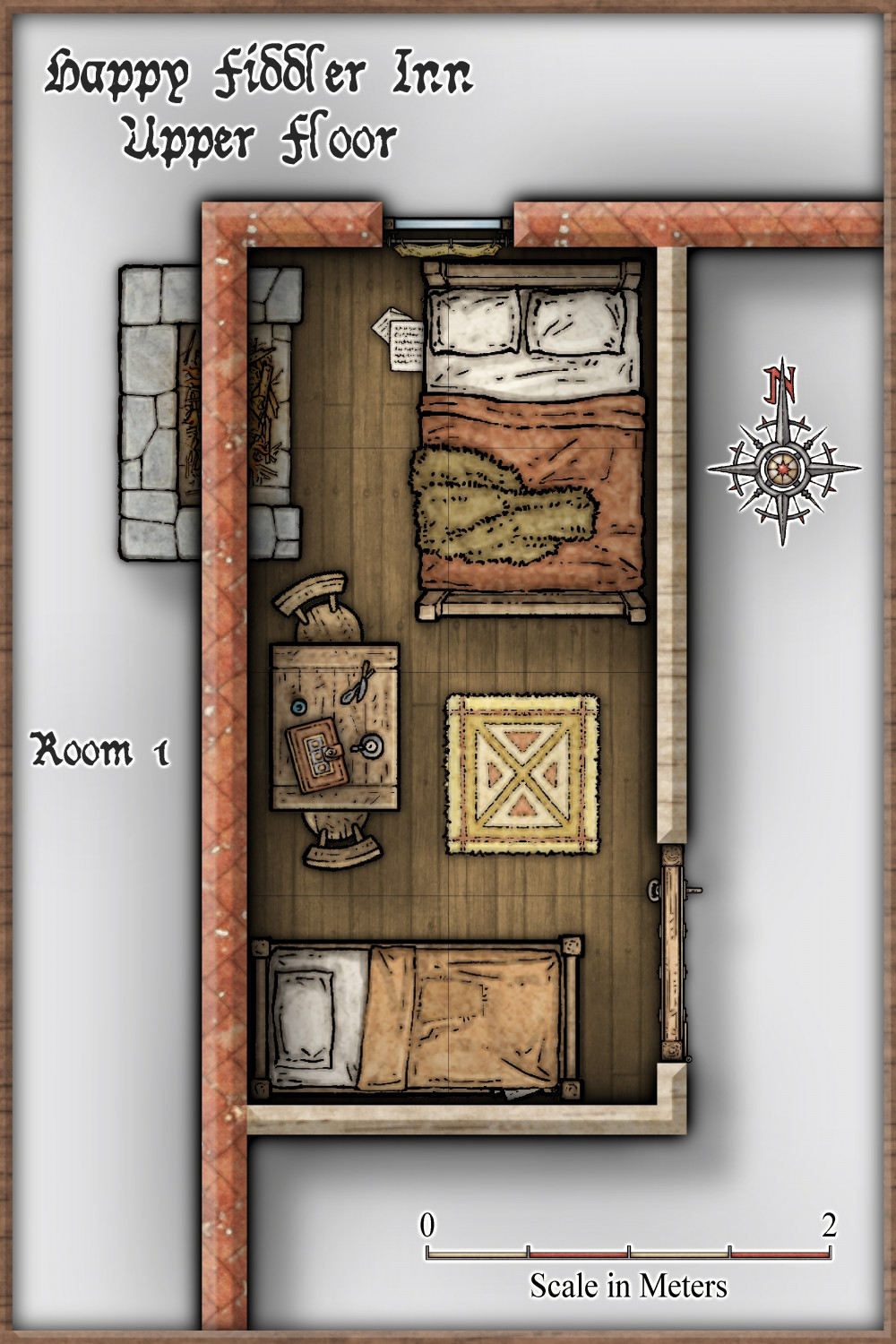
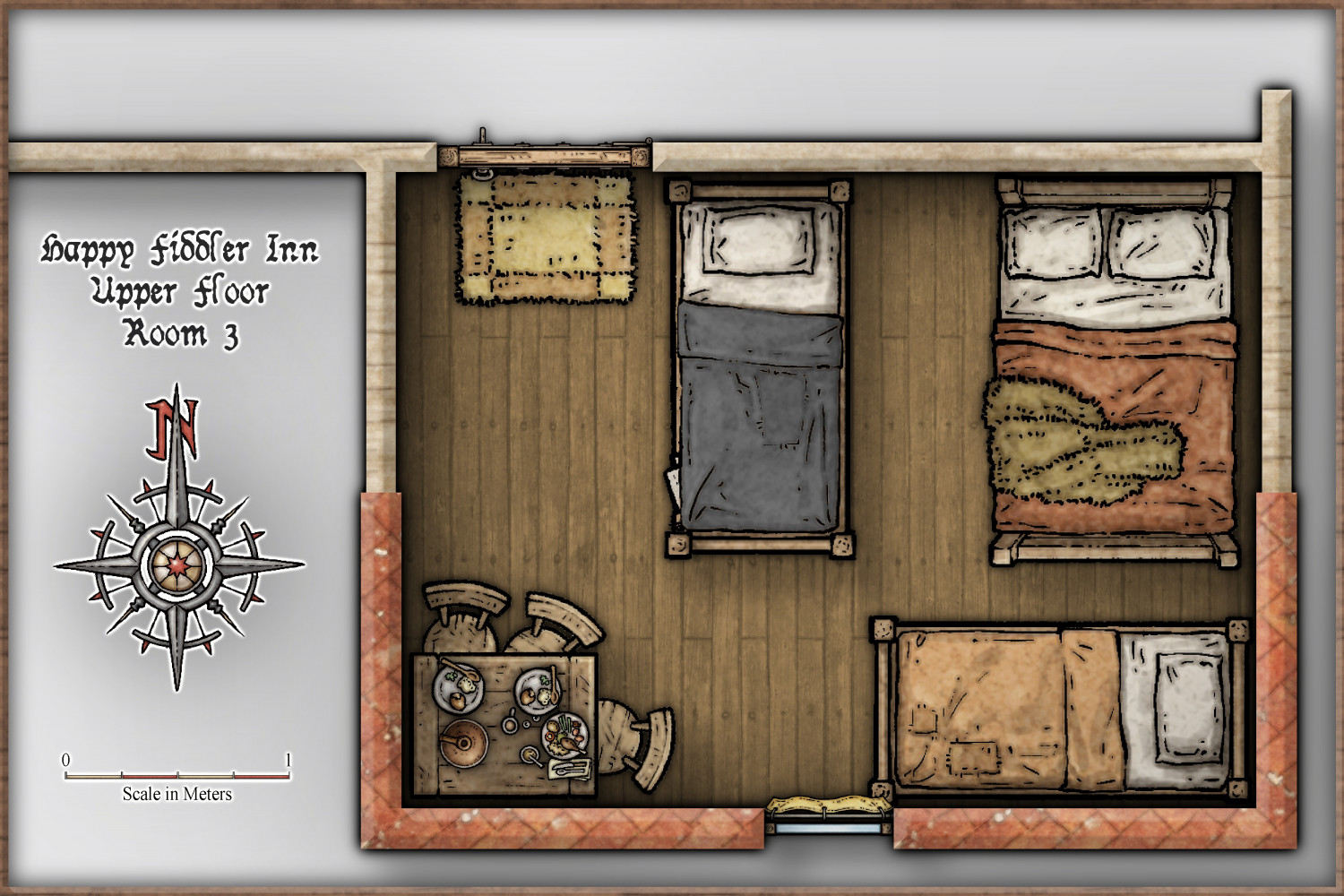
Community Atlas - Torstan Holy District - Happy Fiddler's Inn - a joint collaboration.
-
Community Atlas - Torstan Holy District - Happy Fiddler's Inn - a joint collaboration.